Wednesday, April 28, 2021

Roche confirms tominersen as ineffective, while Triplet provides key details for trial of drug to slow major driver of Huntington’s disease


Following up on news that it had halted dosing, Roche has confirmed that its historic GENERATION HD1 clinical trial, aimed at the genetic causes of Huntington’s disease, failed to improve symptoms in study participants.


The disappointing trial outcome for the drug candidate tominersen was revealed on April 27 by Scott Schobel, M.D., M.Sc., Roche’s medical leader of GENERATION HD1, at the virtual 16th Annual HD Therapeutics Conference, sponsored by CHDI Foundation, Inc., the nonprofit virtual biotech focused solely on developing HD treatments and a collaborator in the effort.


More than 1,000 people registered for this greatly anticipated meeting.


“Nobody wanted this result,” Dr. Schobel said in his online talk, the first scientific presentation describing why an independent review committee had recommended, and Roche accepted, that GENERATION HD1 be halted. “This is a setback, and it’s a setback which is emotional. It’s a setback which we all feel, because, after being able to lower the huntingtin protein for the first time, there’s a lot of hope in that.”


An opportunity to learn


Dr. Schobel displayed a series of slides demonstrating tominersen’s lack of effect on trial volunteers, who showed “progressive decline,” reflected in key measures of cognition and control of bodily movements. Observations by physicians also showed “increasing severity” of disease in the participants, Dr. Schobel said.


Still, he said the researchers established a “new setpoint for the field”: reducing the level of the mutant protein in the early-stage tominersen clinical trial.


That achievement was a historic first, and many HD scientists still believe that this strategy can lead to an improvement in symptoms. However, it now remains for potential future trials to demonstrate that huntingtin-lowering can actually help patients.


Roche is “compelled” to use the trial results “as an opportunity to learn,” Dr. Schobel said. The company still has a “wealth of data” to analyze regarding tominersen and its implications for the huntingtin-lowering approach. The firm will share results with the HD community.


The Huntington's Disease Society of America will hold a webinar at noon Eastern time on April 29 with an update for the community on the Roche results. (Click here to register.)


Dr. Scott Schobel of Roche displays slide demonstrating decline in volunteers' condition in the GENERATION HD1 clinical trial at the 16th Annual HD Therapeutics Conference (screenshot by Gene Veritas, aka Kenneth P. Serbin)


Drug candidate’s target chosen


On this first day of the three-day conference, Irina Antonijevic, M.D., Ph.D., the chief medical officer at Triplet Therapeutics, Inc., revealed key details of the firm’s drug program to develop a genetic strategy that contrasts sharply with the idea of lowering the huntingtin protein. The firm also issued a press release.


Dr. Antonijevic focused on Triplet’s efforts to slow or stop a key driver of HD, somatic expansion, the mutant huntingtin gene’s tendency for continued expansion with age.


Triplet’s research exploits continuing breakthroughs in HD genetics, also the topic of this year’s Therapeutics Conference. Those advances have revealed that so-called modifier genes linked to the speeding or slowing of somatic expansion can hasten or delay the age of HD onset by just a few years or by as many as 40.


Triplet scientists and others believe that the longer that expansion, the more toxic the gene and its product, the huntingtin protein, become.


Building on these developments, in 2020 Triplet announced its drug candidate TTX-3360, aimed at slowing or stopping somatic expansion.


In her conference presentation, Dr. Antonijevic announced that the specific biochemical target of TTX-3360 is the modifier gene MSH3, involved in the maintenance and repair of DNA.


In studies of mice, Triplet has demonstrated safe and effective lowering of MSH3 using TTX-3360. Additional safety studies were done in nonhuman primates.


Injection directly into the brain


Like the Roche drug, TTX-3360 is an antisense oligonucleotide (ASO), a synthetic modified single strand of DNA. Both the early-stage trial of tominersen and GENERATION HD1 delivered ASOs via spinal tap.


However, Dr. Antonijevic announced that TTX-3360 will be introduced into the brain using an intracerebroventricular (ICV) injection. The ICV device is a small reservoir implanted at the top of the head with a catheter going into the brain. ICVs have been used in medical treatments since the 1960s, including injection of anti-cancer drugs.


Dr. Antonijevic explained that, in contrast with the spinal tap – whereby an ASO had to travel along the spine before entering the brain – the ICV will permit Triplet to get its drug deeper into the brain, including areas severely affected by HD.


With spinal taps, patients can experience pain and inflammation during dosing because of scarring that results from repeated dosing, Dr. Antonijevic asserted. The ICV permits easy withdrawal of cerebrospinal fluid (which bathes the brain) for monitoring of drug safety and efficacy, she added.


The ICV also allows for rapid dosing – perhaps even at home – whereas the spinal tap requires a visit to a doctor’s office, Dr. Antonijevic pointed out.


(According to one scientific article, an ICV can remain in place for life. However, long-term usage is not well understood. The device should be monitored for leakage or failure. If necessary, the device can be removed or replaced.)


At the HD Therapeutics Conference, Dr. Irina Antonijevic of Triplet Therapeutics discusses a slide comparing two methods of drug delivery: spinal taps (intrathecal injections) and intracerebroventricular injection (screenshot by Gene Veritas)


Triplet aims to file an investigational new drug application with the U.S. Food and Drug administration (and/or a clinical trial application in Europe or Canada) by year’s end for a Phase 1/2a study of TTX-3360, which will address primarily the safety and tolerability of the compound. Triplet will recruit presymptomatic and early symptomatic individuals for the trial.


Triplet also announced a pledge of one percent of its equity to a “patient support fund,” to be managed independently, to support patients suffering from HD and other, similar disorders, known as repeat expansion disorders. The fund will help patients and families secure access to care and therapies.


(For background on the Triplet clinical trial program, click here. Stay tuned to this blog here for further coverage of the conference.)


(For additional coverage of the conference, click here).

Sunday, April 25, 2021

With PROOF-HD in the lead, the Huntington’s disease drug pipeline is still ‘full of hope’ (Coping with disappointing clinical trial results – Part II)


Despite the recent disappointing news about two fundamental programs seeking Huntington’s disease treatments, significant drug-discovery initiatives proceed steadily. They include two major clinical trials: KINECT-HD, sponsored by Neurocrine Biosciences, and PROOF-HD, backed by Prilenia Therapeutics.


As reported in Part I of this two-part series and a previous article, Roche announced that it had halted dosing in its historic Phase 3 gene silencing clinical trial, followed by Wave Life Sciences’ revelation that a similar effort to reduce the level of mutant huntingtin protein had fallen short.


In all likelihood, these drug candidates – at least the current version of them – will not become HD treatments.


However, other candidates abound.


“Our pipeline is full of hope,” said George Yohrling, Ph.D., the chief scientific officer for the Huntington’s Disease Society of America (HDSA), in a March 25 webinar held to address the devastating clinical trial news. “Our pipeline is deep and diverse.”


The HD research community “has not put all their eggs” in the Roche “basket,” Dr. Yohrling explained. “We know what causes the disease, and it’s the expansion of the huntingtin gene and the expression of this mutant protein. There is a wide array of approaches that we are using to tackle that. We’re hopeful that one or many of them will prove efficacious and modify the course of the disease.”


Advancing programs


Although two Wave drug compounds failed in early-stage trials, the company plans to start a trial of a third compound later this year.


Both Roche and Wave are scheduled to make the first scientific presentations about their recent results this week at the greatly anticipated 16th Annual HD Therapeutics Conference, April 27-29, a virtual event because of the COVID-19 pandemic. The research community is confident that a deep analysis of these studies will guide its next steps in the quest for therapies.


Researchers and companies are investigating dozens of distinct designs for the type of drug used by Roche and Wave, an antisense oligonucleotide (ASO).


Using surgery to inject its drug directly into the brain, Uniqure has started the first-ever HD gene therapy safety trial in a small number of trial participants.


Triplet Therapeutics aims to start a Phase 1 clinical trial in the second half of this year of a unique ASO targeted at stopping the mutant huntingtin gene’s tendency for continued expansion with age (click here  to read more).


Genetic modification is not the only approach under study, however. Several other firms have Phase 2 programs in the works to treat symptoms and reduce disability due to HD, and Neurocrine expects to complete KINECT-HD – its Phase 3 trial of a chorea-reducing drug called valbenazine – by year’s end. Chorea is the involuntary movements that afflict many people with HD. (On KINECT-HD, also click here.)


Two similar drugs for chorea – Xenazine and Austedo – are the only HD drugs approved by the U.S. Food and Drug Administration (FDA). They do not stop progression of the disease.


A big goal: helping HD people function normally


A second major study, called PROOF-HD, is currently underway, led by the Huntington Study Group (HSG), and sponsored by Prilenia. This is a Phase 3 trial (the final step before a drug can be approved by the FDA) of a drug called pridopidine, which is proposed to improve function in people in the early stages of HD.


PROOF-HD stands for “PRidopidine Outcome On Function In Huntington Disease.”


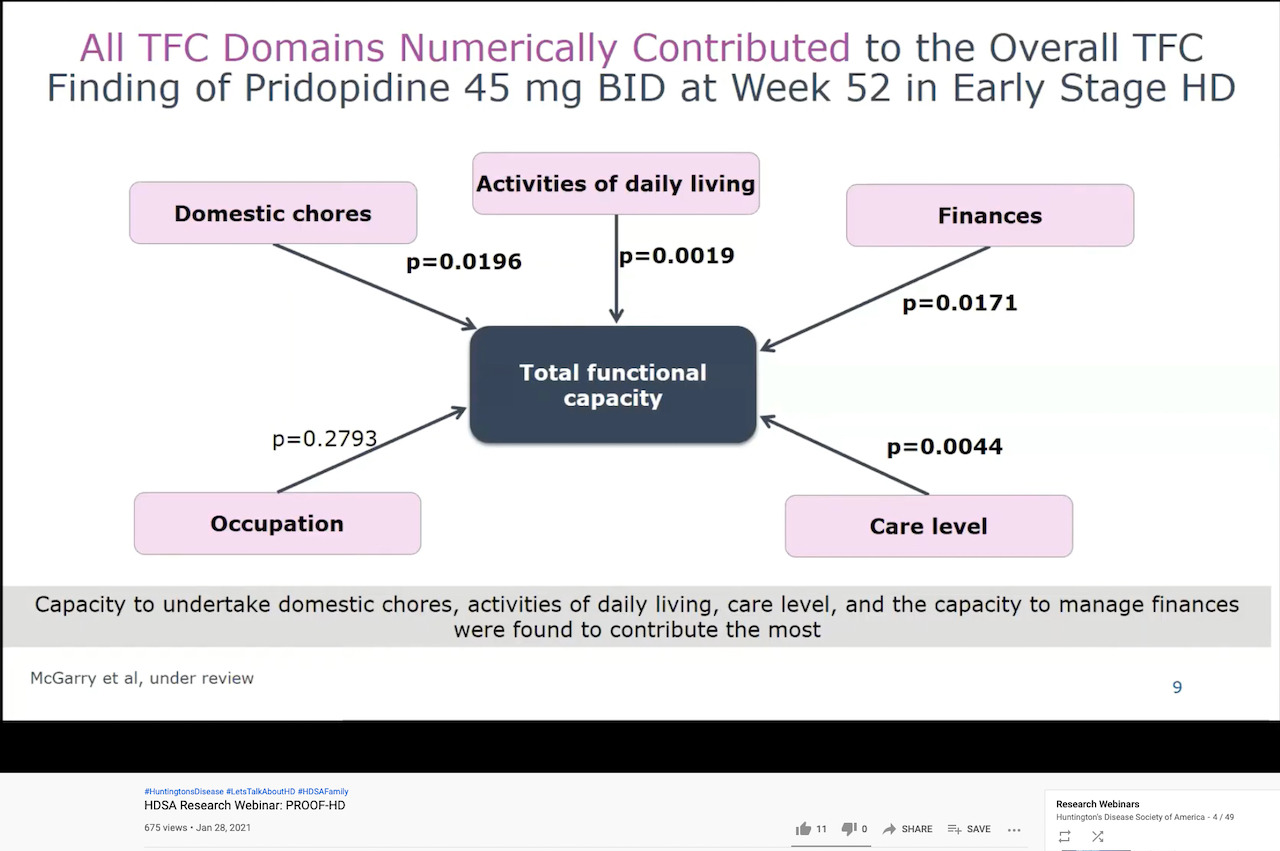
The clinical trial investigators believe that, if tested successfully, pridopidine would help early-stage HD-afflicted individuals maintain the ability to function normally in five key areas: occupation/employment, managing personal finances, performing household chores, performing activities of daily life (such as bathing and dressing), and the ability to live in a home environment. These five domains comprise the Shoulson-Fahn Total Functional Capacity Scale (TFC), developed almost 40 years ago, and used daily in HD clinics and research studies since then.


“The bigger the effect, the better,” Prilenia CEO Michael Hayden, M.D., Ph.D., said in an April 1 interview about pridopidine with Evaluate Vantage. “But any significant change in TFC would be regarded as meaningful. There’s never been a drug that has had any impact on TFC.”


Dr. Hayden is one of the world’s foremost HD scientists (click here to watch our 2011 interview at the Therapeutics Conference.) Prior to founding Prilenia in 2018, Dr. Hayden served as the president of global R&D and chief scientific officer at Teva Pharmaceutical Industries, Ltd. from 2012-2017, where he oversaw ongoing research on pridopidine. He is also a professor at the University of British Columbia and a senior scientist at the Centre for Molecular Medicine and Therapeutics, having mentored over 100 graduate students.


In a January 28 HDSA webinar, Sandra Kostyk, M.D., Ph.D., a professor Ohio State University and the co-principal investigator for PROOF-HD in the U.S., pointed out that individuals’ Total Functional Capacity ranges from zero (severely reduced function) to 13 (full function). In early and mid-early HD, people on average lose about one point on the scale a year, she explained.


In later stages of the disease, TFC may be less reflective of the rate of decline, Dr. Kostyk continued.


A slide from the January 2021 HDSA webinar on the PROOF-HD trial illustrating the Total Functional Capacity Scale and the effect of  pridopidine (screenshot by Gene Veritas, aka Kenneth P. Serbin)


Stopping the house from burning down


As an HD gene carrier who saw his mother devastated by the disease, I have most feared losing my ability to function normally.


In three previous clinical trials of pridopidine, carried out between 2008 and 2018, both the original developer of the drug and Teva failed to achieve the goal of reducing HD persons’ difficulties with both voluntary and involuntary movements. At that time, scientists thought that pridopidine affected levels of dopamine, an important chemical in the brain affecting movements in both HD and Parkinson’s disease.


However, additional analysis (done after the trials) showed that patients taking the study drug showed a slower decline in TFC than expected from previous studies. “In early patients with Huntington disease we have shown that the functional capacity may be maintained,” Dr. Hayden observed in a January HSG podcast. “There also appears to be an improvement and less deterioration in patients with early HD.”


Referring to research conclusions published in the Journal of Huntington’s Disease last December and co-authored by Dr. Hayden and five others, he asserted that the stabilized TFC results were the “first time that this has ever been shown in any analysis for any drug. This was exciting.” Significantly, the FDA accepts TFC as a way of measuring drug efficacy in HD clinical trials, he added.

Those observations now require confirmation in PROOF-HD, Dr. Hayden said.


Also, he continued, pridopidine “appears to have beneficial effects around protecting neurons,” whatever the injury might be. The goal, he said, is to prevent these brain cells from dying – one of the major symptoms of HD.


“You want to treat them before they've died,” he explained. “If you're trying to stop a fire taking care of a house, you don't want the house to be burned down. And that's why treating early becomes effective because there are still injured neurons, but not dead neurons.”


In the HDSA webinar, Dr. Kostyk referred to pridopidine as a possible “disease-modifying intervention – something that slows the course of the disease.” The data indicate that early-stage HD patients could obtain “long-term beneficial effects” from an approved pridopidine drug for five years or more, she said.


That could buy valuable time for older asymptomatic individuals like me and the HD community in general as we await other gene-modifying or huntingtin-lowering drugs.


Prilenia: seeking to soothe the impact of disease


Dr. Hayden explained the name and goals of Prilenia: “Prilenia, which comes from pri, as in pridopidine, and lenia, which comes from the Greek, to sooth or to cure. It's an aspiration that we can have some impact on soothing some aspects of this disease and potentially others as well.”


Privately held and based in Israel and the Netherlands, in 2020 Prilenia raised $68.5 million to support PROOF-HD and also a Phase 2/3 trial in sufferers of amytrophic lateral sclerosis (ALS).


The ALS trial is currently enrolling participants at 54 sites across the US.


Pridopidine taken as a pill


For HD sufferers, Pridopidine has another major advantage: whereas ASOs so far have been injected into the spine and Uniqure’s drug has been infused via brain surgery, pridopidine in the PROOF-HD trial is very conveniently dosed in a 45-milligram pill – a hard gelatin capsule – taken twice daily (click here for official details of the trial). 


Pridopidine has been extensively studied in several previous clinical trials over more than a decade, with more than 1,300 people taking the drug, most of them with Huntington’s, Dr. Kostyk said. As a result, researchers have high confidence in its safety, she added.


Other HD research projects and biopharmaceutical firms are seeking so-called small molecule drugs that can enter cells easily and be taken as a pill.


A key receptor in the brain


Dr. Hayden and his colleagues now believe that the benefits of pridopine are due to its ability to activate the sigma-1 receptor (S1R). “It’s highly selective and fairly potent,” Dr. Hayden explained about the action of pridopidine on S1R in response to a question that I posed about the drug’s basic mechanism during his presentation at the 27th Annual HSG Meeting (held online) in October 2020.


Dr. Hayden observed further that ample data demonstrates that activation of S1R leads to protection of neurons. Deficiencies in S1Rs leads to disease. He cited the case of patients lacking the S1R gene, resulting in juvenile onset ALS.


“The activation of the sigma-1 receptor has multiple mechanisms of action that should lead to neuroprotection in HD and help stabilize cell function,” stated Dr. Kostyk, noting that S1Rs are plentiful in the striatum – the inner core of the brain where HD is especially devastating – and in the cortex, the large outer area of the brain in charge of thought, language, and consciousness.


“One could think of the role of S1R as being like that of a high school guidance counselor,” Martha Nance, M.D., director of the HDSA Center of Excellence at Hennepin HealthCare in Minneapolis, MN, wrote me in an e-mail. “When the receptor is turned on, materials, molecules, and traffic within the cell flow as it should, and the cell stays healthy, much as the counselor helps students in trouble to be safe, find resources to keep healthy, and stay in school. Supporting S1R early in the course of HD might help more brain cells to remain healthy and function well for longer.”


A relatively easy trial seeking practical results


Initiated last October, PROOF-HD investigators hope to enroll a total of 480 clinical trial volunteers by year’s end at 30 sites in the U.S. and Canada and 30 more in Europe. Over 15 months, half will get pridopidine, and half will get a placebo. Patients must have a diagnosis of HD, be 25 or older (no upper age limit), and have a TFC score of at least 7, in line with the project’s goal of testing the drug in the earlier stages of the disease.


Participants will undergo measurements of their TFC, cognition, quality of life, and motor symptoms (difficulties with voluntary and involuntary movements). They will also get blood and safety tests. All participants can take part in the potential extension of the trial, with everybody receiving the drug. Dr. Kostyk described PROOF-HD as an “easy” trial, with no brain scans or spinal taps (used in the Roche trial, for instance). The study design has been adapted to accommodate the challenges posed by COVID-19.


PROOF-HD emphasizes practical results. “What’s most important for us it to get an agent out that’s working,” Dr. Kostyk said, and “not necessarily” the kinds of measurements used in other trials in order to demonstrate how the drug works.


A separate trial might be designed later for later-stage HD-afflicted individuals, Dr. Hayden said.


For more information on PROOF-HD, click here or call 800-487-7671.


A potential major step forward


“Our overall goal is to get this agent FDA-approved as soon as possible so that we can start using it in individuals affected by Huntington’s disease,” said Dr. Kostyk. The more quickly patients enroll in the study, the sooner it will be completed, hopefully by late 2022 or early 2023.  Because this is a Phase 3 trial, if it is successful, the next step will be an application to the FDA for approval as a drug that doctors can prescribe.


Andrew Feigin, M.D., the HSG chair and principal investigator in the U.S. for PROOF-HD, said in the HDSA webinar that Prilenia has also shown interest in a possible future trial involving pre-symptomatic individuals like me.


Past skepticism about pridopidine focused on the lack of hard evidence that the drug could really slow HD progression (click here to read more). However, that debate came before the discovery of a clearer picture of pridopidine as a potential protector of neurons.


As will all clinical trials, the Huntington's community will be rooting for success in PROOF-HD. Although pridopidine may not cure HD, enabling people to have a few more years of normal daily function would be a major step in the quest to manage this complex disease.

Thursday, April 01, 2021

Overcoming a ‘heartbreaking’ moment for the Huntington’s disease cause (Coping with disappointing clinical trial results – Part I)


In the wake of two deeply disappointing clinical trial updates in just one week, the Huntington’s disease community is collectively grieving the loss of drugs that might have provided the first effective treatments for this incurable disorder.


As reported here, on March 22 Roche announced that it was halting dosing in the firm’s historic Phase 3 clinical trial of its gene silencing drug tominersen because of unfavorable efficacy data, as seen by an independent review committee.


On March 29, Wave Life Sciences revealed that a similar effort – gene silencing drug candidates in two small, earlier-stage trials – had failed to lower the level of the mutant huntingtin protein in trial participants.


Whereas Roche partner Ionis Pharmaceuticals’ success in using tominersen to reduce the protein represented a milestone and moment of euphoria in the HD community, the stall in the effort to transform this type of drug into an actual treatment in both the Roche and Wave programs has created one of the most frustrating moments of the last several decades.


With its usual resilience, the community and its leaders have responded quickly, organizing outreach events and furnishing resources to put the Roche results in perspective and provide ways to cope with the shock and disappointment.


Grieving because of lost hope


“It has been heartbreaking,” Katie Jackson, the president and CEO of Help4HD International, said of the Roche stoppage, which, she added, has “rocked the HD community.” Jackson’s husband Michael Hinshaw died of HD in 2019 at age 40, and she has three children at risk for being carriers of the HD mutation.


Jackson spoke during a March 24 panel discussion on Help4HD TV titled “Grief – When a clinical trial doesn’t go as hoped it is a loss.”


“I’m definitely grieving,” said Help4HD activist and podcast host Lauren Holder, 35, like me a carrier of the HD gene. The mother of two young at-risk children, Holder lost her father Stephen M. Rose, Jr., 62, to HD in January.


Holder said that she felt “extremely sad and disappointed and terrified” by the Roche news. The possibility of a treatment was “huge for us to have – to get so close to where it did and have all of the information so good on it” over the past several years, but then suddenly that hope “was taken away.”


HD gene carriers “don’t have time to just go back to the beginning” of another trial, “because that could mean symptoms” might have already started, she lamented.


“Everyone is human,” observed Help4HD vice president and CFO Katrina Hamel. “We all are feeling something because of this news.”


“I felt like someone punched me in the stomach,” said MaryAnn Emerick, an HD family member, in a March 25 webinar on the Roche announcement and grief sponsored by the Huntington’s Disease Society of America (HDSA), where she works as the manager of youth and community services. “I started hysterical crying.”


Emerick had built “more hope” in the potential of the Roche trial than she had realized, she added.


About 500 people took part in the webinar, including clinicians, scientists, social workers, and HD family members – a sign of both the impact of the Roche announcement and of community solidarity.


A slide from the HDSA webinar that focuses on the concept of ambiguous grief and compares the textbook-version stages of grief with how grief can actually be experienced by an individual. Presenting the slide is Jennifer Simpson, LCSW, HDSA assistant director of youth and community services (screenshot by Gene Veritas, aka Kenneth P. Serbin).


Tracking the project since 2008


I, too, have grieved the outcome of the Roche trial. I began tracking the program in April 2008, less than a year after tominersen developer Ionis (formerly Isis Pharmaceuticals) had initiated the search for a gene silencing compound. I reported on every key turn of the project, with many visits to the Ionis facility in Carlsbad, CA, about 30 miles from my house.


The prospect of taking an Ionis-Roche drug developed in my own community has long felt like a protective blanket shielding me from Huntington’s. Now, that blanket has been ripped away.


Like other HD family members, the Roche announcement has led me to relive the difficult moments in my family’s HD history, including my mother’s inexorable decline and then death in 2006. Since the day of the Roche news, I have aggravated the unhealthy, usually unconscious habit of clenching my teeth.


I do add my deep thanks to the chorus of gratitude for the participants in the Roche trial and their families and – once the data is analyzed in the coming months – for their contributions to a greater understanding of HD science. In Emerick’s words, “They are the foundation for the future.”


The team effort was not a ‘failure’


Other perspectives on clinical trials can perhaps help the community overcome the grief and disappointment.


In 2005, when I was preparing articles for the HDSA-San Diego chapter newsletter on a research project in San Diego sponsored by the Hereditary Disease Foundation, a scientist educated me on a key point: if a scientific experiment does not produce the desired result, that does not mean it failed. On the contrary, such an experiment is valuable in its own right because it brings forth new information and helps point the way for future experiments.


Clinical trials are scientific experiments, a fact underscored by the scientific and medical personnel at the HDSA webinar. Interestingly, nobody said “failure” at that event nor at the one by Help4HD.


Indeed, the Roche and Wave trials should not be considered failures – especially because of the very large team efforts involving not just the scientists and the participant families, but many kinds of support staff from inside and outside those firms.


Riding – and learning from – the clinical trial roller coaster


Emerick described another common feeling that can ultimately help the community move forward in the search for effective treatments: “I’m going on this roller coaster ride of emotion and feeling super-motivated and resilient and then all of a sudden just wanting to cry and wanting to know why – give us answers.”


Leading HD scientist Robert Pacifici, Ph.D., anticipated this scenario in February 2020. At that point, Roche was approaching the midpoint of its trial and, significantly, other clinical trials were also ramping up – as others do today.


“Getting to this stage – which we’ve all so been hoping for – is still a bit of a roller coaster ride,” Dr. Pacifici told me in an interview at the 15th Annual HD Therapeutics Conference, sponsored by CHDI Foundation, Inc., the nonprofit virtual biotech dedicated solely to finding HD therapies and headed by Pacifici. “You have to be able stay in our seats and weather the ups and downs. I think we’re well-poised for some great news, as some of these trials hopefully report out. Even a whisper of efficacy would be just amazing.”


However, there will also be “disappointments, where, despite our best attempts, some of the things that showed so much promise didn’t end up meeting their endpoints,” he cautioned. “But it’s going to be a learning roller coaster. So hang in there. Don’t lose hope.”


The HD-affected (and their caregivers) should keep informed about the trials by consulting their physicians, attending meetings of patient organizations, and keeping abreast of developments in such sources as HDBuzz and this blog, Dr. Pacifici advised.


Become knowledgeable, he urged, “so that you are not disproportionately spooked or elated when these bits of information come out.”


Many of us are scared. However, in the words of my “HD sister” Holder, now is the time to reach out to one another, and remember that the scientists have continued their quest.


Nobody has to ride that roller coaster alone.


(The second part of this series will examine other key programs in the Huntington’s disease drug pipeline.)


(Disclosure: I hold a symbolic amount of Ionis shares.)

Tuesday, March 23, 2021

Tough news for Huntington’s, other neurological disease patients: Roche halts dosing in historic clinical trial on signs of inefficacy


Calling it “tough news to share” and “even more difficult to receive,” pharmaceutical giant Roche announced on March 22 that it has halted dosing in the firm’s historic Phase 3 Huntington's disease clinical trial of its gene silencing drug tominersen, GENERATION HD1, because of unfavorable efficacy data, as seen by an independent review committee.


“The committee recently met for a pre-planned review of the latest safety and efficacy data from GENERATION HD1 and made a recommendation about the investigational therapy’s potential benefit/risk profile,” wrote David West, Roche’s senior director, for Global Patient Partnership, in a letter addressed to the international HD community. “Based on the committee’s recommendation, we will permanently stop dosing with tominersen and placebo in the GENERATION HD1 study.”


GENERATION HD1 began in early 2019, paused for several months to recalibrate dosing, and became fully enrolled in April 2020. Volunteers were to receive the drug over 25 months, and Roche had expected to finish the trial and report results in 2022. Tominersen developer Ionis Pharmaceuticals, Inc., Roche’s partner, had completed a Phase 1/2a trial of the drug (testing for mainly safety and tolerability) in 2017. That trial was so successful that Roche skipped a full-blown Phase 2 and went directly to Phase 3, GENERATION HD1.


West noted that the review committee’s recommendations resulted not from “any new emergent safety concern, but on a broad assessment of the benefit/risk” for those receiving the drug as compared to those getting the placebo.


This means that the drug demonstrated an “unfavorable efficacy trend,” an official of U.S. Roche’s subsidiary Genentech wrote me in an e-mail. If successful, the trial would have demonstrated that tominersen could slow, halt, or even reverse HD symptoms.


“This is brutal and I am absolutely devastated for our patients and families,” Jody Corey-Bloom, M.D., Ph.D., the director of the Huntington’s Disease Society of America (HDSA) Center of Excellence at the University of California, San Diego, wrote me.


Trial participants in Dr. Corey-Bloom’s clinic were among those taking part in GENERATION HD1. “I am glad that Roche will continue following patients for safety and clinical outcomes,” she added.


Veteran HD physician LaVonne Goodman expressed a similar sentiment. “Hope has been so very high for this drug; our community will feel not just disappointment, but real grief,” Dr. Goodman wrote me. “However, we’re accustomed to grief, and are resilient.  I think part of the community message should be that supporting each other is vitally important now.”


HDSA Chief Scientific Officer George Yohrling, Ph.D., called the news “devastating.” “HD families around the world had their hopes held high that this experimental drug could one day soon become an effective therapy for HD,” Dr. Yohrling stated. “While this is clearly not the news we wanted to hear, I am confident that in the coming weeks the Generation HD1 data will help the scientific community understand why tominersen did not meet its desired outcome.”


Robert Pacifici, Ph.D., the chief scientific officer for CHDI Foundation, Inc., the nonprofit virtual biotech dedicated to discovering HD therapies and a collaborator of Roche and Ionis, also commented on the development.


“Roche’s decision to discontinue dosing in most of its Huntington’s disease studies based on a recommendation from the unblinded [with access to data] Independent Data Monitoring Committee that periodically reviews study data is a very disappointing outcome,” Dr. Pacifici wrote. “However, knowing our colleagues at Roche we are confident that this decision has been made in good faith with the best interests of study participants uppermost in mind.”


No new safety concern caused the halt


The stop to the Roche trial underscores the fact that an effective treatment still eludes not only HD scientists, but also researchers of Alzheimer’s disease, Parkinson’s disease, amyotrophic lateral sclerosis (ALS), and other neurological conditions.


The reviewers who recommended the halt to GENERATION HD1 work separately from Roche. The committee has not yet shared its specific reasoning or data with Roche.


“It is important to note that the recommendation is not based on any new emergent safety concern,” West’s letter stated.


Roche has notified the clinical trial sites in the 18 participating countries of the halt. The sites are contacting the 791 symptomatic volunteers who had enrolled in the program.


The participants were receiving intrathecal (spinal) injections of tominersen or a placebo. Participants in GEN-EXTEND (an extension study for participants coming from any Roche HD study) will also no longer receive doses.


“It is our intention to provide as much information as we can to the community, which at this time is limited until we have accessed and analyzed full data,” West’s letter explained.


West acknowledged “the tremendous contribution of the families who are participating in these studies, as well as the broader Huntington’s community for their collaboration.”


Next steps depend on the data


Although Roche has stopped giving tominersen to the volunteers, the trial has not yet ended.


“The studies will remain ongoing (without further dosing in GENERATION HD1 and GEN-EXTEND) and it is intended that study participants will be followed by their physicians for safety and clinical outcomes,” West stated. Roche has not provided a timeline for the remainder of the work to be completed.


A Q&A appended to West’s letter states that “Roche remains committed to the HD space and our studies are continuing,” and data from GENERATION HD1 “will advance our understanding of tominersen and inform research for other disease modifying treatments.” It adds: “In addition to tominersen, the Roche family of companies is investigating gene therapy approaches to treating Huntington’s disease.”


The conclusions about GENERATION HD1 – and possible next steps by Roche and Ionis­­ – will depend on the analysis of the independent reviewers’ explanations and all of the massive data from the Phase 3 trial.


As Dr. Pacifici noted, only when data from the independent review committee has been “shared with the wider HD community” will it become possible to “form a scientific opinion” about the halting of the trial.


A perplexing result


Ionis held a public conference call on March 22 to answer questions about the Roche announcement.


“This is the largest Huntington’s trial ever conducted,” stated Ionis CEO Brett Monia, Ph.D. “It was conducted on a wealth of information.”


Monia stated that, “while we are saddened by today’s outcome, we are committed to the HD community and focused on delivering treatments for this and other devastating neurological diseases.”


Monia added, “Although this is a disappointing setback for Ionis and the HD community, we are confident in the potential of our technology platform to address many neurological diseases.”


Various questioners on the call asked Dr. Monia and Ionis scientists to speculate about the reasons for the halt and future potential approaches using the company’s technology (antisense oligonucleotides, or ASOs), but the Ionis officials emphasized that answers are premature without access to the data.


“We are still strong believers in the ASO approach,” Dr. Monia asserted.


However, Ionis Chief Scientific Officer Frank Bennett, Ph.D., the long-time coordinator of the firm’s HD program, added that the news of the potential ineffectiveness of using an ASO to reduce the amount of huntingtin protein in patients was “perplexing and disappointing to us,” leaving many unanswered questions.


Eric Swayze, Ph.D., Ionis’s executive vice president for research and one of the developers of the ASO, reminded the participants on the call of a fundamental reality of HD: “It’s a complex disease.”


Dr. Monia added that “one silver lining” in the halt to GENERATION HD1 was that it did not, as noted above, result from a concern about safety.


Diversification necessary


Although the pioneering Roche-Ionis program had electrified the HD world with the hope of the first effective treatment, the HD research community has also deliberately diversified the approaches to treating HD.


Thus, companies like Triplet Therapeutics, Inc. have leveraged publicly available knowledge gained from the Roche/Ionis program and others to plan their own, unique drug development strategies.


Triplet aims to start a clinical trial in the second half of this year for a potential drug targeted at stopping the mutant huntingtin gene’s tendency for continued expansion with age. That expansion compromises brain cells and triggers disease. In this respect, HD is known as a repeat expansion disorder (RED), with the triplets of the genetic code CAG recurring too many times and thus causing disease.


As a Triplet scientist explained last year, the Roche/Ionis approach is like “putting a brake” on the disease, whereas Triplet’s ASO will target the expansion of the gene and therefore seek to “remove the foot on the gas.” (Click here to read more).


Using the same mechanism, in addition to HD, Triplet hopes to develop transformative treatments for many of the more than 50 other REDs. For REDs of the central nervous system, it would use the same drug as for Huntington’s.


Although unavailable for comment on the Roche announcement, Triplet executives offered encouragement in an e-mail to me: “Triplet’s thoughts are with the HD community, and our clinical development plans in HD and other repeat expansion disorders remain on track and unchanged.”


As one scientist wrote me (and as I also felt), the Roche announcement was like a punch to the gut. However, I am also heartened by the potential of other clinical trials like Triplet’s. (I will further explore the implications of the Roche trial halt in upcoming articles.)


To echo Dr. Goodman’s words, our community and its scientists are indeed resilient.


(For more on the Roche announcement, see the article in HDBuzz).


(Disclosure: I hold a symbolic amount of Ionis shares.)