(This entry is dedicated to the physicians and scientists seeking treatments and a cure for HD.)
Summary
How could God allow people to suffer from a cruel disease like Huntington’s, which slowly kills by destroying the brain?
As a person who is gene-positive for HD, I have pondered this question for years. This article is my manifesto of faith and HD.
In college I learned about process theology, which sustains that God is evolving along with humanity. Later I studied liberation theology, a divine call to build the Kingdom of God in the here and now. It helped inspire me to become an activist for the Huntington’s Disease Society of America.
My religion, Catholicism, has arrived at a synthesis of faith and science and accepts the theory of evolution.
HD perhaps resulted from evolution gone wild. But it may serve a purpose as of yet undiscovered. HD people have a huge cross to carry, but they should see their lives as part of the evolutionary surge towards a better life for all.
To understand this predicament, I studied the life and writings of Teilhard de Chardin, a Jesuit priest, World War I stretcher-bearer, and world-renowned paleontologist. More than anybody else, Teilhard led Catholicism to embrace evolution. He is the “Catholic Darwin.”
Teilhard’s master work was The Phenomenon of Man, a modern, scientific creation narrative centered on evolution. Teilhard affirmed that the central thread in all of evolution is the rise of consciousness. The earth is now encompassed by a “thinking layer” of conscious beings.
Research is the soul of evolution. It enables us to strive for the perfection of our species, including the drive to eliminate Huntington’s and other devastating diseases.
Part I: God and evolution
The big question
If God created and loves us, why does He (or She) allow us to become ill?
And how could God allow people to suffer from Huntington’s disease, which slowly and cruelly, over 15 to 20 years, reduces people to a mere shadow of themselves by destroying their brains and robbing them of their ability to speak, walk, swallow, and think?
Having tested positive for this 100-percent genetic condition in 1999 and watched the disease ravage my mother’s brain until her death in 2006, I have pondered these questions for many years.
Around Easter of 2009, for instance, I wondered why God – who in the Bible had saved the Israelites from the oppressive Egyptians, cured the sick, and raised people from the dead – did nothing for children with juvenile Huntington’s. We in Huntington’s families often feel the same kind of utter abandonment that Jesus Christ, the Son of God, felt when forsaken by his Father during His crucifixion by soldiers of the Roman Empire on Good Friday.
 An HD patient at Edgemoor Hospital in Santee, CA (photo by Mike Nowak)
Christ rose from the dead, but HD people, helpless, remain confined to their wheelchairs and cannot sing praises to God – although they perhaps express themselves in their own special, interior manner, just as many people with other kinds of less severe disabilities and illnesses find ways to cope and remain creative.
God and evil
In recent months I have reflected profoundly on these questions once again. They became especially poignant late last year, after the death of my 81-year-old father, a Huntington’s disease warrior who cared for my mother for 15 years.
I completed the first draft of this essay on December 31, 2009 – my 50th birthday. “Dad, you’re half way to a hundred,” declared my “miracle daughter,” who tested negative in the womb for HD ten years ago this past January.
Lashing out at God is the easy response to these bewildering ironies. But I believe it is more productive to tackle the far more challenging task of understanding the meaning of Huntington’s disease and how it fits into the story of humanity. As both a person of faith and student of the science of Huntington’s disease, I have strived mightily to make sense of my predicament.
In my youth I confronted the contradiction between a merciful God and the existence of evil by learning about the doctrine of free will. Evil exists because God gives each individual the freedom to determine his or her own life, and that includes the ability to choose between good and evil.
Later, in college, I learned of the unspeakable atrocities of the Holocaust, war, and countless other examples of inhumane behavior. I discovered an explanation to this paradox in process theology. In its simplest form, and as I interpreted it, this theological school of thought sustains that God is evolving along with humanity and therefore does not exercise complete control over it. Humanity seeks to improve itself, but God is advancing too.
The divine call to activism
More recently I delved into a study of the liberation theology movement. Liberation theology, too, interprets humanity in the light of an evolutionary process in which believers do not wait for salvation in the afterlife but join together to begin constructing the Kingdom of God on earth as a prelude to eternal existence. As God delivered the Israelites to the Promised Land and as Christ beseeched his listeners to treat others as they treat themselves, liberation theology advocates the fight for social justice.
In this outlook religion and politics go hand in hand. God wants us to become activists in order to build a more fraternal society.
 The cover of Gustavo Gutierrez's A Theology of Liberation, one of the first works of its kind.
As a child I prayed fervently for straight As on my report card. But as an adult I no longer believed in a God-magician who manipulates people’s lives by having them win the lottery or striking them with diseases. I believed in the God of human community – the same community that people experience during a religious service or in taking Holy Communion or in visiting the sick in the hospital. I recently shared this outlook with my daughter as we watched the film Mother Teresa of Calcutta, a powerful portrayal of how we can see God in the faces of our fellow humans.
I was naturally devastated when I learned the day after Christmas 1995 that my mother had Huntington’s and that I had a 50-50 chance of inheriting it (click here to read more). My wife and I are Catholic, and we sought solace by attending Mass. But I understood the science of HD, and I did not believe that God would extirpate the defective genetic material from my mother’s body and cure her of the disease.
This was not lack of faith – as surely some believers would claim – but actually an affirmation of faith as I understood it. I channeled most of my energies into learning about Huntington’s at the local HD support group, joining the board of the local chapter of the Huntington’s Disease Society of America (HDSA), and participating in research experiments. For me, these efforts are deeply religious because they answer God’s call for collective action for social justice and the betterment of humanity. They contribute to the evolutionary process that God and humans share.
A manifesto of faith and HD
But what meaning could Huntington’s disease itself have for my life and the lives of the tens of thousands of people afflicted with it or at risk? Aren’t my HDSA activism and the belief system I have constructed for myself just another form of denial of the crippling consequences resulting from the impending shriveling of my brain? Can banding together to fight for a better life for our community really make a difference?
My Catholic upbringing originally led me to investigate the problem of evil and the divine call for social justice. I am now a couple of years past the age when HD struck my mother. As I have attempted to learn the science of HD in order to comprehend what is occurring in my very own brain cells, I have also sought to explore the part that God and faith play in this predicament and its solution.
I have found answers by examining more deeply both the science and my religious tradition. This examination led me to write this article, a manifesto of my faith and of the significance of Huntington’s disease in history and for our times – and for the suffered lives of its victims.
The nexus of faith and science
Catholicism stands at the nexus of faith and science and, as a system of thought, has provided humanity with a clear view of the holistic nature of our existence.
This statement collides with some people’s opinions about religion in general and Catholicism in particular. These people see religious belief as a sign of ignorance, and they especially view Catholicism as backward because of its apparent animosity towards science. Many assume, for instance, that Catholicism preaches a fundamentalist interpretation of the Bible – in other words, a literal belief in Adam and Eve and the creation of the world in six days.
Such views are appallingly inaccurate. Our university system, one of the great marks of Western civilization, originated in the Catholic Church. Teaching orders such as the Society of Jesus (the Jesuits) have always placed a great emphasis on scientific knowledge and have themselves produced some of the world’s great scientists. In the nineteenth century the Augustinian monk Gregor Mendel discovered heredity by studying his famous pea plants. Mendel is now known as the father of modern genetics.
 Gregor Mendel
Acceptance of evolution
Catholic biblical scholars long ago abandoned the idea of literal interpretations. Significantly, over the past half century the leadership of the Catholic Church has come to accept Charles Darwin’s theory of the evolution of species, although it maintains, of course, that it was God who initiated the universe and set evolution in motion.
Notably, in their many reflections on evolution, the Catholic popes have gone to great length to reaffirm the compatibility of science and faith. In 2004, before he became pope, Cardinal Joseph Ratzinger stated that evolution is part of God’s plan for creation. In 2007, as Pope Benedict XVI, he labeled as “absurd” the antithesis between “creationism” and “evolution.”
“On the one hand, there are so many scientific proofs in favor of evolution, which appears to be a reality we can see and which enriches our knowledge of life and being as such,” Benedict XVI stated. “But on the other, the doctrine of evolution does not answer every query, especially the great philosophical question: Where does everything come from? And how did everything start which ultimately led to man?”
Today official Catholicism embraces the idea of “theistic evolution,” as do many Jews, Hindus, and Muslims. As summarized by Dr. Francis Collins – the head of the Genome Project and a convert from atheism to Christianity – theistic evolution accepts the premises of the Big Bang theory, evolution, and natural selection. It also affirms that “humans are … unique in ways that defy evolutionary explanation and point to our spiritual nature. This includes the existence of the Moral Law (the knowledge of right and wrong) and the search for God that characterizes all human cultures throughout history.”
God’s tough plan
Because it requires the acceptance of the hard realities of life without an interventionist God, the belief in theistic evolution requires intellectual, emotional, and spiritual maturity on the part of religious organizations and the individual.
As Dr. Collins puts it, theistic evolution forces us to consider that perhaps God’s plan “is not the same as our plan. This is a hard concept, especially if we have been too regularly spoon-fed a version of God’s benevolence that implies nothing more on His part than a desire for us to be perpetually happy.”
Quoting the great Christian writer C. S. Lewis, author of The Chronicles of Narnia and Mere Christianity, Collins affirms that “we want, in fact, not so much a father in Heaven as a grandfather in Heaven – a senile benevolence who, as they say, ‘likes to see young people enjoying themselves,’ and whose plan for the universe was simply that it might be truly said at the end of each day, ‘a good time was had by all.’”
 C. S. Lewis
In the New Testament Jesus stated: “I have come that you might have life, and have it abundantly.” He also told his followers: “Take up your cross and follow me.”
We in the Huntington’s community have especially difficult crosses to bear. But no matter how heavy they might be, we must pick them up and keep moving ahead as much as possible. There is no miraculous end to the disease – only the hard work of progressing towards better scientific understanding of the disease and eventual treatments and a cure, all as part of the process of evolution towards a better life for all.
We in the HD community stand on the cutting edge of evolution, both biological and social.
In 1994 scientists studying the evolution of HD used computer simulations to predict that the incidence of the disease will increase. In 2006 Dr. William Brusilow published a study suggesting that HD was an example of evolution gone wild.
Commenting on Brusilow’s work, Dr. Marsha Miller noted that the Huntington’s protein (huntingtin) “is an old one – even yeast have it – yet, humans are the only animal to get Huntington’s disease. Primates don’t develop the disease (unless it’s genetically engineered)…. Why us? Does polyglutamine expansion [the cause of HD] give our species any advantage? It is known that people with the HD gene are less likely to get certain forms of cancer, most likely because of elevated levels of P53, a protein which suppresses cancer. But is there anything else?” Brusilow speculated that the HD mutation was perhaps part of an attempt to create a safe reservoir of necessary substances in the brain during times of famine.
 William Brusilow
We in the Huntington’s community have especially difficult crosses to bear. But no matter how heavy they might be, we must pick them up and keep moving ahead as much as possible. There is no miraculous end to the disease – only the hard work of progressing towards better scientific understanding of the disease and eventual treatments and a cure, all as part of the process of evolution towards a better life for all.
We in the HD community stand on the cutting edge of evolution, both biological and social.
In 1994 scientists studying the evolution of HD used computer simulations to predict that the incidence of the disease will increase. In 2006 Dr. William Brusilow published a study suggesting that HD was an example of evolution gone wild.
Commenting on Brusilow’s work, Dr. Marsha Miller noted that the Huntington’s protein (huntingtin) “is an old one – even yeast have it – yet, humans are the only animal to get Huntington’s disease. Primates don’t develop the disease (unless it’s genetically engineered)…. Why us? Does polyglutamine expansion [the cause of HD] give our species any advantage? It is known that people with the HD gene are less likely to get certain forms of cancer, most likely because of elevated levels of P53, a protein which suppresses cancer. But is there anything else?” Brusilow speculated that the HD mutation was perhaps part of an attempt to create a safe reservoir of necessary substances in the brain during times of famine.
 William Brusilow
The HD community fights on the barricades of many of today’s key developments and controversies: the Genome Project and the biotechnological boom, the quest to understand the brain and human consciousness, stem-cell research, new kinds of experimentation on humans, antisense technology and oligonucleotides, genetic testing and genetic discrimination, healthcare reform, and abortion.
Part II: The ‘Catholic Darwin’
Priest, war veteran, and paleontologist
The individual most responsible for synthesizing Catholicism and evolution was Pierre Teilhard de Chardin, a French Jesuit and paleontologist born in 1881. Some have called Teilhard the “Catholic Darwin.”
I identified with Teilhard on several levels. He was deeply spiritual, but also a first-rate intellectual and scientist.
I also admired Teilhard as a man of action involved in the major events and issues of his era.
Teilhard volunteered to serve as a stretcher-bearer in the front lines during World War I. A number of Jesuit colleagues and two of his brothers died in the conflict. At one point he carried a dead man’s body on his back. He was cited for his many acts of bravery.
 Teilhard, the war veteran
The war exposed Teilhard to the worst possible examples of personal pain and man’s inhumanity to man. Yet he optimistically viewed the war as a necessary stage in human development. “The world is still being created,” he wrote. “The cross, it follows, does not represent an expiation for sin so much as the arduous and painful travail of evolution in its present human, social phase.”
Teilhard’s witness of death and destruction gave him a deeper appreciation of physical matter.
In his “Hymn to Matter,” he wrote: “Blessed be you, harsh matter, barren soil, stubborn rock: . . . Blessed be you, mighty matter, irresistible march of evolution, reality ever newborn: . . . the sap of our souls, the hand of God, the flesh of Christ: it is you, matter, that I bless. . . . I acclaim you as the universal power which brings together and unites . . . I acclaim you as the divine milieu, charged with creative power, as the ocean stirred by the Spirit, as the clay molded and infused with life by the incarnate Word.”
 Teilhard, geologist and paleontologist
Part II: The ‘Catholic Darwin’
Priest, war veteran, and paleontologist
The individual most responsible for synthesizing Catholicism and evolution was Pierre Teilhard de Chardin, a French Jesuit and paleontologist born in 1881. Some have called Teilhard the “Catholic Darwin.”
I identified with Teilhard on several levels. He was deeply spiritual, but also a first-rate intellectual and scientist.
I also admired Teilhard as a man of action involved in the major events and issues of his era.
Teilhard volunteered to serve as a stretcher-bearer in the front lines during World War I. A number of Jesuit colleagues and two of his brothers died in the conflict. At one point he carried a dead man’s body on his back. He was cited for his many acts of bravery.
 Teilhard, the war veteran
 The war exposed Teilhard to the worst possible examples of personal pain and man’s inhumanity to man. Yet he optimistically viewed the war as a necessary stage in human development. “The world is still being created,” he wrote. “The cross, it follows, does not represent an expiation for sin so much as the arduous and painful travail of evolution in its present human, social phase.”
Teilhard’s witness of death and destruction gave him a deeper appreciation of physical matter.
In his “Hymn to Matter,” he wrote: “Blessed be you, harsh matter, barren soil, stubborn rock: . . . Blessed be you, mighty matter, irresistible march of evolution, reality ever newborn: . . . the sap of our souls, the hand of God, the flesh of Christ: it is you, matter, that I bless. . . . I acclaim you as the universal power which brings together and unites . . . I acclaim you as the divine milieu, charged with creative power, as the ocean stirred by the Spirit, as the clay molded and infused with life by the incarnate Word.”
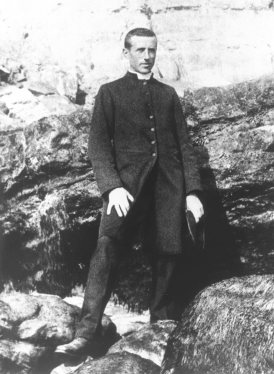 Teilhard, geologist and paleontologist
 After the war Teilhard resumed his graduate studies and obtained a doctorate in paleontology. Having taken an interest in rocks as a child, he was also well-versed in geology. Teilhard declared himself an adherent of the theory of evolution.
Teilhard’s positive and intriguing outlook on pain, suffering, and evolution inspired me to search for the broader social and scientific implications of my own plight, and his highly practical spirituality of matter helped me to feel the presence of the divine in everything, including my HDSA activism and my personal fight to delay the onset of symptoms.
Faith and reason
But the Catholic hierarchy of the 1920s was not ready to discuss Teilhard’s seemingly heretical mixture of Christian spirituality and evolution. As a result, Teilhard’s Jesuit superiors exiled him to China, where he would spend much of the rest of his life.
In 1929 Teilhard participated in the discovery and interpretation of the fossils of Sinanthropus, also known as “Peking man,” a forerunner of modern humans that had lived in Asia about 400,000 years ago. Teilhard published approximately 170 scientific articles and papers based on his paleontological and geological observations. He became a star in the world of science.
During the 1920s, 1930s, and 1940s Teilhard also wrote profound philosophical reflections combining concepts of faith and science and reaffirming the validity of Christian belief in the modern world. Like St. Ignatius, the founder of the Jesuits, and so many other colleagues, Teilhard stood for the quest for knowledge. As the quintessential man of both God and of science, he believed that faith and reason complemented each other.
In Teilhard I found a man who strived to understand humanity in all of its dimensions. This helped me to view my situation of risk in a holistic sense and as part of humanity’s struggle for progress. Faith – and not just science and medicine – became a valuable weapon in my arsenal for survival.
Teilhard’s impact
The Church leadership in Rome, however, prohibited Teilhard from publishing anything that was not strictly scientific, and it kept him away from the philosophical and theological centers of Europe.
Teilhard was truly a man ahead of his time. But he died in relative obscurity in New York City in 1955. Instead of being taken to France, his body was buried at a Jesuit training house in Poughkeepsie, New York.
After his death, however, the books that Teilhard could not publish during his lifetime quickly made their way into print. His thought became enormously influential in the Catholic Church and in scientific and philosophical circles.
Quoting ecologist Thomas Berry, theology professor Ronald Modras subsequently described Teilhard’s The Phenomenon of Man as the closest thing to a “Summa of the modern mode of consciousness.” Likewise, Modras points out, Mortimer Adler, the founder of the Great Books movement, listed the book among the great works of the twentieth century.
In 1962 the Vatican tried to dampen the impact of Teilhard’s ideas by officially declaring that they were offensive to Catholic doctrine.
Nevertheless, Teilhard’s ideas deeply influenced the thinking of the Church fathers from around the globe when they gathered in Rome between 1962 and 1965 for a series of monumental meetings known as the Second Vatican Council, the greatest reform in the 2,000-year history of the Catholic Church. During the Council the Church leaders began reconsidered their suspicions of modern science and reaffirmed the nexus of faith and reason.
Thanks to Teilhard, Catholicism adopted theistic evolution as opposed to the fundamentalist readings of creation found in many Protestant denominations. As Professor Modras stated, “Catholic schools today, even at the primary level, regularly teach the Genesis stories of Adam as figurative rather than historical. Catholics need not choose between science and religion, as if the Bible and biology were in conflict.”
In 1981 Pope John Paul II reversed the Vatican’s previous negative interpretation of Teilhard’s work by recognizing him as “a man seized by Christ in the very depths of his being, and who struggled to honor at once faith and reason.”
 John Paul II: Teilhard honored both faith and reason.
In 2006 Pope Benedict XVI spoke in Teilhardian terms when he discussed evolution and described the Resurrection as “the greatest ‘mutation,’ absolutely the most crucial leap into a totally new dimension that there has ever been in the long history of life and its development.”
In July of 2009 Benedict XVI directly referred to the “great vision” of Teilhard and used Teilhardian terms to advocate “a true cosmic liturgy, where the cosmos becomes a living host.”
Teilhard created a new vocabulary in which scientific and religious terminology could be spoken in the same breath.
For me especially the concept of “mutation” took on a whole new meaning as not only a biological process, but a social and spiritual one too. As a person who was gene-positive for Huntington’s disease, I no longer needed to feel like a freak accident of nature or the result of rotten luck. I was part of the process of humanity’s reach for a higher state.
The Phenomenon of Man
Knowing that Teilhard sought to tie all knowledge into a master interpretation of the universe and humanity’s place in it, I decided to delve into The Phenomenon of Man in order to explore further the meaning of gene-positive status.
Teilhard employed the word “phenomenon” because he intended to observe the development of humanity by using the scientific method. He stressed that he was not writing a metaphysical work.
Yet because of the book’s enormous implications for my life, I treated it like scripture, reading only a page or two a week, usually on the weekends, when I could clear my mind of the concerns of work and contemplate life. In all it took me several years to finish.
 The cover of the first English translation of The Phenomenon of Man
Teilhard’s positive and intriguing outlook on pain, suffering, and evolution inspired me to search for the broader social and scientific implications of my own plight, and his highly practical spirituality of matter helped me to feel the presence of the divine in everything, including my HDSA activism and my personal fight to delay the onset of symptoms.
Faith and reason
But the Catholic hierarchy of the 1920s was not ready to discuss Teilhard’s seemingly heretical mixture of Christian spirituality and evolution. As a result, Teilhard’s Jesuit superiors exiled him to China, where he would spend much of the rest of his life.
In 1929 Teilhard participated in the discovery and interpretation of the fossils of Sinanthropus, also known as “Peking man,” a forerunner of modern humans that had lived in Asia about 400,000 years ago. Teilhard published approximately 170 scientific articles and papers based on his paleontological and geological observations. He became a star in the world of science.
During the 1920s, 1930s, and 1940s Teilhard also wrote profound philosophical reflections combining concepts of faith and science and reaffirming the validity of Christian belief in the modern world. Like St. Ignatius, the founder of the Jesuits, and so many other colleagues, Teilhard stood for the quest for knowledge. As the quintessential man of both God and of science, he believed that faith and reason complemented each other.
In Teilhard I found a man who strived to understand humanity in all of its dimensions. This helped me to view my situation of risk in a holistic sense and as part of humanity’s struggle for progress. Faith – and not just science and medicine – became a valuable weapon in my arsenal for survival.
Teilhard’s impact
The Church leadership in Rome, however, prohibited Teilhard from publishing anything that was not strictly scientific, and it kept him away from the philosophical and theological centers of Europe.
Teilhard was truly a man ahead of his time. But he died in relative obscurity in New York City in 1955. Instead of being taken to France, his body was buried at a Jesuit training house in Poughkeepsie, New York.
After his death, however, the books that Teilhard could not publish during his lifetime quickly made their way into print. His thought became enormously influential in the Catholic Church and in scientific and philosophical circles.
Quoting ecologist Thomas Berry, theology professor Ronald Modras subsequently described Teilhard’s The Phenomenon of Man as the closest thing to a “Summa of the modern mode of consciousness.” Likewise, Modras points out, Mortimer Adler, the founder of the Great Books movement, listed the book among the great works of the twentieth century.
In 1962 the Vatican tried to dampen the impact of Teilhard’s ideas by officially declaring that they were offensive to Catholic doctrine.
Nevertheless, Teilhard’s ideas deeply influenced the thinking of the Church fathers from around the globe when they gathered in Rome between 1962 and 1965 for a series of monumental meetings known as the Second Vatican Council, the greatest reform in the 2,000-year history of the Catholic Church. During the Council the Church leaders began reconsidered their suspicions of modern science and reaffirmed the nexus of faith and reason.
Thanks to Teilhard, Catholicism adopted theistic evolution as opposed to the fundamentalist readings of creation found in many Protestant denominations. As Professor Modras stated, “Catholic schools today, even at the primary level, regularly teach the Genesis stories of Adam as figurative rather than historical. Catholics need not choose between science and religion, as if the Bible and biology were in conflict.”
In 1981 Pope John Paul II reversed the Vatican’s previous negative interpretation of Teilhard’s work by recognizing him as “a man seized by Christ in the very depths of his being, and who struggled to honor at once faith and reason.”
 John Paul II: Teilhard honored both faith and reason.
In 2006 Pope Benedict XVI spoke in Teilhardian terms when he discussed evolution and described the Resurrection as “the greatest ‘mutation,’ absolutely the most crucial leap into a totally new dimension that there has ever been in the long history of life and its development.”
In July of 2009 Benedict XVI directly referred to the “great vision” of Teilhard and used Teilhardian terms to advocate “a true cosmic liturgy, where the cosmos becomes a living host.”
Teilhard created a new vocabulary in which scientific and religious terminology could be spoken in the same breath.
For me especially the concept of “mutation” took on a whole new meaning as not only a biological process, but a social and spiritual one too. As a person who was gene-positive for Huntington’s disease, I no longer needed to feel like a freak accident of nature or the result of rotten luck. I was part of the process of humanity’s reach for a higher state.
The Phenomenon of Man
Knowing that Teilhard sought to tie all knowledge into a master interpretation of the universe and humanity’s place in it, I decided to delve into The Phenomenon of Man in order to explore further the meaning of gene-positive status.
Teilhard employed the word “phenomenon” because he intended to observe the development of humanity by using the scientific method. He stressed that he was not writing a metaphysical work.
Yet because of the book’s enormous implications for my life, I treated it like scripture, reading only a page or two a week, usually on the weekends, when I could clear my mind of the concerns of work and contemplate life. In all it took me several years to finish.
 The cover of the first English translation of The Phenomenon of Man
I wanted to absorb fully Teilhard’s scientific and philosophical points. Teilhard wrote densely and frequently used complex scientific ideas as he packed billions of years of history into 300 pages, moving from the most elemental stages of matter to the development of human consciousness. I often had to read sentences and even entire paragraphs over again in order to grasp his meaning. It seemed that each phrase could itself render an entire book.
But Teilhard also produced poetic gems that elegantly and succinctly summed up scientific reality and gave it meaning for human existence.
He wrote: “The profoundly ‘atomic’ character of the universe is visible in everyday experience, in raindrops and grains of sand, in the hosts of the living, and the multitude of stars; even in the ashes of the dead.”
On the historic conflict between science and faith, Teilhard wrote the following: “But, inasmuch as the tension is prolonged, the conflict visibly seems to need to be resolved in terms of an entirely different form of equilibrium – not in elimination, nor duality, but in synthesis. After close on two centuries of passionate struggles, neither science nor faith has succeeded in discrediting its adversary. On the contrary, it becomes obvious that neither can develop normally without the other. And the reason is simple: the same life animates both.”
With such graceful logic, Teilhard shined light on the biggest questions of humanity and reduced the most difficult puzzles to essentials we can all understand.
A new creation narrative
With his vast account of the universe and the evolution of life Teilhard produced a new, modern creation narrative.
Evolution is the central theme.
“Despite all the waste and ferocity, all the mystery and scandal it involves, there is, as we must be fair and admit, a great deal of biological efficiency in the struggle for life,” Teilhard wrote. “‘Survival of the fittest by natural selection’ is not a meaningless expression, provided it is not taken to imply either a final ideal or a final explanation.”
My mutation – my defective huntingtin gene – was not meaningless. It was part of the great mystery of life, the collective struggle for survival. The symptoms of Huntington’s disease are indeed ferocious, with limbs twitching and flailing, the speech slurred, large portions of the brain effaced. But this could all happen to me for a reason.
Evolution = consciousness
The primary thread in the story of evolution is the rise of consciousness. Without an understanding of consciousness, “the forces of research are scattered, and there is no determination to build the earth.” Consciousness is the “line of progress” for life. “We have merely to look into ourselves to perceive it – the nervous system.” This fact proves that “evolution has a direction.”
“Among all the stages successively crossed by evolution, the birth of thought comes directly after, and is the only thing comparable in order of grandeur to, the condensation of the terrestrial chemism or the advent of life itself,” Teilhard wrote.
The power of consciousness meant that a human could not only “know, but “know oneself; no longer merely to know, but to know that one knows.”
 Teilhard: self-reflection is key
Humans’ unique attribute is the ability to think and to engage in self-reflection. Together they have constructed and organized the earth as part of a cosmic process present since the birth of the planet – a process in which all matter and life forms are intimately related and interconnected through evolution and the consumption of a common force: energy.
Consciousness and psychotherapy
In my view, consciousness is the crux of Teilhard’s thought.
I have strived to increase my own consciousness throughout my ordeal with Huntington’s. After learning about my mother’s diagnosis, powerful feelings of denial and a desire for escapism took hold of me. I felt headed for disaster.
I sought the help of a psychoanalyst. For several years I lay on her couch during four 45-minutes sessions per week baring my mind and soul in the attempt to become aware of the impediments to clear thinking not only about Huntington’s disease, but all aspects of my life. With the help of psychiatrists we added several medications to my personal psychological toolkit.
Later I transitioned into a more standard therapy, and now I consult with her twice a month. During difficult moments we hold extra sessions.
I now refer to my therapist as my “mind coach.”
Psychotherapy brought me to a level of consciousness whereby I am able to control my thoughts and efficiently channel my energies into the most important parts of my life: my relationship with my wife and daughter, the HD movement, my writing, and the linking up with the rest of humanity through Teilhardian spirituality.
In short, I strive each day to become a better person.
I now feel in command of my mind. In fact, in a psychological sense, I believe I have never been healthier. As I recently told my therapist, “I am now the man I wanted to become.”
Greater consciousness has enabled me to grasp the significance of the HD movement and my part in it. As a result, I engage in the movement more effectively. Although not a natural-born leader, I feel increasingly confident about the calls to leadership I have received in the last few years.
I am also ever more conscious of the biological processes likely being wrought in my brain by the defective huntingtin gene. I can picture them at work, and consciousness of this fact reminds me of how precious time is. I am also highly conscious of the fact that, at least for the moment, I am healthy.
Ironically, as I enjoy a high level of consciousness, I could soon start losing it to the ravages of HD. But I can take consolation in the fact that, through psychotherapy, I achieved a level of consciousness previously unimaginable.
Teilhard, I think, would have heartily approved of this approach to HD.
The “thinking layer”
According to Teilhard, the earth itself formed a terrestrial layer (“geogenesis”), and upon it grew a biosphere (“biogenesis”) in which humans increased their consciousness (“psychogenesis”). Humans next built what Teilhard described as the “noosphere,” the “thinking layer,” the layer of conscious, collective thought tied together across the earth in an enormous, ever more complex web (“noogenesis”).
In effect, Teilhard foresaw the development of modern telecommunications, the Internet, and the World Wide Web.
 A diagram of Teilhard's thinking, including the noosphere
But Teilhard also produced poetic gems that elegantly and succinctly summed up scientific reality and gave it meaning for human existence.
He wrote: “The profoundly ‘atomic’ character of the universe is visible in everyday experience, in raindrops and grains of sand, in the hosts of the living, and the multitude of stars; even in the ashes of the dead.”
On the historic conflict between science and faith, Teilhard wrote the following: “But, inasmuch as the tension is prolonged, the conflict visibly seems to need to be resolved in terms of an entirely different form of equilibrium – not in elimination, nor duality, but in synthesis. After close on two centuries of passionate struggles, neither science nor faith has succeeded in discrediting its adversary. On the contrary, it becomes obvious that neither can develop normally without the other. And the reason is simple: the same life animates both.”
With such graceful logic, Teilhard shined light on the biggest questions of humanity and reduced the most difficult puzzles to essentials we can all understand.
A new creation narrative
With his vast account of the universe and the evolution of life Teilhard produced a new, modern creation narrative.
Evolution is the central theme.
“Despite all the waste and ferocity, all the mystery and scandal it involves, there is, as we must be fair and admit, a great deal of biological efficiency in the struggle for life,” Teilhard wrote. “‘Survival of the fittest by natural selection’ is not a meaningless expression, provided it is not taken to imply either a final ideal or a final explanation.”
My mutation – my defective huntingtin gene – was not meaningless. It was part of the great mystery of life, the collective struggle for survival. The symptoms of Huntington’s disease are indeed ferocious, with limbs twitching and flailing, the speech slurred, large portions of the brain effaced. But this could all happen to me for a reason.
Evolution = consciousness
The primary thread in the story of evolution is the rise of consciousness. Without an understanding of consciousness, “the forces of research are scattered, and there is no determination to build the earth.” Consciousness is the “line of progress” for life. “We have merely to look into ourselves to perceive it – the nervous system.” This fact proves that “evolution has a direction.”
“Among all the stages successively crossed by evolution, the birth of thought comes directly after, and is the only thing comparable in order of grandeur to, the condensation of the terrestrial chemism or the advent of life itself,” Teilhard wrote.
The power of consciousness meant that a human could not only “know, but “know oneself; no longer merely to know, but to know that one knows.”
 Teilhard: self-reflection is key
Humans’ unique attribute is the ability to think and to engage in self-reflection. Together they have constructed and organized the earth as part of a cosmic process present since the birth of the planet – a process in which all matter and life forms are intimately related and interconnected through evolution and the consumption of a common force: energy.
Consciousness and psychotherapy
In my view, consciousness is the crux of Teilhard’s thought.
I have strived to increase my own consciousness throughout my ordeal with Huntington’s. After learning about my mother’s diagnosis, powerful feelings of denial and a desire for escapism took hold of me. I felt headed for disaster.
I sought the help of a psychoanalyst. For several years I lay on her couch during four 45-minutes sessions per week baring my mind and soul in the attempt to become aware of the impediments to clear thinking not only about Huntington’s disease, but all aspects of my life. With the help of psychiatrists we added several medications to my personal psychological toolkit.
Later I transitioned into a more standard therapy, and now I consult with her twice a month. During difficult moments we hold extra sessions.
I now refer to my therapist as my “mind coach.”
Psychotherapy brought me to a level of consciousness whereby I am able to control my thoughts and efficiently channel my energies into the most important parts of my life: my relationship with my wife and daughter, the HD movement, my writing, and the linking up with the rest of humanity through Teilhardian spirituality.
In short, I strive each day to become a better person.
I now feel in command of my mind. In fact, in a psychological sense, I believe I have never been healthier. As I recently told my therapist, “I am now the man I wanted to become.”
Greater consciousness has enabled me to grasp the significance of the HD movement and my part in it. As a result, I engage in the movement more effectively. Although not a natural-born leader, I feel increasingly confident about the calls to leadership I have received in the last few years.
I am also ever more conscious of the biological processes likely being wrought in my brain by the defective huntingtin gene. I can picture them at work, and consciousness of this fact reminds me of how precious time is. I am also highly conscious of the fact that, at least for the moment, I am healthy.
Ironically, as I enjoy a high level of consciousness, I could soon start losing it to the ravages of HD. But I can take consolation in the fact that, through psychotherapy, I achieved a level of consciousness previously unimaginable.
Teilhard, I think, would have heartily approved of this approach to HD.
The “thinking layer”
According to Teilhard, the earth itself formed a terrestrial layer (“geogenesis”), and upon it grew a biosphere (“biogenesis”) in which humans increased their consciousness (“psychogenesis”). Humans next built what Teilhard described as the “noosphere,” the “thinking layer,” the layer of conscious, collective thought tied together across the earth in an enormous, ever more complex web (“noogenesis”).
In effect, Teilhard foresaw the development of modern telecommunications, the Internet, and the World Wide Web.
 A diagram of Teilhard's thinking, including the noosphere
Teilhard explained this process: “Under the free and ingenious effort of successive intelligences, something (even in the absence of any measurable variation in brain or cranium) irreversibly accumulates, according to all the evidence, and is transmitted, at least collectively by means of education, down the course of ages. The point here is that this ‘something’ – construction of matter or construction of beauty, systems of thought or systems of action – ends up always translating itself into an augmentation of consciousness, and consciousness in its turn, as we now know, is nothing less than the substance and heart of life in process of evolution.”
He concluded: “The earth ‘gets a new skin.’ Better still, it finds its soul.”
As they seek ever great consciousness, humans will continue to evolve. This has included – and will continue to include – self-knowledge and knowledge of our biological processes and the nature of the universe. Evolution has become conscious of itself.
“The being who is the object of his own reflection … becomes in a flash able to raise himself into a new sphere,” Teilhard wrote. “In reality, another world is born.”
This process is what makes each of us a person.
In the HD community, we all need to achieve greater consciousness. Many people remain in denial about the disease and thus have strangled their own consciousness. Rather than grow in appreciation for reality, these individuals stunt their minds.
Those of us who have accepted the reality of HD must continually strive to improve both our individual and collective consciousness to increase collaboration among us and awareness about HD in the larger community.
The harmonization of the world
Indeed, as Teilhard affirmed, evolution seems no longer to be a physical process but a psychosocial one. History has demonstrated great conflict among the world’s cultures but also the tendency towards their “gradual harmonization” – a kind of cosmopolitan culture.
This process also includes the increase of psychosocial and environmental pressures that humankind must manage correctly if it is to survive.
The noosphere expands in collective fashion. “There can be no doubt of it: the great human machine is designed to work and must work – by producing a super-abundance of mind,” Teilhard wrote. “If it does not work, or rather it produces only matter, this means that it has gone into reverse.”
Huntington’s disease researchers have collectively built a critical mass of knowledge about the disease that is now on the verge of becoming a scientific “super-abundance.” Those of us in the rest of the HD movement badly need to follow their lead and create our own super-abundance of strategies for advocacy, caregiving, fundraising, and other ways of collective action.
Union with God
Ultimately, humanity will evolve until it reaches the Omega Point, the great, mysterious center of all consciousness, which is God.
As a Catholic who remained loyal to the Church until his death, Teilhard believed in the idea of a personal God.
The Omega is a “distinct center radiating at the core of a system of centers,” in which each center represents a conscious individual.
“To be fully ourselves,” Teilhard continued, “it is in the opposite direction, in the direction of convergence with all the rest, that we must advance – towards the ‘other.’ The goal of ourselves, the acme of our originality, is not our individuality but our person; and according to the evolutionary structure of the world, we can only find our person by uniting together. There is no mind without synthesis. The same law holds good from top to bottom. The true ego grows in inverse proportion to ‘egoism.’ Like the Omega which attracts it, the element only becomes personal when it universalizes itself.”
And here enters love in Teilhard’s description of the universe. Love is union, love is energy, it resides in everything. “If there were no internal propensity to unite, even at a prodigiously rudimentary level – indeed in the molecule itself – it would be physically impossible for love to appear higher up, with us, in ‘hominized’ [human] form…. Driven by the forces of love, the fragments of the world seek each other so that the world may come to being. This is no metaphor; and it is much more than poetry. Whether as a force or a curvature, the universal gravity of bodies, so striking to us, is merely the reverse or shadow of that which really moves nature.”
Love and its companions – respect and empathy – form the most important ingredients of the HD movement. We should never want pity for our HD people and their families, but respect, understanding, and honor for their struggles.
We need to raise everybody’s level of consciousness about HD and its role in evolution so that the disease does not frighten people but instead inspires them to join our fight to find a cure and thus possibly enable the end of other neurological diseases. (Click here to read my previous thoughts on love and HD.)
The Christian phenomenon
Again employing historical and evolutionary analysis, Teilhard proceeded to assess “the Christian phenomenon.”
“The Christian fact stands before us. It has its place among the other realities of the world,” he began. “Led astray by a false evangelism, people often think they are honoring Christianity when they reduce it to a sort of gentle philanthropism. Those who fail to see it in the most realistic and at the same time the most cosmic of beliefs and hopes, completely fail to understand its ‘mysteries.’ Is the Kingdom of God a big family? Yes, in a sense it is. But in another sense it is a prodigious biological operation – that of the Redeeming Incarnation.”
Christ had a profoundly evolutionary purpose on earth. He became man to “superanimate the general ascent of consciousness into which he inserted himself.”
“Though frightened for a moment by evolution, the Christian now perceives that what it offers him is nothing but a magnificent means of feeling more at one with God and of giving himself more to him,” Teilhard wrote. “Evolution has come to infuse new blood, so to speak, into the perspectives and aspirations of Christianity. In return, is not the Christian faith destined, is it not preparing, to save and even to take the place of evolution?”
Reading these words, I came to understand that my HD activism had made me a soldier in the front lines of evolution along with others who, by seeking a cure, will vault us into a new era of human existence.
The ultimate earth
As humanity evolves towards the Omega Point, it will construct what Teilhard termed “the ultimate earth.” He predicted that both science and religion would play major parts. He advocated an increase in spending on pure scientific research to produce “a world in which giant telescopes and atom smashers absorb more money and excite more spontaneous admiration than all the bombs and cannons put together…. a world in which, as happens already, one gives one’s life to be and to know, rather than possess.”
Science should concentrate on humanity, Teilhard affirmed, and would thus “find itself increasingly face to face with religion.”
 Teilhard: science finds itself face to face with religion.
Teilhard elaborated on his conclusion that science and religion needed to form a synthesis: “Neither in its impetus nor its achievements can science go to its limits without becoming tinged with mysticism and charged with faith.”
I would submit to the HD community – from the patients, caregivers, and at-risk people in the trenches to the scientists in the labs – that we all come face to face with the profoundly religious character of our movement and its implications for humanity. Together we can do our part to build the ultimate earth.
Part III: Teilhard and Huntington’s disease
Evolutionary freedom
Teilhard did not speak of Huntington’s disease in The Phenomenon of Man, but the book’s extremely broad scientific scope helps put in perspective the history of this terrible malady and especially the efforts to alleviate it.
In an appendix on “the place and part of evil in a world in evolution,” Teilhard recognized the necessary role of death in human life. “Sickness and corruption invariably result from some unhappy chance,” he wrote. Death, in general, is “the essential lever in the mechanism and upsurge of life.” The very last sentence of the book states that “the human epic resembles nothing so much as a way of the Cross.”
Teilhard described evolution as involving “reckless self-reproduction” in order to take “precautions against mishap.” Along these lines, and in conjunction with Dr. Brusilow’s aforementioned research, I take Huntington’s disease to be an evolutionary experiment.
The transition from pre-human primates to humans involved, in Teilhard’s words, a recasting of the “animal psychism” and a “sudden deluge of cerebralization.” This movement “did not stop, for there was nothing in the structure of the organism to prevent it advancing.” A new type of organism – the human being – for a time “devotes all its strength, so to speak, groping within itself,” Teilhard wrote. “Try-out follows try-out, without being finally adopted.”
Echoing the conventions of his time, Teilhard observed what he believed to be “physical degeneration” in our species, “so full of misshapen subjects,” whereas animal societies could have “a hundred thousand individuals” without a single genetic defect. Why did the human species lack such perfection? “In itself that geometrical perfection is not in the line of our evolution whose bent is towards suppleness and freedom.” In other words, our ability to evolve, especially psychically, opened us up to greater possibilities, and this required greater genetic experimentation. The suppleness and freedom further suggest that Huntington’s disease formed part of an attempt by the species to move to a new level.
Rather than see ourselves as cursed, we in the HD community should see ourselves as mutants in this process. HD should not carry a stigma, as should no disease!
Democratic eugenics
And, like so many of his generation, Teilhard believed that the solution to physical degeneration was eugenics, the idea that society should improve its genetic stock by preventing the unfit from having children.
On the face of it this is an abhorrent suggestion, especially for the Huntington’s community, for which medical officials believed sterilization was a way to prevent the disease from propagating (click here to read more).
But a verbatim reading of Teilhard’s comment reveals a more complex appreciation for the problem of perceived imperfections in the species.
“So far we have certainly allowed our race to develop at random, and we have given too little thought to the question of what medical and moral factors must replace the crude forces of natural selection should we suppress them,” Teilhard wrote. “In the course of the coming centuries it is indispensable that a nobly human form of eugenics, on a standard worthy of our personalities, should be discovered and developed.”
We have already implemented Teilhard’s vision. I got tested for Huntington’s in June 1999 precisely because my wife and I wanted to eliminate the possibility that our potential children would inherit the disease. After I tested positive, we found it necessary to test our daughter in the womb. If she had tested positive, we would have seriously considered an abortion, which we morally oppose but find necessary in some cases.
More recently couples have gained access to preimplantation genetic diagnosis (PGD), whereby lab technicians screen embryos for HD before implanting them in the womb.
There are no laws against PGD, and it is, in effect, a democratic, grassroots form of eugenics. Although he anticipated and advocated eugenics via social control, Teilhard would have described the development of our own system as yet another stage in our evolution.
The conquest of disease
While Teilhard recognized the possibility of a future in which “evil may go on growing alongside good,” he believed that humanity should strive to create an earth where evil “will be reduced to a minimum.”
In this scenario, Teilhard wrote, “disease and hunger will be conquered by science and we will no longer need to fear them in any acute form.”
The Huntington’s community fervently hopes for this kind of world, where effective treatments and even a cure for the disease will forever end its scourge upon families and serve as a template for ending other neurological conditions such as Parkinson’s, Alzheimer’s, Lou Gehrig’s disease, and stroke, to name just a few.
An awakening to research
In this regard Teilhard would have felt very much at home with today’s Huntington’s researchers, who labor on the many new frontiers of post-genomic science in the search for a solution to the disease.
Research – the preeminent activity of a self-conscious species and its rapidly expanding noosphere – took center stage in Teilhard’s vision of humanity’s future. Research was part and parcel of evolution, and it was the key to the improvement of the species.
To understand Teilhard’s vision of research, we must reflect on his assertion that man “is nothing else than evolution become conscious of itself.”
In the multi-billion-year sweep of the universe’s history this revelation has taken place as if just yesterday with the emergence of modern evolutionary theory. Teilhard described it as an “awakening” – to both our potential and our challenges.
Research propels evolutionary consciousness ahead.
Evolution’s soul: the spirit of research
As an evolutionary process, research is inherent in all life.
Evolution has occurred through “a long sequence of discoveries,” Teilhard wrote. “In the same beam of light the instinctive gropings of the first cell link up with the learned gropings of our laboratories. So let us bow our head with respect for the anxieties and joys of ‘trying all and discovering all.’ The passing wave that we can feel was not formed in ourselves. It comes to use from far away; it set out at the same time as the light from the first stars. It reaches us after creating everything on the way. The spirit of research and conquest is the permanent soul of evolution.”
 Teilhard: research is inherent in all life.
In this spirit the task of humankind is to perfect nature.
We in the HD movement need to recognize the importance of research in our lives – the research at the personal level that will enable us to comprehend our status in the evolutionary process and our actual participation in the research studies so important for finding treatments and a cure.
Knowledge for humanitarian power
“Knowledge is the twin sister of mankind,” Teilhard asserted. In the present age “we are witnessing a formidable upsurge of unused powers. Modern man no longer knows what to do with the time and potentialities he has unleashed. We groan under the burden of this wealth.”
Humankind must usefully employ this knowledge and power towards the goal of humanitarian perfection.
“Knowledge for its own sake,” Teilhard wrote. “But also, and perhaps still more, knowledge for power.
“Since its birth, knowledge has made its greatest advances when stimulated by some particular problem of life needing a solution; and its most sublime theories would have drifted, rootless, on the flood of human thought if they had not been promptly incorporated into some way of mastering the world…. Increased power for increased action. But, finally, and above all, increased action for increased being.”
From the moment I learned of my mother’s diagnosis, I have sought to increase my own knowledge of HD in order to possibly delay the onset of the disease and to become an effective activist. Teilhard was right. The more I learn, the more I feel compelled to act to end the disease, and the more I feel the need to increasing my own sense of being through greater consciousness, greater links to my family and the HD community, and greater enjoyment of my remaining time as a healthy individual.
The cure and the noosphere
Teilhard would have applauded Huntington’s researchers in their pursuit of a cure for a disease so complex and so destructive in its cellular destruction in the brain, the most important organ in human evolution and the expansion of the noosphere.
As Teilhard observed, “intellectual discovery and synthesis are no longer merely speculation but creation…. And from this point onwards they are (at least partially right) who situate the crown of evolution in a supreme act of collective vision obtained by a pan-human effort of investigation and construction.”
These researchers stand at the outer limits of the noosphere. Using all of the latest, most relevant tools of the biotechnological era, they seek, in a worldwide effort, to create a specific solution to a specific problem: a drug or drugs that will halt Huntington’s.
I have carried out a two-fold effort to increase consciousness about this effort. First, I have sought to learn all I can about this research in order to elevate my own consciousness.
Secondly, I have placed a layman’s version of this research into the noosphere. I have visited, photographed, interviewed, and written articles about the researchers in this blog and for the website of HDSA-San Diego. I have especially followed the project at Isis Pharmaceuticals, Inc., to create a drug that would stop HD at its genetic roots. The project receives funding from CHDI Management, Inc., informally known as the “cure Huntington’s disease initiative” and underwritten by private, anonymous donors. In July 2009 I visited CHDI’s research headquarters in Los Angeles, and in February I attended the CHDI international conference on HD research held in Palm Springs, CA.
The cure will push the limits of the noosphere yet further. In Teilhard’s words, “We have as yet no idea of the possible magnitude of ‘noospheric’ effects.”
Beyond the cure of HD lies the possibility of preserving human brains to extend healthy life for decades.
And the cure could help generate a new, creative, life-giving power of humanity. As Teilhard put it, “We may well one day be capable of producing what the earth, left to itself, seems no longer able to produce: a new wave of organisms, an artificially provoked neo-life.”
The sacredness of research
Teilhard ultimately viewed research for human betterment as a sacred task. He expressed the highest admiration for modern-day researchers who dreamt of “mastering, beyond all atomic or molecular affinities, the ultimate energy of which all other energies are merely servants; and thus, by grasping the very mainspring of evolution, seizing the tiller of the world.”
He continued: “I salute those who have the courage to admit that their hopes extend that far; they are at the pinnacle of mankind; and I would say to them that there is less difference than people think between research and adoration.”
I, too, salute the many physicians, Ph.D.s, lab technicians, and others dedicated to finding treatments and a cure for Huntington’s. In my encounters with these individuals over the past fifteen years I have learned that many of these individuals possess not only the intellectual power necessary for seeking the cure, but a zest for life and unlocking its biological mysteries.
Part IV: Conclusion
I hope that this blog entry on the World Wide Web will contribute to an expansion of the noosphere by offering a historical and philosophical understanding of my status as gene-positive for Huntington’s disease.
“The consciousness of each of us is evolution looking at itself and reflecting,” Teilhard concluded.
My own consciousness had led me to think about Huntington’s disease and its potential impact on my health and my family each and every day.
Looking at myself and reflecting on my gene-positive condition, I have chosen as an HD activist to fight consciously to help stop this disease.
Teilhard wrote that “the whole psychology of modern disquiet is linked with the sudden confrontation with space-time.”
The advances of biology and the resultant availability of genetic testing have created in me a great disquiet about my health, because they have given me so much information about my genetic condition but as of yet no tools for combating HD.
Teilhard described modern disquiet as producing in humanity “a feeling of futility, of being crushed by the enormities of the cosmos.” This is the “malady of multitude and immensity.” I was astounded by this immensity when I recently took my daughter to watch the documentary Hubble, about the Hubble space telescope. The film shows new images of galaxies and other formations from the outer edges of the known universe, distances unfathomable in the human experience.
This, too, is how I feel about living at risk for Huntington’s disease. The immensity of the problem and the multitude of factors in the disease are daunting.
But Teilhard is optimistic about the future of humanity, and his work, though scientifically rigorous and highly realistic, offers hope by pointing out to us another immensity – that of human potential as measured in the ever-increasing expansion of our individual and collective brain power.
“Sustainable development” has become the buzzword of a world threatened by ecological breakdown. I want to propose another phrase describing a Teilhardian vision for the world and the solution to its problems, whether environmental or, in the case of HD and other neurological diseases, medical: sustainable research. We must nurture new research – and young researchers – to keep alive the flame that feeds the noosphere.
By contemplating the writings of Teilhard de Chardin and the work of scientists seeking a cure for HD, I believe that I have created meaning and hope for a predicament that results in a long, torturous path to death. Teilhard has helped me to understand that I – and all of us in the HD community – are part of a grand process ultimately concerned with bringing greater health to humanity.
We in the HD community are evolving, reaching out to God through every sinew of our muscles and every cell of our body, with the huntingtin protein expressed in each and every one.
Together we await the Resurrection, the “great mutation,” the cure that HD researchers will someday soon create.
He concluded: “The earth ‘gets a new skin.’ Better still, it finds its soul.”
As they seek ever great consciousness, humans will continue to evolve. This has included – and will continue to include – self-knowledge and knowledge of our biological processes and the nature of the universe. Evolution has become conscious of itself.
“The being who is the object of his own reflection … becomes in a flash able to raise himself into a new sphere,” Teilhard wrote. “In reality, another world is born.”
This process is what makes each of us a person.
In the HD community, we all need to achieve greater consciousness. Many people remain in denial about the disease and thus have strangled their own consciousness. Rather than grow in appreciation for reality, these individuals stunt their minds.
Those of us who have accepted the reality of HD must continually strive to improve both our individual and collective consciousness to increase collaboration among us and awareness about HD in the larger community.
The harmonization of the world
Indeed, as Teilhard affirmed, evolution seems no longer to be a physical process but a psychosocial one. History has demonstrated great conflict among the world’s cultures but also the tendency towards their “gradual harmonization” – a kind of cosmopolitan culture.
This process also includes the increase of psychosocial and environmental pressures that humankind must manage correctly if it is to survive.
The noosphere expands in collective fashion. “There can be no doubt of it: the great human machine is designed to work and must work – by producing a super-abundance of mind,” Teilhard wrote. “If it does not work, or rather it produces only matter, this means that it has gone into reverse.”
Huntington’s disease researchers have collectively built a critical mass of knowledge about the disease that is now on the verge of becoming a scientific “super-abundance.” Those of us in the rest of the HD movement badly need to follow their lead and create our own super-abundance of strategies for advocacy, caregiving, fundraising, and other ways of collective action.
Union with God
Ultimately, humanity will evolve until it reaches the Omega Point, the great, mysterious center of all consciousness, which is God.
As a Catholic who remained loyal to the Church until his death, Teilhard believed in the idea of a personal God.
The Omega is a “distinct center radiating at the core of a system of centers,” in which each center represents a conscious individual.
“To be fully ourselves,” Teilhard continued, “it is in the opposite direction, in the direction of convergence with all the rest, that we must advance – towards the ‘other.’ The goal of ourselves, the acme of our originality, is not our individuality but our person; and according to the evolutionary structure of the world, we can only find our person by uniting together. There is no mind without synthesis. The same law holds good from top to bottom. The true ego grows in inverse proportion to ‘egoism.’ Like the Omega which attracts it, the element only becomes personal when it universalizes itself.”
And here enters love in Teilhard’s description of the universe. Love is union, love is energy, it resides in everything. “If there were no internal propensity to unite, even at a prodigiously rudimentary level – indeed in the molecule itself – it would be physically impossible for love to appear higher up, with us, in ‘hominized’ [human] form…. Driven by the forces of love, the fragments of the world seek each other so that the world may come to being. This is no metaphor; and it is much more than poetry. Whether as a force or a curvature, the universal gravity of bodies, so striking to us, is merely the reverse or shadow of that which really moves nature.”
Love and its companions – respect and empathy – form the most important ingredients of the HD movement. We should never want pity for our HD people and their families, but respect, understanding, and honor for their struggles.
We need to raise everybody’s level of consciousness about HD and its role in evolution so that the disease does not frighten people but instead inspires them to join our fight to find a cure and thus possibly enable the end of other neurological diseases. (Click here to read my previous thoughts on love and HD.)
The Christian phenomenon
Again employing historical and evolutionary analysis, Teilhard proceeded to assess “the Christian phenomenon.”
“The Christian fact stands before us. It has its place among the other realities of the world,” he began. “Led astray by a false evangelism, people often think they are honoring Christianity when they reduce it to a sort of gentle philanthropism. Those who fail to see it in the most realistic and at the same time the most cosmic of beliefs and hopes, completely fail to understand its ‘mysteries.’ Is the Kingdom of God a big family? Yes, in a sense it is. But in another sense it is a prodigious biological operation – that of the Redeeming Incarnation.”
Christ had a profoundly evolutionary purpose on earth. He became man to “superanimate the general ascent of consciousness into which he inserted himself.”
“Though frightened for a moment by evolution, the Christian now perceives that what it offers him is nothing but a magnificent means of feeling more at one with God and of giving himself more to him,” Teilhard wrote. “Evolution has come to infuse new blood, so to speak, into the perspectives and aspirations of Christianity. In return, is not the Christian faith destined, is it not preparing, to save and even to take the place of evolution?”
Reading these words, I came to understand that my HD activism had made me a soldier in the front lines of evolution along with others who, by seeking a cure, will vault us into a new era of human existence.
The ultimate earth
As humanity evolves towards the Omega Point, it will construct what Teilhard termed “the ultimate earth.” He predicted that both science and religion would play major parts. He advocated an increase in spending on pure scientific research to produce “a world in which giant telescopes and atom smashers absorb more money and excite more spontaneous admiration than all the bombs and cannons put together…. a world in which, as happens already, one gives one’s life to be and to know, rather than possess.”
Science should concentrate on humanity, Teilhard affirmed, and would thus “find itself increasingly face to face with religion.”
 Teilhard: science finds itself face to face with religion.
Teilhard elaborated on his conclusion that science and religion needed to form a synthesis: “Neither in its impetus nor its achievements can science go to its limits without becoming tinged with mysticism and charged with faith.”
I would submit to the HD community – from the patients, caregivers, and at-risk people in the trenches to the scientists in the labs – that we all come face to face with the profoundly religious character of our movement and its implications for humanity. Together we can do our part to build the ultimate earth.
Part III: Teilhard and Huntington’s disease
Evolutionary freedom
Teilhard did not speak of Huntington’s disease in The Phenomenon of Man, but the book’s extremely broad scientific scope helps put in perspective the history of this terrible malady and especially the efforts to alleviate it.
In an appendix on “the place and part of evil in a world in evolution,” Teilhard recognized the necessary role of death in human life. “Sickness and corruption invariably result from some unhappy chance,” he wrote. Death, in general, is “the essential lever in the mechanism and upsurge of life.” The very last sentence of the book states that “the human epic resembles nothing so much as a way of the Cross.”
Teilhard described evolution as involving “reckless self-reproduction” in order to take “precautions against mishap.” Along these lines, and in conjunction with Dr. Brusilow’s aforementioned research, I take Huntington’s disease to be an evolutionary experiment.
The transition from pre-human primates to humans involved, in Teilhard’s words, a recasting of the “animal psychism” and a “sudden deluge of cerebralization.” This movement “did not stop, for there was nothing in the structure of the organism to prevent it advancing.” A new type of organism – the human being – for a time “devotes all its strength, so to speak, groping within itself,” Teilhard wrote. “Try-out follows try-out, without being finally adopted.”
Echoing the conventions of his time, Teilhard observed what he believed to be “physical degeneration” in our species, “so full of misshapen subjects,” whereas animal societies could have “a hundred thousand individuals” without a single genetic defect. Why did the human species lack such perfection? “In itself that geometrical perfection is not in the line of our evolution whose bent is towards suppleness and freedom.” In other words, our ability to evolve, especially psychically, opened us up to greater possibilities, and this required greater genetic experimentation. The suppleness and freedom further suggest that Huntington’s disease formed part of an attempt by the species to move to a new level.
Rather than see ourselves as cursed, we in the HD community should see ourselves as mutants in this process. HD should not carry a stigma, as should no disease!
Democratic eugenics
And, like so many of his generation, Teilhard believed that the solution to physical degeneration was eugenics, the idea that society should improve its genetic stock by preventing the unfit from having children.
On the face of it this is an abhorrent suggestion, especially for the Huntington’s community, for which medical officials believed sterilization was a way to prevent the disease from propagating (click here to read more).
But a verbatim reading of Teilhard’s comment reveals a more complex appreciation for the problem of perceived imperfections in the species.
“So far we have certainly allowed our race to develop at random, and we have given too little thought to the question of what medical and moral factors must replace the crude forces of natural selection should we suppress them,” Teilhard wrote. “In the course of the coming centuries it is indispensable that a nobly human form of eugenics, on a standard worthy of our personalities, should be discovered and developed.”
We have already implemented Teilhard’s vision. I got tested for Huntington’s in June 1999 precisely because my wife and I wanted to eliminate the possibility that our potential children would inherit the disease. After I tested positive, we found it necessary to test our daughter in the womb. If she had tested positive, we would have seriously considered an abortion, which we morally oppose but find necessary in some cases.
More recently couples have gained access to preimplantation genetic diagnosis (PGD), whereby lab technicians screen embryos for HD before implanting them in the womb.
There are no laws against PGD, and it is, in effect, a democratic, grassroots form of eugenics. Although he anticipated and advocated eugenics via social control, Teilhard would have described the development of our own system as yet another stage in our evolution.
The conquest of disease
While Teilhard recognized the possibility of a future in which “evil may go on growing alongside good,” he believed that humanity should strive to create an earth where evil “will be reduced to a minimum.”
In this scenario, Teilhard wrote, “disease and hunger will be conquered by science and we will no longer need to fear them in any acute form.”
The Huntington’s community fervently hopes for this kind of world, where effective treatments and even a cure for the disease will forever end its scourge upon families and serve as a template for ending other neurological conditions such as Parkinson’s, Alzheimer’s, Lou Gehrig’s disease, and stroke, to name just a few.
An awakening to research
In this regard Teilhard would have felt very much at home with today’s Huntington’s researchers, who labor on the many new frontiers of post-genomic science in the search for a solution to the disease.
Research – the preeminent activity of a self-conscious species and its rapidly expanding noosphere – took center stage in Teilhard’s vision of humanity’s future. Research was part and parcel of evolution, and it was the key to the improvement of the species.
To understand Teilhard’s vision of research, we must reflect on his assertion that man “is nothing else than evolution become conscious of itself.”
In the multi-billion-year sweep of the universe’s history this revelation has taken place as if just yesterday with the emergence of modern evolutionary theory. Teilhard described it as an “awakening” – to both our potential and our challenges.
Research propels evolutionary consciousness ahead.
Evolution’s soul: the spirit of research
As an evolutionary process, research is inherent in all life.
Evolution has occurred through “a long sequence of discoveries,” Teilhard wrote. “In the same beam of light the instinctive gropings of the first cell link up with the learned gropings of our laboratories. So let us bow our head with respect for the anxieties and joys of ‘trying all and discovering all.’ The passing wave that we can feel was not formed in ourselves. It comes to use from far away; it set out at the same time as the light from the first stars. It reaches us after creating everything on the way. The spirit of research and conquest is the permanent soul of evolution.”
 Teilhard: research is inherent in all life.
In this spirit the task of humankind is to perfect nature.
We in the HD movement need to recognize the importance of research in our lives – the research at the personal level that will enable us to comprehend our status in the evolutionary process and our actual participation in the research studies so important for finding treatments and a cure.
Knowledge for humanitarian power
“Knowledge is the twin sister of mankind,” Teilhard asserted. In the present age “we are witnessing a formidable upsurge of unused powers. Modern man no longer knows what to do with the time and potentialities he has unleashed. We groan under the burden of this wealth.”
Humankind must usefully employ this knowledge and power towards the goal of humanitarian perfection.
“Knowledge for its own sake,” Teilhard wrote. “But also, and perhaps still more, knowledge for power.
“Since its birth, knowledge has made its greatest advances when stimulated by some particular problem of life needing a solution; and its most sublime theories would have drifted, rootless, on the flood of human thought if they had not been promptly incorporated into some way of mastering the world…. Increased power for increased action. But, finally, and above all, increased action for increased being.”
From the moment I learned of my mother’s diagnosis, I have sought to increase my own knowledge of HD in order to possibly delay the onset of the disease and to become an effective activist. Teilhard was right. The more I learn, the more I feel compelled to act to end the disease, and the more I feel the need to increasing my own sense of being through greater consciousness, greater links to my family and the HD community, and greater enjoyment of my remaining time as a healthy individual.
The cure and the noosphere
Teilhard would have applauded Huntington’s researchers in their pursuit of a cure for a disease so complex and so destructive in its cellular destruction in the brain, the most important organ in human evolution and the expansion of the noosphere.
As Teilhard observed, “intellectual discovery and synthesis are no longer merely speculation but creation…. And from this point onwards they are (at least partially right) who situate the crown of evolution in a supreme act of collective vision obtained by a pan-human effort of investigation and construction.”
These researchers stand at the outer limits of the noosphere. Using all of the latest, most relevant tools of the biotechnological era, they seek, in a worldwide effort, to create a specific solution to a specific problem: a drug or drugs that will halt Huntington’s.
I have carried out a two-fold effort to increase consciousness about this effort. First, I have sought to learn all I can about this research in order to elevate my own consciousness.
Secondly, I have placed a layman’s version of this research into the noosphere. I have visited, photographed, interviewed, and written articles about the researchers in this blog and for the website of HDSA-San Diego. I have especially followed the project at Isis Pharmaceuticals, Inc., to create a drug that would stop HD at its genetic roots. The project receives funding from CHDI Management, Inc., informally known as the “cure Huntington’s disease initiative” and underwritten by private, anonymous donors. In July 2009 I visited CHDI’s research headquarters in Los Angeles, and in February I attended the CHDI international conference on HD research held in Palm Springs, CA.
The cure will push the limits of the noosphere yet further. In Teilhard’s words, “We have as yet no idea of the possible magnitude of ‘noospheric’ effects.”
Beyond the cure of HD lies the possibility of preserving human brains to extend healthy life for decades.
And the cure could help generate a new, creative, life-giving power of humanity. As Teilhard put it, “We may well one day be capable of producing what the earth, left to itself, seems no longer able to produce: a new wave of organisms, an artificially provoked neo-life.”
The sacredness of research
Teilhard ultimately viewed research for human betterment as a sacred task. He expressed the highest admiration for modern-day researchers who dreamt of “mastering, beyond all atomic or molecular affinities, the ultimate energy of which all other energies are merely servants; and thus, by grasping the very mainspring of evolution, seizing the tiller of the world.”
He continued: “I salute those who have the courage to admit that their hopes extend that far; they are at the pinnacle of mankind; and I would say to them that there is less difference than people think between research and adoration.”
I, too, salute the many physicians, Ph.D.s, lab technicians, and others dedicated to finding treatments and a cure for Huntington’s. In my encounters with these individuals over the past fifteen years I have learned that many of these individuals possess not only the intellectual power necessary for seeking the cure, but a zest for life and unlocking its biological mysteries.
Part IV: Conclusion
I hope that this blog entry on the World Wide Web will contribute to an expansion of the noosphere by offering a historical and philosophical understanding of my status as gene-positive for Huntington’s disease.
“The consciousness of each of us is evolution looking at itself and reflecting,” Teilhard concluded.
My own consciousness had led me to think about Huntington’s disease and its potential impact on my health and my family each and every day.
Looking at myself and reflecting on my gene-positive condition, I have chosen as an HD activist to fight consciously to help stop this disease.
Teilhard wrote that “the whole psychology of modern disquiet is linked with the sudden confrontation with space-time.”
The advances of biology and the resultant availability of genetic testing have created in me a great disquiet about my health, because they have given me so much information about my genetic condition but as of yet no tools for combating HD.
Teilhard described modern disquiet as producing in humanity “a feeling of futility, of being crushed by the enormities of the cosmos.” This is the “malady of multitude and immensity.” I was astounded by this immensity when I recently took my daughter to watch the documentary Hubble, about the Hubble space telescope. The film shows new images of galaxies and other formations from the outer edges of the known universe, distances unfathomable in the human experience.
This, too, is how I feel about living at risk for Huntington’s disease. The immensity of the problem and the multitude of factors in the disease are daunting.
But Teilhard is optimistic about the future of humanity, and his work, though scientifically rigorous and highly realistic, offers hope by pointing out to us another immensity – that of human potential as measured in the ever-increasing expansion of our individual and collective brain power.
“Sustainable development” has become the buzzword of a world threatened by ecological breakdown. I want to propose another phrase describing a Teilhardian vision for the world and the solution to its problems, whether environmental or, in the case of HD and other neurological diseases, medical: sustainable research. We must nurture new research – and young researchers – to keep alive the flame that feeds the noosphere.
By contemplating the writings of Teilhard de Chardin and the work of scientists seeking a cure for HD, I believe that I have created meaning and hope for a predicament that results in a long, torturous path to death. Teilhard has helped me to understand that I – and all of us in the HD community – are part of a grand process ultimately concerned with bringing greater health to humanity.
We in the HD community are evolving, reaching out to God through every sinew of our muscles and every cell of our body, with the huntingtin protein expressed in each and every one.
Together we await the Resurrection, the “great mutation,” the cure that HD researchers will someday soon create.


