Showing posts with label HSG. Show all posts

Tuesday, August 29, 2023

Adding to arsenal of movement disorder drugs approved by FDA, Neurocrine pledges to seek anxiously awaited therapies to slow progression of Huntington’s disease


Neurocrine Biosciences, Inc., announced on August 18 that the U.S. Food and Drug Administration (FDA) has approved its drug INGREZZA to treat chorea, a debilitating movement disorder suffered by people with Huntington’s disease.


INGREZZA is the third FDA-approved HD chorea drug.


Like the two previously approved, similar drugs for chorea made by other drug companies, INGREZZA does not fulfill what the HD community of scientists, advocates, and affected families anxiously await: development and FDA approval of a drug to slow, halt, or reverse the progression of the disease.


INGREZZA is easier to take, requiring just one daily dose, and its availability could deliver a therapy to those suffering chorea, many of whom do not take the two other drugs.


Recognizing the need to go beyond treating just chorea, Neurocrine’s scientific leadership has pledged to seek the development of so-called disease-modifying therapies for HD, which other clinical trials have failed to achieve.


“We have had an interest and a focus on HD and other rare neurological disorders at Neurocrine for a long time,” Eiry Roberts, M.D., Neurocrine’s chief medical officer, told me in a Zoom interview on August 25, recalling that the San Diego-based biotech firm was founded in 1992. “Now, that is not only focused on symptomatic treatments for rare neurological disorders, but also on that very, very important area of disease modification and cures.”


Huntington’s disease is “right front and center in our neurology therapeutic area efforts on the research side,” Dr. Roberts added. “Those obviously take a while to come through into the clinic. But we really have a significant interest there, and understand the importance to the community, as the community has been let down several times by failures in this space. But the science is evolving very rapidly, and we want to be a part of that as we move forward.”


Clockwise from upper left: Aimee White, Neurocrine director of corporate communications, Gene Veritas (aka Kenneth P. Serbin), Dr. Eiry Roberts, Neurocrine chief medical officer, and Dr. Dietrich Haubenberger, Neurocrine executive medical director and clinical lead for the KINECT-HD clinical trial during a Zoom call on August 25, 2023 (screenshot by Gene Veritas).


A drug earning large revenues


In 2008, introduced into the U.S. by Lundbeck, Xenazine (tetrabenazine) became the first FDA-approved HD-specific drug of any kind and is used to reduce chorea. In 2015 Xenazine/tetrabenazine became a generic drug.


In 2017, the FDA approved Austedo (deutetrabenazine), a very similar but improved chorea drug developed in San Diego by Auspex Pharmaceuticals but ultimately licensed by Israel-based pharma giant Teva, which had acquired Auspex and the rights to the drug.


In 2017, INGREZZA was approved by the FDA for the treatment of tardive dyskinesia, an irreversible involuntary movement disorder unrelated to HD.


INGREZZA – the compound valbenazine – has a different chemical makeup than its predecessors. Like them, however, it is a VMAT2 inhibitor, designed to reduce involuntary movements like chorea. VMAT2 inhibitors help regulate dopamine, a chemical messenger in the brain that affects movements.


INGEZZA’S prior approval by the FDA allowed Neurocrine to skip the early phases of a clinical trial program and take the drug directly into a definitive  Phase 3 trial run in partnership with the Huntington Study Group, the world’s largest HD clinical research network, with deep experience in running drug trials, including for Xenazine and Austedo.


Xenazine requires three daily doses, Austedo two, but INGREZZA just one – although in anticipation of Neurocrine’s entry into the market with INGREZZA, Teva received permission from the FDA in February to reduce the daily dose to just one. Nevertheless, Austedo requires titration, that is, slowly increasing the dosage over weeks. INGREZZA is always just one pill.


Both Teva and Neurocrine have earned hundreds of millions of dollars annually with their respective drugs (on INGREZZA, for example, click here to read more).


Life with HD in the U.S. before anti-chorea drugs


“Most people with HD experience chorea, an abnormal involuntary movement disorder, characterized by irregular and unpredictable movements,” the Neurocrine press release observed.  “Chorea can affect various body parts and interfere with motor coordination, gait, swallowing and speech.”


In the U.S., before the approval of Xenazine, at least some HD families got tetrabenazine from Canada, where the drug was legal.


My mother, who died of HD in 2006 at the age of 68 – two years before the Xenazine approval –was never able to take tetrabenazine for chorea. Instead, she was prescribed haloperidol, although we heard from HD advocates and family members that this drug could have very negative side effects. My mother switched to Zyprexa (olanzapine), an antipsychotic medication.


Early in my family’s journey with HD – I tested positive for the HD mutation in 1999 – I took Zyprexa for depression and anxiety.


Thankfully, at 63 I have reached an age about 15 years beyond my mother’s age of HD onset and have not experienced chorea.


Changing the treatment landscape, providing options


In the U.S., the availability of three chorea drugs in a span of just 15 years has vastly changed the treatment landscape.


“Chorea associated with HD can significantly affect the quality of life of a person living with HD by impacting their daily activities, social life, independence and overall well-being,” said Louise Vetter, President and CEO of the Huntington's Disease Society of America (HDSA). “The approval of INGREZZA for HD chorea means that people living with HD have a new treatment option to help manage their chorea symptoms, which is a welcomed milestone in efforts to improve care for families affected by HD.”


“The convenience of once-a-day dosing will make it appealing to patients and families,” Martha Nance, M.D., director of the HDSA Center of Excellence at Hennepin Health Care, wrote me in e-mail on August 23. “And remember, everyone is different – some people will prefer one of the older drugs, while others will likely respond better to the new one. It is wonderful to have options!”


Both Xenazine and Austedo are extended release; they offer gradual introduction into the system over time. They are also tablets, making it difficult for patients and caregivers to crush for use in food or a feeding tube.


As Dr. Roberts explained, breaking a medication can lead a patient to experience a very different effect from the one intended.


In contrast, INGREZZA is a capsule and non-extended, potentially providing physicians and patients greater flexibility in dosing. It can be crushed and given in different quantities.


INGREZZA’S one capsule, once-daily dose “may be of huge benefit to patients with swallowing difficulties or those in need of reminders to take medication,” Jody Corey-Bloom, M.D., Ph.D., observed in an e-mail on August 25. She added that the approval of the new drug “may also be helpful in curbing the price point of anti-chorea agents,” given the competition.


Was a third chorea drug necessary?


In the absence of disease-modifying therapies, the INGREZZA approval has raised the question of whether a third chorea drug was necessary.


At an August 22 online meeting of Neurocrine officials, HSG clinical trial administrators, and HD advocates from North America and Europe, I expressed this concern, asking whether developing INGREZZA was “the best way for the community to focus its efforts.”


Katie Jackson, the president/CEO of Help4HD International, echoed that concern from the community. With a strong online presence and connections with the HD-focused biopharma firms, Help4HD widely announced the INGREZZA news on social media.


Jackson, who lost her husband to HD and has three at-risk children, said that the response from the HD community was “exactly what we're talking about today: we already have Austedo. Why is this [the development of INGREZZA] important?”


“I couldn’t agree more, in that, right, this is the third VMAT-2 inhibitor,” said Erin Furr Stimming, M.D., the HSG principal investigator for the Phase 3 trial, KINECT-HD, referring to my question. “We absolutely acknowledge that this is a symptomatic treatment. This is not a disease-modifying therapy. Chorea is only one of the many symptoms that our patients struggle with on a daily basis.”


Nevertheless, Dr. Furr Stimming stated that it “is really important for the community to have another drug available.” The INGREZZA approval will help to build further awareness about HD and “provide hopefully resources to our patients and families,” she added.


Dietrich Haubenberger, M.D., the executive medical director at Neurocrine and clinical lead for the firm on KINECT-HD, stressed the importance of INGREZZA/valbenazine as a “unique molecule.”


So far researchers have not done a head-to-head study of Xenazine, Austedo, and INGREZZA.


The scientist-written site HDBuzz cautioned that, “like all drugs, valbenazine has some downsides. VMAT2 inhibitors have common side effects, like sleepiness. They can also have very serious side effects which include depression as well as suicidal thoughts or actions.”


The site recommended that “people with HD who are considering INGREZZA accurately relay their past medical history to their healthcare provider and alert them as soon as possible if they experience any side effects.”


Success in reducing chorea


The FDA approval was based on the favorable results from KINECT-HD and KINECT-HD2, a related open-label extension trial, still ongoing. These trials measure the safety and tolerability of INGREZZA and the efficacy of the drug in alleviating chorea.


KINECT-HD enrolled 128 adults 18 to 75 years of age in the U.S. who were diagnosed with motor-manifest HD (had onset of movement disorder) and who had sufficient chorea symptoms to meet study protocol criteria.


KINECT-HD2, a three-year study, will enroll more than 150 adults,  with the same inclusion criteria as KINECT-HD. Whereas half the volunteers in KINECT-HD got a placebo, in KINECT-HD2 every participant will receive the drug.


KINECT-HD had sites in the U.S. and Canada, and KINECT-HD2 is taking place at some of those same sites.


According to the Neurocrine press release (and also a June 2023 scholarly article reporting on KINECT-HD in Lancet Neurology), INGREZZA demonstrated a decreased chorea severity three times better than placebo.


As explained by HDBuzz, in the trial, INGREZZA “improved the Total Maximal Chorea (TMC) score, a metric clinicians use to monitor chorea symptoms.”


A “significant gap” in getting people treated with chorea


With my questions to Dr. Roberts and Dr. Haubenberger on August 25, I wanted to explore why Neurocrine had not sought a “potentially far more transformative drug.” With the FDA approval for INGREZZA for chorea, I also wanted to learn about the company’s plans for developing disease-modifying therapies.


Dr. Roberts, Dr. Haubenberger, and I explored these themes in greater depth in our interview.


Neurocrine, the HSG, and other clinicians, according to Dr. Roberts, saw a “significant gap” in treating chorea: 90 percent of patients have chorea, but less than 20 percent were taking either Xenazine or Austedo. Making INGREZZA available could help fill this unmet need.


Another key factor in favor of INGREZZA was that in the “clinical trial we saw benefits as early as two weeks,” Dr. Roberts said.


The approval of INGREZZA provides Neurocrine with an opportunity to partner more closely with the HD community – including in the search for disease-modifying therapies, Dr. Roberts continued.


“We're very interested in learning from the community, including researchers in the area and key opinion leaders and other individuals about what are the areas of science that we should be doubling down on,” she said.


Just the start


For Neurocrine, a drug approval is not the conclusion but just the start of a relationship with a community of affected individuals and their families, Dr. Haubenberger stated.


Moving beyond the clinical trials, the researchers need to learn “how this translates into the real world,” he explained.


“This goes back to your first question about symptomatic versus more transformative, disease-modified,” Dr. Haubenberger said. “I don't necessarily see there quite an either/or. I think it's about what is important to patients and their caregivers.”


Now the researchers following INGREZZA need “to actually drill down on the clinical meaningfulness,” for example, by examining what an improvement in a score signifies in affected persons’ daily lives or how chorea may be impairing their activities in ways unseen by doctors, he said.


This approach can inform the search for treatments not just for HD, but other neurological disorders, Dr. Haubenberger said.


Next steps for HD


Dr. Roberts said that, for business reasons, she cannot discuss specific biological processes to be examined in the search for HD disease-modifying therapies. She added that currently there are no plans for clinical trials.


“I will say that we are interested in a broad range of different biological processes that could have an impact for patients with HD, and I think that our research colleagues are working very hard on that right now,” she said.


“I think specifically for HD these are, from a scientific point of view, exciting times,” Dr. Haubenberger said, noting the advances in biology as well as the lessons from clinical trial programs with negative results.


A focus on neuroscience


With the evolution of the company and the financial success of INGREZZA, Neurocrine may be well-positioned to research disease-modifying therapies for HD and other neurological disorders.


It has been leaving its mark on the biotech world.


STAT News in 2018 praised Neurocrine for its focus on central nervous system disorders – one of the toughest nuts to crack in biomedicine – and having an ambitious research and development budget.


In 2019, pharma giant Biogen contemplated a takeover of Neurocrine, at the time valued at $8 billion.


In 2020, Neurocrine signed a statement by global biopharma leaders to ensure affordable access of medicines for patients.


That year Neurocrine was represented at an exclusive screening of the film Dancing at the Vatican – about Pope Francis’ historic 2017 audience with the HD community in Rome – at the University of San Diego


In a new partnership that could eventually have a key impact on the search for HD therapies, Neurocrine and Voyager Therapeutics – which has focused on HD in the past – formed a strategic collaboration in January for developing next-generation gene therapies for neurological diseases such as Parkinson’s disease.


“We're a company that's focused on neuroscience in its broadest sense,” Dr. Roberts observed. “We have therapeutics in neurology, psychiatry, neuroendocrinology and the emerging area of neuro immunology, which may well be very important in the context of disease-modifying and curative treatments.”


A big applause for the trial participants and caregivers


INGREZZA is available now for the HD community. The company has promised to schedule webinars and conduct additional educational efforts to provide information about the drug and answer questions and concerns.


For now, Neurocrine has no plans to seek approval for INGREZZA for chorea associated with Huntington’s outside the U.S. Participants in KINECT-HD in Canada will get access to the drug.


(Neurocrine has not announced pricing for INGREZZA but noted that the approval for chorea for HD will not affect the price. Currently, INGREZZA coverage is approved for more than eight out of ten patients nationwide regardless of insurance. For information about Neurocrine’s Copay Savings Card or the INBRACE Support Program, call 1-84-INGREZZA (1-844-647-3992) 8 AM to 8 PM ET, Monday through Friday or visit the INBRACE Support Program website:  https://inbracesupportprogram.com/ingrezzapatient/)


At the conclusion of our interview, Dr. Roberts renewed Neurocrine’s invitation – the pandemic thwarted an earlier plan – for me to visit the company’s labs to learn more about the key areas of research. This will be the focus of a future article.


I echo Dr. Haubenberger’s words at the August 22 meeting with advocates:


“The biggest applause needs to be given to all the participants and their caregivers that tirelessly committed their time, their commitment to participating in this clinical program.”


Disclosure: My travel expenses were partially covered by the HSG for attendance at its 2019 annual conference.

Sunday, April 25, 2021

With PROOF-HD in the lead, the Huntington’s disease drug pipeline is still ‘full of hope’ (Coping with disappointing clinical trial results – Part II)


Despite the recent disappointing news about two fundamental programs seeking Huntington’s disease treatments, significant drug-discovery initiatives proceed steadily. They include two major clinical trials: KINECT-HD, sponsored by Neurocrine Biosciences, and PROOF-HD, backed by Prilenia Therapeutics.


As reported in Part I of this two-part series and a previous article, Roche announced that it had halted dosing in its historic Phase 3 gene silencing clinical trial, followed by Wave Life Sciences’ revelation that a similar effort to reduce the level of mutant huntingtin protein had fallen short.


In all likelihood, these drug candidates – at least the current version of them – will not become HD treatments.


However, other candidates abound.


“Our pipeline is full of hope,” said George Yohrling, Ph.D., the chief scientific officer for the Huntington’s Disease Society of America (HDSA), in a March 25 webinar held to address the devastating clinical trial news. “Our pipeline is deep and diverse.”


The HD research community “has not put all their eggs” in the Roche “basket,” Dr. Yohrling explained. “We know what causes the disease, and it’s the expansion of the huntingtin gene and the expression of this mutant protein. There is a wide array of approaches that we are using to tackle that. We’re hopeful that one or many of them will prove efficacious and modify the course of the disease.”


Advancing programs


Although two Wave drug compounds failed in early-stage trials, the company plans to start a trial of a third compound later this year.


Both Roche and Wave are scheduled to make the first scientific presentations about their recent results this week at the greatly anticipated 16th Annual HD Therapeutics Conference, April 27-29, a virtual event because of the COVID-19 pandemic. The research community is confident that a deep analysis of these studies will guide its next steps in the quest for therapies.


Researchers and companies are investigating dozens of distinct designs for the type of drug used by Roche and Wave, an antisense oligonucleotide (ASO).


Using surgery to inject its drug directly into the brain, Uniqure has started the first-ever HD gene therapy safety trial in a small number of trial participants.


Triplet Therapeutics aims to start a Phase 1 clinical trial in the second half of this year of a unique ASO targeted at stopping the mutant huntingtin gene’s tendency for continued expansion with age (click here  to read more).


Genetic modification is not the only approach under study, however. Several other firms have Phase 2 programs in the works to treat symptoms and reduce disability due to HD, and Neurocrine expects to complete KINECT-HD – its Phase 3 trial of a chorea-reducing drug called valbenazine – by year’s end. Chorea is the involuntary movements that afflict many people with HD. (On KINECT-HD, also click here.)


Two similar drugs for chorea – Xenazine and Austedo – are the only HD drugs approved by the U.S. Food and Drug Administration (FDA). They do not stop progression of the disease.


A big goal: helping HD people function normally


A second major study, called PROOF-HD, is currently underway, led by the Huntington Study Group (HSG), and sponsored by Prilenia. This is a Phase 3 trial (the final step before a drug can be approved by the FDA) of a drug called pridopidine, which is proposed to improve function in people in the early stages of HD.


PROOF-HD stands for “PRidopidine Outcome On Function In Huntington Disease.”


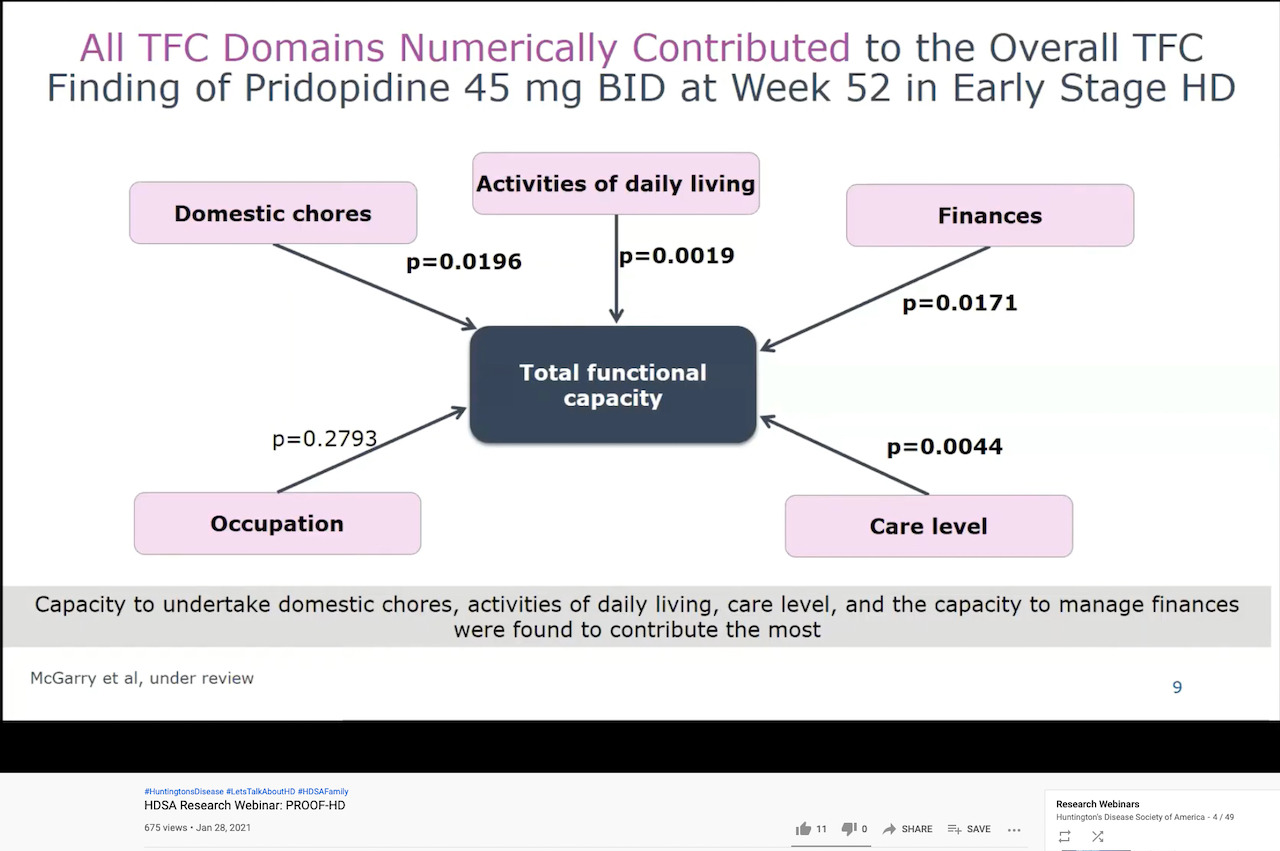
The clinical trial investigators believe that, if tested successfully, pridopidine would help early-stage HD-afflicted individuals maintain the ability to function normally in five key areas: occupation/employment, managing personal finances, performing household chores, performing activities of daily life (such as bathing and dressing), and the ability to live in a home environment. These five domains comprise the Shoulson-Fahn Total Functional Capacity Scale (TFC), developed almost 40 years ago, and used daily in HD clinics and research studies since then.


“The bigger the effect, the better,” Prilenia CEO Michael Hayden, M.D., Ph.D., said in an April 1 interview about pridopidine with Evaluate Vantage. “But any significant change in TFC would be regarded as meaningful. There’s never been a drug that has had any impact on TFC.”


Dr. Hayden is one of the world’s foremost HD scientists (click here to watch our 2011 interview at the Therapeutics Conference.) Prior to founding Prilenia in 2018, Dr. Hayden served as the president of global R&D and chief scientific officer at Teva Pharmaceutical Industries, Ltd. from 2012-2017, where he oversaw ongoing research on pridopidine. He is also a professor at the University of British Columbia and a senior scientist at the Centre for Molecular Medicine and Therapeutics, having mentored over 100 graduate students.


In a January 28 HDSA webinar, Sandra Kostyk, M.D., Ph.D., a professor Ohio State University and the co-principal investigator for PROOF-HD in the U.S., pointed out that individuals’ Total Functional Capacity ranges from zero (severely reduced function) to 13 (full function). In early and mid-early HD, people on average lose about one point on the scale a year, she explained.


In later stages of the disease, TFC may be less reflective of the rate of decline, Dr. Kostyk continued.


A slide from the January 2021 HDSA webinar on the PROOF-HD trial illustrating the Total Functional Capacity Scale and the effect of  pridopidine (screenshot by Gene Veritas, aka Kenneth P. Serbin)


Stopping the house from burning down


As an HD gene carrier who saw his mother devastated by the disease, I have most feared losing my ability to function normally.


In three previous clinical trials of pridopidine, carried out between 2008 and 2018, both the original developer of the drug and Teva failed to achieve the goal of reducing HD persons’ difficulties with both voluntary and involuntary movements. At that time, scientists thought that pridopidine affected levels of dopamine, an important chemical in the brain affecting movements in both HD and Parkinson’s disease.


However, additional analysis (done after the trials) showed that patients taking the study drug showed a slower decline in TFC than expected from previous studies. “In early patients with Huntington disease we have shown that the functional capacity may be maintained,” Dr. Hayden observed in a January HSG podcast. “There also appears to be an improvement and less deterioration in patients with early HD.”


Referring to research conclusions published in the Journal of Huntington’s Disease last December and co-authored by Dr. Hayden and five others, he asserted that the stabilized TFC results were the “first time that this has ever been shown in any analysis for any drug. This was exciting.” Significantly, the FDA accepts TFC as a way of measuring drug efficacy in HD clinical trials, he added.

Those observations now require confirmation in PROOF-HD, Dr. Hayden said.


Also, he continued, pridopidine “appears to have beneficial effects around protecting neurons,” whatever the injury might be. The goal, he said, is to prevent these brain cells from dying – one of the major symptoms of HD.


“You want to treat them before they've died,” he explained. “If you're trying to stop a fire taking care of a house, you don't want the house to be burned down. And that's why treating early becomes effective because there are still injured neurons, but not dead neurons.”


In the HDSA webinar, Dr. Kostyk referred to pridopidine as a possible “disease-modifying intervention – something that slows the course of the disease.” The data indicate that early-stage HD patients could obtain “long-term beneficial effects” from an approved pridopidine drug for five years or more, she said.


That could buy valuable time for older asymptomatic individuals like me and the HD community in general as we await other gene-modifying or huntingtin-lowering drugs.


Prilenia: seeking to soothe the impact of disease


Dr. Hayden explained the name and goals of Prilenia: “Prilenia, which comes from pri, as in pridopidine, and lenia, which comes from the Greek, to sooth or to cure. It's an aspiration that we can have some impact on soothing some aspects of this disease and potentially others as well.”


Privately held and based in Israel and the Netherlands, in 2020 Prilenia raised $68.5 million to support PROOF-HD and also a Phase 2/3 trial in sufferers of amytrophic lateral sclerosis (ALS).


The ALS trial is currently enrolling participants at 54 sites across the US.


Pridopidine taken as a pill


For HD sufferers, Pridopidine has another major advantage: whereas ASOs so far have been injected into the spine and Uniqure’s drug has been infused via brain surgery, pridopidine in the PROOF-HD trial is very conveniently dosed in a 45-milligram pill – a hard gelatin capsule – taken twice daily (click here for official details of the trial). 


Pridopidine has been extensively studied in several previous clinical trials over more than a decade, with more than 1,300 people taking the drug, most of them with Huntington’s, Dr. Kostyk said. As a result, researchers have high confidence in its safety, she added.


Other HD research projects and biopharmaceutical firms are seeking so-called small molecule drugs that can enter cells easily and be taken as a pill.


A key receptor in the brain


Dr. Hayden and his colleagues now believe that the benefits of pridopine are due to its ability to activate the sigma-1 receptor (S1R). “It’s highly selective and fairly potent,” Dr. Hayden explained about the action of pridopidine on S1R in response to a question that I posed about the drug’s basic mechanism during his presentation at the 27th Annual HSG Meeting (held online) in October 2020.


Dr. Hayden observed further that ample data demonstrates that activation of S1R leads to protection of neurons. Deficiencies in S1Rs leads to disease. He cited the case of patients lacking the S1R gene, resulting in juvenile onset ALS.


“The activation of the sigma-1 receptor has multiple mechanisms of action that should lead to neuroprotection in HD and help stabilize cell function,” stated Dr. Kostyk, noting that S1Rs are plentiful in the striatum – the inner core of the brain where HD is especially devastating – and in the cortex, the large outer area of the brain in charge of thought, language, and consciousness.


“One could think of the role of S1R as being like that of a high school guidance counselor,” Martha Nance, M.D., director of the HDSA Center of Excellence at Hennepin HealthCare in Minneapolis, MN, wrote me in an e-mail. “When the receptor is turned on, materials, molecules, and traffic within the cell flow as it should, and the cell stays healthy, much as the counselor helps students in trouble to be safe, find resources to keep healthy, and stay in school. Supporting S1R early in the course of HD might help more brain cells to remain healthy and function well for longer.”


A relatively easy trial seeking practical results


Initiated last October, PROOF-HD investigators hope to enroll a total of 480 clinical trial volunteers by year’s end at 30 sites in the U.S. and Canada and 30 more in Europe. Over 15 months, half will get pridopidine, and half will get a placebo. Patients must have a diagnosis of HD, be 25 or older (no upper age limit), and have a TFC score of at least 7, in line with the project’s goal of testing the drug in the earlier stages of the disease.


Participants will undergo measurements of their TFC, cognition, quality of life, and motor symptoms (difficulties with voluntary and involuntary movements). They will also get blood and safety tests. All participants can take part in the potential extension of the trial, with everybody receiving the drug. Dr. Kostyk described PROOF-HD as an “easy” trial, with no brain scans or spinal taps (used in the Roche trial, for instance). The study design has been adapted to accommodate the challenges posed by COVID-19.


PROOF-HD emphasizes practical results. “What’s most important for us it to get an agent out that’s working,” Dr. Kostyk said, and “not necessarily” the kinds of measurements used in other trials in order to demonstrate how the drug works.


A separate trial might be designed later for later-stage HD-afflicted individuals, Dr. Hayden said.


For more information on PROOF-HD, click here or call 800-487-7671.


A potential major step forward


“Our overall goal is to get this agent FDA-approved as soon as possible so that we can start using it in individuals affected by Huntington’s disease,” said Dr. Kostyk. The more quickly patients enroll in the study, the sooner it will be completed, hopefully by late 2022 or early 2023.  Because this is a Phase 3 trial, if it is successful, the next step will be an application to the FDA for approval as a drug that doctors can prescribe.


Andrew Feigin, M.D., the HSG chair and principal investigator in the U.S. for PROOF-HD, said in the HDSA webinar that Prilenia has also shown interest in a possible future trial involving pre-symptomatic individuals like me.


Past skepticism about pridopidine focused on the lack of hard evidence that the drug could really slow HD progression (click here to read more). However, that debate came before the discovery of a clearer picture of pridopidine as a potential protector of neurons.


As will all clinical trials, the Huntington's community will be rooting for success in PROOF-HD. Although pridopidine may not cure HD, enabling people to have a few more years of normal daily function would be a major step in the quest to manage this complex disease.

Sunday, November 17, 2019

‘Navigating’ the Huntington’s disease community towards crucial clinical trials


As scientists and drug companies expand the array of potential treatments for Huntington’s disease, the Huntington Study Group (HSG), the world’s largest HD clinical research network, is redoubling its efforts to educate the HD community for current and upcoming clinical trials and train the necessary medical personnel.

A record 700-plus participants focused on these themes at the 26th annual HSG Meeting, titled “HSG 2019: Navigating HD,” November 7-9 at the Hyatt Regency hotel in Sacramento, CA. (Attendance at the HSG 2017 and 2018 meetings was over 600.)

Clinical trials are crucial for demonstrating drug safety and efficacy. The number of HD trials has increased in recent years, bringing hope for better treatment of the devastating symptoms and perhaps even an attack on the root causes. Key trials in progress include GENERATION HD1, run by Roche, and SIGNALadministered by the HSG and Vaccinex.

“Figuring out how these trials are going to work, what they’re aiming to do, and what an individual patient or family should do to get involved or not get involved has become complicated, to some extent,” Andrew Feigin, M.D., the HSG chair and a professor of neurology at New York University Langone Health, told me in a November 6 interview. “That’s my interpretation of the ‘navigating HD.’ We’re trying to get at some of these novel therapies and clarify where they’re headed, where they stand, how the HSG can get more involved, and figuring out where people can go for the cutting-edge therapies for Huntington’s disease.”

In the conference-opening “HSG State of the Union” presentation by HSG leaders and staff, executive director Shari Kinel, J.D., reported that the event involved 15 countries, 23 companies, 9 advocacy groups, 17 sponsors, and 15 exhibitors. The sponsors included Roche’s American subsidiary Genentech and Vaccinex.

“This incredible showing […] is a sign that the HSG has more partners, more colleagues, more friends than ever who are engaged, dedicated, and committed to seeking treatments that make a difference for those impacted by Huntington’s disease,” Kinel told the audience.

Dr. Feigin affirmed that in the past year, the HSG has doubled its paid staff from four to eight, plus one part-timer, although he declined to reveal the organization’s annual budget. Headquartered in Rochester, NY, the HSG is mainly funded by firms like Vaccinex that it partners with on clinical trials, he explained. Sponsors cover the cost of the annual meeting.


The audience watches a presentation by Dr. Arthur Combs at the "HD Innovators Forum" at the 26th annual HSG Meeting (photo by Gene Veritas, aka Kenneth P. Serbin)

A full-service organization

The HSG was founded in 1993, the year of the discovery of the huntingtin gene. Dr. Feigin described the nonprofit organization as a “full-service” contract research organization that can carry out all aspects of an HD clinical trial.

In her speech, Kinel stated that the HSG member network includes 801 investigators (researchers), trial coordinators, scientists, and HD experts. Around the globe, the organization has credentialed 127 sites for HD trials, and HSG members have worked with more than 21,000 HD-affected individuals, she said.

The HSG also developed the Unified Huntington’s Disease Rating Scale (UHDRS), the primary assessment tool in HD clinical trials. It consists of tests of a person’s movements, cognition, behavior, independence, and functional capacity.

The “HSG State of the Union” presentation outlined the HSG’s mission, accomplishments, clinical trials, educational activities, efforts to improve patient care, and plans for the future.

You can watch the presentation in the video below. Click here for my video album of the event, which included a variety of presentations on patient care, clinical trial techniques and measurements, new scientific findings, and innovations in drug and clinical trial development.


Seeking a better drug to treat chorea

Prior to the main conference, the HSG held organizational meetings for KINECT-HD, a Phase 3 clinical trial by the HSG and San Diego-based drug developer Neurocrine Biosciences to test the efficacy of valbenazine to treat chorea, the involuntary movements typical in HD. 

The HSG ran the successful clinical trials of two other drugs for chorea, Xenazine and Austedo, the only HD-specific medicines to receive approval from the U.S. Food and Drug Administration (FDA). On November 14, it issued a press release announcing the start of the 18-week trial, which seeks to enroll HD-affected individuals with chorea at 55 sites in the U.S. and Canada.

In 2017, valbenazine was approved by the FDA with the name Ingrezza for the treatment of tardive dyskinesia, an irreversible involuntary movement disorder. This status allowed Neurocrine and the HSG to take it directly into a Phase 3 trial for HD.

Like Xenazine and Austedo, valbenazine is a VMAT2 inhibitor. Xenazine requires three daily doses, and Austedo two

“The upside thing of valbenazine is that it’s a drug that can be dosed once daily,” said Dietrich Haubenberger, M.D., the Neurocrine medical director, in a presentation forming part of the “HD Research Round-Up” at the close of the scientific sessions on November 8.

Wearable sensors and the search for biomarkers

In the quest for HD treatments, researchers hunt for new biomarkers, that is, signs of the disease and the effect of remedies. Biomarkers are especially critical in brain-related diseases, because doctors cannot do biopsies on the organ.

With a key innovation, KINECT-HD will also look for biomarkers. It will be the HSG’s first trial in which participants use wearable sensors – for continuous monitoring of their movements and other biological functions, even at home. Researchers hope this more detailed monitoring will provide both a better understanding of chorea and valbenazine’s impact on it.

Called BioStamp nPoint, the sensors were designed by MC10, Inc., and cleared for use by the FDA. MC10 is based in Lexington, MA.

MC10 chief medical officer Arthur Combs, M.D., described the system at the conference’s “HD Innovators Forum.”

“It weighs less than eight grams [0.28 oz.],” Dr. Combs said, explaining that the sensor can be placed anywhere on the body and worn even during showers and swimming. “It’s like putting on a Band-Aid.”

MC10 developed 44 algorithms for the system to help measure trial participants’ data. In addition to chorea, BioStamp nPoint will help investigators observe individuals’ gait, heart rate, sleep, posture, and other bodily functions, Dr. Combs added.

In one previous study, “patients with symptomatic Huntington’s disease spent 50 percent of their day” lying down, he explained. That may be a response to exhaustion or the risk of falling, he said. Thus, the BioStamp nPoint system could help determine whether lying down is a “marker” for the disease, and whether less time at rest is a sign of drug efficacy, he said. It also accounts for the uniqueness of each patients, he added.

To obtain continuous data in GENERATION HD1, Roche developed an HD Digital Monitoring Platform, with participants wearing a smartwatch and using a smartphone.

You can watch Dr. Combs’ presentation in the video below.


The latest clinical trial news

In addition to Neurocrine, other firms reported on their clinical trials during the “HD Research Round-Up”: Voyager Therapeutics, uniQure, Wave Life Sciences, Vaccinex, and Roche.

The Roche GENERATION HD1 update of the company’s historic Phase 3 clinical trial of the drug RG6042 was one of the most anticipated. A gene-silencing drug, RG6042 is aimed at the roots of HD and caused a stunning improvement in the health of HD-affected mice. On October 14, Roche announced that it was expanding the number of trial participants from 660 to 801 and adding China to the nearly 20 countries in the study.

The announcement noted that recruitment in the U.S. had “exceeded expectations” and was now complete. Expanding the number of volunteers and adding China will allow for more abundant data and the study of a more diverse population, Roche said.

Enrollment for the Roche HD program has been “absolutely electric,” with over 800 individuals already in 2019 in GENERATION HD1 and related HD studies, said Scott Schobel, M.D., M.S., Roche’s associate group medical director and clinical science leader for RG6042 (click here to watch Dr. Schobel’s presentation). If the trial is successful, Roche will apply for drug approval from the FDA and regulatory agencies in other countries.

On November 9, HSG held a “Family Day” for the HD community, with presentations by advocates like me, presentations by scientists, and an update on GENERATION HD1.

In upcoming articles, I will report on Family Day and more of the scientific and clinical developments discussed at the meeting.

Disclosure: my travel expenses were covered by the HSG and the Department of History of the University of San Diego.