Showing posts with label Alice Wexler. Show all posts

Sunday, May 17, 2026

For Huntington’s Disease Awareness Month, reflections on teaching about this devastating disorder at the University of San Diego


First proclaimed by President George H. W. Bush in 1991, Huntington’s Disease Awareness Month (May) encourages affected families to share their stories about this rare neurological disorder with the wider world.


For that reason, among others, I served on the board of the San Diego Chapter of the Huntington’s Disease Society of America (HDSA) from 1998-2010. In this blog, begun in 2005, I have written articles commemorating HD Awareness Month.


A 2019 posting about HD Awareness Month featured a photo of me pointing to HDSA #LetsTalkAboutHD flyers posted on my office door at the University of San Diego (USD), where I teach history and research science and technology studies.


As a fulfillment of a long-term goal to advance both awareness-building and deepen my knowledge of HD science, in the spring semester of 2025 I inaugurated a new course, A History of the Brain: Examining Huntington’s Disease. Professors often say that the best way to learn a subject is to teach it. Student feedback is crucial in this process.


This month, in the third offering of the course, I distributed a flyer containing HD Awareness Month promotional material from HDSA and the Huntington’s Disease Foundation.


Each holding a flyer, three students – Ana-Lucia Moreno, Ava Puorro, and Mia Wilde – had a picture of me taken with them in the classroom and posted it on Wilde’s Instagram with the title “National Huntington’s Disease Awareness Month.”


“Best class ever with Dr. Serbin, who has Huntington’s disease and taught us so much about it in class!” they wrote on the posting.


They included the link to this blog. “Watch his blog to learn more about HD and how we can make all people feel included.”


From left to right, Mia Wilde, Gene Veritas (aka Kenneth P. Serbin), Ana-Lucia Moreno, and Ava Puorro in Wilde’s Instagram post about HD Awareness Month. The jacket I am wearing is much-appreciated swag from the Annual HD Therapeutics Conference, sponsored by CHDI Foundation, Inc., the biggest private funder of HD research (personal photo).


Keys to understanding the history of HD


A History of the Brain has great relevance to the present. At the outset, I acknowledge that I am not a neuroscientist but a historian, HD gene carrier, and advocate.


An introductory course that fulfills the history requirement in USD’s core curriculum, A History of the Brain teaches basic skills in how to interpret history. The students have a wide variety of majors and career interests, including premed, neuroscience, biotech, business, natural sciences, engineering, and the humanities. The course also counts towards a major or minor in history.


I lecture on the basic scientific understanding of the brain from antiquity to the present, based on the masterful book by Andrew P. Wickens, A History of the Brain: From Stone Age surgery to modern neuroscience. It helps provide an overview of humanity’s understanding of the brain in understandable terms.


To launch discussion about the disease, students do short writing assignments based on the course readings. They include neurologist Thomas Bird’s Can You Help Me? Inside the Turbulent World of Huntington Disease. As I stated in my review of the book, “With non-technical, limpid prose, Dr. Bird tells the full story of HD’s wide-ranging medical, socioeconomic, and legal implications through a series of poignant vignettes, based on hundreds of HD cases."


The students also read two classic works by prominent HD family member and historian Alice Wexler, Ph.D. In The Woman Who Walked into the Sea: Huntington’s and the Making of a Genetic Disease, Dr. Wexler explains the deep stigma and misunderstanding about HD that developed in the nineteenth and twentieth centuries. In Mapping Fate: A Memoir of Family Risk and Genetic Research she chronicles the crucial work by her family and a myriad of scientists to discover the huntingtin gene in 1993.


Emotional debates and discussions


Many days in the course produce deeply emotional debates and discussions.


My students’ recognition of the need for social inclusion for all echoes the course’s deep exploration of the stigma and discrimination associated with HD, other neurological disorders, mental illness, and disabilities.


Those themes emerge in the books about HD and in the selection of articles from my blog included in the course readings. For its contributions in giving a voice to the HD community, last year my blog received the 11th Victor Gonzalez Santos Community Award, which supports local families in San Diego with HD. My articles, which include stories of my family’s struggles with HD, and my discussions with the students add a deeply personal element to HD and the cause to defeat it.


The course studies in details HD’s triad of devastating symptoms: involuntary movements, cognitive loss, and behavioral and psychiatric difficulties. We also delve into many other difficult challenges faced by the HD community, such as genetic testing, family planning, and bioethical issues like abortion and suicide. We also discuss the quest for treatments of this still incurable disorder.


Students see how I bared my heart in blog articles like the one about my mother’s final moments before dying from HD and the revelation that I carried the HD gene. As a result, I need to be prepared to talk in class about the most devastating aspects of the disease and the fears of experiencing them myself.


College classes provide an exercise in intellectual freedom and debate, with a professor being open to all views. In one class last year we intensely debated police misunderstanding and mishandling of HD-affected individuals, who are often seen as being under the influence of drugs or alcohol.


I introduced the students to something new for most of them: the Psychiatric Emergency Response Team, which has specialists trained to interact with and identify resources for those with behavioral health issues and who may pose a threat to themselves or others. The students concluded that this team was the appropriate alternative to calling the police in the case of HD or other disorder.


Invaluable insights


The course closes with an important religious perspective on the HD cause. We ponder the question, “how could God allow people to suffer from disease?” We examine Pope Francis’s historic audience with the HD community in 2017 and his declaration that HD should be “hidden no more!”


One of my projects at USD is to publish an annotated collection of about a dozen or some of my blog articles.


My interaction with the students and their thoughts on my blog and the HD cause will provide invaluable insights for that project.


A ‘very meaningful’ experience


The course has also underscored for me the fact that Huntington’s disease is still not a household word in the U.S. as compared to Alzheimer’s, Parkinson’s, ALS (amyotrophic lateral sclerosis), and other disorders. For most of the students, it is their first exposure to HD.


HD families still lack an effective therapy.


In a very poignant way, the course introduces young people to something we all share: mortality. Tragically, last year a vibrant and accomplished 42-year-old USD sociology professor, Greg Prieto, Ph.D., died of cancer – after offering his own reflections on facing death.


With A History of the Brain, I hope to have move us a bit further towards the greater awareness that the HD community still needs.


My students’ HD Awareness Month Instagram post is an example of the impact the course has had.


In an e-mail to me, Mia Wilde reported that the post had some 600 views and 100 likes, “a really great amount of engagement.”


“Another person reached out asking what Huntington’s disease was, so I gave them a brief overview about it being a hereditary disease and shared some of what we learned in class,” Wilde wrote.


Another person told Wilde that “it was such a thoughtful thing that we were doing because they had a friend who had Huntington’s disease before, which I thought was very meaningful to hear.”

Wednesday, November 05, 2025

Understanding the FDA’s surprising step back on uniQure drug that slows Huntington’s disease


Less than six weeks after uniQure announced that its gene therapy drug slowed the progression of Huntington’s disease by 75 percent over three years, the U.S. Food and Drug Administration (FDA) has backtracked on its conversations with the company regarding the timeline and data needed for potential approval of the remedy.


The company’s plan to apply for approval of the drug, AMT-130, in early 2026 and launch it into the market later that year may no longer be possible.


In a November 3 press release uniQure announced that, after a recent meeting with the FDA, the company believes that the “FDA currently no longer agrees” that data from its clinical trial of AMT-130 using an "external control" as a comparison "may be adequate to provide the primary evidence in support of” an application for approval.


The external control refers to data taken from Enroll-HD, the global HD patient registry of more than 22,200 people, as a baseline, rather than those taking a placebo, to compare with those on AMT-130. After extensive consultations with the FDA in 2024, uniQure had gotten permission from the agency to use the Enroll-HD data.


“This is a key shift from prior communications with the FDA in multiple … meetings over the past year,” the uniQure release stated. “Consequently, the timing of the BLA [Biologics License Application] submission for AMT-130 is now unclear.”


uniQure expects to receive the final minutes of its meeting with the FDA within 30 days and plans to urgently interact with the agency “to find a path forward for the timely accelerated approval of AMT-130,” the press release continued.


“We are surprised by the FDA’s feedback at the recent pre-BLA meeting, which is a drastic change from the guidance the FDA provided in November 2024,” said Matt Kapusta, the uniQure CEO. “This news is unexpected, and we are truly disappointed for people living with HD, who have no disease-modifying treatment options for this devastating disease.”


Kapusta added that “we strongly believe that AMT-130 has the potential to bring substantial benefit to patients, and we remain fully committed to working with the FDA to determine the best path forward to rapidly bring AMT-130 to patients and their families in the U.S.”


David Margolin, M.D., Ph.D., uniQure's vice president for clinical development, presents data illustrating AMT-130's slowing of the progression in Huntington's disease at the 20th Annual HD Therapeutics Conference, Palm Springs, CA, February 25, 2025 (photo by Gene Veritas, aka Kenneth P. Serbin).


FDA claims to ‘unleash gene therapies’


The October 30 Huntington’s Disease Society of America (HDSA) webinar on AMT-130, featuring uniQure’s chief medical officer, Walid Abi-Saab, M.D., offered no inkling of the FDA’s new position.


Some 1,000 people attended the webinar – a sign of the excitement about AMT-130 in the HD community. Reuniting after 17 years of estrangement, my own family has found great hope in the possibility of this treatment, though we understand that the drug is not a cure and might not even reach the public.


The FDA so far has provided no comment to the media on the matter. At the top of its website’s homepage it has the phrase “first six months of FDA reforms,” including “unleashing cell and gene therapies.”


As this blog reported in July, under the Trump administration the uncertainty of public funding for science has created serious challenges to HD research.


Politics and society play a role


Science and medicine do not act in a vacuum and are impacted by politics and society, as HD family member and historian Alice Wexler brilliantly illustrated in her book The Woman Who Walked into the Sea: Huntington’s and the Making of a Genetic Disease (click here to read my review).


In July, a New York Times report titled “Inside the Collapse of the FDA” detailed how Health and Human Services Secretary Robert F. Kennedy Jr., is “dismantling the agency.”


The key biotech and life sciences website STAT reported that since uniQure and the FDA had set drug submission “benchmarks” last year, “the agency has undergone considerable changes. Vinay Prasad, a physician with a reputation for taking a more conservative view of gene therapies, now oversees the division with authority over AMT-130.”


Dr. Prasad heads the Center for Biologics Evaluation and Research.


Only last week STAT reported that a “slow-boiling feud” between Dr. Prasad and his staff “is threatening the future of the center that regulates the nation’s vaccines, biological products, and blood supply.”


According to the report, officials in the center described it as “rife with mistrust and paranoia” and with fears of “retaliation” for pushing back on Dr. Prasad. The center has lost hundreds of employees this year to retirements, layoffs, and resignations. Dr. Prasad has also pushed out senior leaders, including “top cell and gene therapy regulators,” STAT reported.


Prasad has also played a role in limiting access to Covid-19 vaccines, according to STAT and the New York Times.


The HD community is ‘highly mobilized’


The scientist-written website HDBuzz noted that, although “the reason for the change of heart” of the FDA is “not currently clear,” “it makes the timeline for advancing AMT-130 less clear, with additional uncertainty as the U.S. government shutdown continues.”


“The decision by the FDA to not agree that an external control group can be used to apply for a [drug application] doesn’t change the data” of AMT-130’s actual effect in the clinical trial run by uniQure, HDBuzz stated. It simply means that the FDA would want to see more data, possibly from a trial designed with a placebo control group, before moving forward with a BLA for AMT-130.


HDBuzz also noted that uniQure is working with the equivalent of the FDA in the United Kingdom and Europe, with an approval there possibly leading to acceptance elsewhere.


HDBuzz stated that “we push forward – together.”


On November 5 HDSA and four other HD entities issued a joint statement: following the regulatory update about uniQure, “it’s clear that stronger alignment and collaboration among Huntington’s disease (HD) patient and family organizations are more critical now than ever.” The four are Huntington’s Disease Foundation (formerly Hereditary Disease Foundation), HD Reach, Help4HD International, and Huntington’s Disease Youth Organization.  


“The next steps here are uncertain,” the brokerage and investment banking firm Stifel wrote, “but given the highly mobilized patient community in Huntington’s, and other external political forces that may have influence on the agency, the story here may not be over.”

Wednesday, November 08, 2023

New book by longtime advocate describes Milton Wexler’s incomparable contributions to Huntington’s disease research and beyond


A new book portrays the largely unexplored personal and psychological context of the quest to understand and defeat Huntington’s disease: a biographical memoir of Milton Wexler (1908-2007), the founder of the Hereditary Disease Foundation (HDF) and key mover in the discovery of the HD gene.


In late 2022, Wexler’s daughter, historian Alice Wexler, published The Analyst: A Daughter’s Memoir (Columbia University Press). She is a longtime Huntington’s disease advocate and chronicler of the cause.


The Analyst adds unique dimensions to HD history, building on Alice’s groundbreaking work. In 1995 she authored Mapping Fate: a memoir of family, risk, and genetic research (first published by Random House and Times Books, then reissued by the University of California Press). In 2008, she wrote The Woman Who Walked into the Sea: Huntington’s and the Making of a Genetic Disease (Yale University Press).


This year marks the 30th anniversary of the discovery of the huntingtin gene, announced in March 1993. Through the HDF and in collaboration with a global team of scientists, Milton and his neuropsychologist daughter Nancy, Alice’s sister, spearheaded the hunt for the gene, as recounted in Mapping Fate. In The Woman Who Walked into the Sea, Alice explored the social and medical history of HD in the 19th and 20th centuries, helping explain the stigma HD families still face.


The sisters’ mother Leonore was diagnosed with HD at the age of 53 in 1968. That led Milton to immediately start the HDF, which focused on the development of treatments.


In 1993 the discovery of huntingtin “immediately transformed Huntington’s research,” Alice writes in The Analyst. “Suddenly it was possible for researchers to make animal and cell models and study how the gene worked at the cellular and molecular level. They could test drugs and other molecules in mice and sheep, fish and flies, as well as in human beings.”


Milton was “ecstatic and also relieved,” Alice recalls. “We even allowed ourselves to imagine that a treatment, and possibly a cure, might be on the horizon.” HDF-sponsored researchers and other scientists around the globe are still striving to achieve that goal.


Meeting’s life’s difficult challenges


Drawing on access to her father’s extensive personal correspondence, her diary, and archival sources enabled Alice, with decades of hindsight, to present her father’s story – in which the fight against HD became his life mission – in intimate detail.


Describing Milton, Alice is meticulous, often critical, but always loving – a reflection of the complex relationship of a highly successful professional with daughters that he wanted the best for and whose lives he fought for. She adds a valuable feminist perspective, for example, interpreting her father’s friendships by analyzing masculinity and male intimacy in the 1950s.


In addition to Milton’s incomparable contributions to HD research, The Analyst depicts key aspects of American life in the second half of the 20th century. It delves into Jewish life in Brooklyn, which spurred Milton’s ambitions, taking him to Kansas and then to Los Angeles.


Portraying her father’s main career as a psychoanalyst, Alice helps to rescue the history of a field that has lost relevance with the emergence of other forms of therapy, though it continues as an intellectual field. Milton saw great value in psychoanalysis’s way of helping people understand their emotions but he increasingly practiced more direct forms of therapy, focused on the here-and-now. As he put it, “insight alone does not change behavior.”


Alice demonstrates how much of Milton's early career trying to understand and treat schizophrenia helped him to confront this other knotty problem, HD.


In an appendix, The Analyst lists “sayings of Milton Wexler” – including a 1998 note to a President Bill Clinton in crisis – regarding challenges such as the loss of a child, self-defeat, depression, personal identity, loneliness, and risk for a disease such as HD.


Milton’s embrace of talk therapy is a key reminder for HD families overwhelmed by the disease's  many social and personal challenges that help is available, and that individual and family therapy can make a difference. He believed that people should not have to struggle on their own.


In Los Angeles, Milton became a therapist for many in the arts and entertainment – a practice that he parlayed into significant donations for the HDF.


(Click here to read more about my own journey with psychoanalysis as an aid to fighting HD.)


‘The nightmare is the children’


With new material and perspective, Alice expands on the difficult moments described in Mapping Fate regarding  Leonore’s diagnosis, Milton’s deep fears that his daughters would be affected, and his  “frantic search for information” about HD and scientific contacts that in a matter of weeks spurred the concept of the HDF.


Leonore’s diagnosis and HD were “the great poison in my life,” Milton wrote his brother Henry in May 1968 in a letter uncovered by Alice. “But the nightmare is the children.[…] For me there is only dread in the air.”


Milton divorced Leonore but nevertheless cared for her impeccably and guaranteed her financial security. Leonore died in 1978 at 63, ten years after her diagnosis..


Providing intellectual fuel


With his background in psychology and prior experience as an attorney, Milton advocated for a multidisciplinary approach to solving HD and other neurological disorders. He championed the interplay of psychoanalysis and neuroscience in a move critical for HD research. He also grasped the growing importance of molecular genetics and its potential value for Huntington’s.


From this perspective Milton developed unique HDF workshops involving informal, spontaneous discussion – as opposed to dry scientific presentations with slides – as the main driver of the search for the HD gene and the quest for treatments. The first took place in 1971. Held in hotel rooms or at universities, these gatherings typically involved 15 to 20 participants.


As Alice reports, Milton believed that real creativity resulted from “casual conversation and carefree association among people in the same or related disciplines.”


While finding prestigious veteran scientists for HDF’s advisory board, Milton recruited younger researchers, including women, as the organization’s intellectual fuel.


As Alice observes, the HDF formed part of a trend in which “philanthropy assumed an increasingly influential role in funding science and meeting social needs.” Contributions to the HDF swelled. It established an endowment to fund future workshops and critical research grants.


The challenges of genetic testing


Alice reflects on her family’s monumental role in finding the gene and also the irony that neither she nor her sister chose to get the genetic test – a test which “opened a Pandora’s box of legal, social, and ethical challenges and raised many personal questions for Nancy and me.”


The test developed shortly after the 1993 discovery of huntingtin enabled 100 percent accuracy in detecting the HD mutation. Prior to this, research had established that each child of an affected parent has a 50-50 chance of inheriting that mutation. As Alice showed in The Woman Who Walked into the Sea, deep stigma and discrimination increased around HD in the 1900s.


“None of us considered the possibility of the genetic test to resolve the uncertainty,” Alice writes, referring to the time when she began noticing subtle changes in Nancy. “For all our knowledge of psychology, we turned to denial, that most primitive of defenses. We worried, we wondered, and then we denied. It simply could not be.”


Indeed, to this day, only about ten percent of persons at risk for HD choose to be tested.


At 81, Alice has not developed symptoms. In 2020, Nancy revealed her HD diagnosis to the New York Times. At 78, she bravely struggles with HD symptoms yet keeps abreast of the latest scientific developments. She now works with a writer on her memoir.


Solidarity and hope


Along with Mapping Fate and The Woman Who Walked into the Sea, Alice’s warm portrayal of her father in The Analyst shows how he helped the HD community advance in understanding the disorder and seek anxiously awaited treatments to slow, stop, or reverse the disease.


Milton lived a full, fascinating, and challenging life, dying peacefully in 2007 at age 98, at Alice and Nancy’s side. In multiple ways, he serves as a model – especially for the idea that when faced with an enormous and difficult challenge, becoming an activist can be the best form of  therapy.


The legacy of the discovery of huntingtin, as well as HDF’s scientific leadership, help build solidarity and hope for a better future for HD and all other neurodegenerative diseases.


Milton Wexler flanked by daughters Nancy (left) and Alice in 1992 (photo by Mariana Cook)

Monday, February 28, 2022

History, Huntington’s disease, and the survival of the human race


With thousands of people continuing to die from the COVID pandemic and the planetary climate crisis worsening, the Russian attack on Ukraine and the dictatorial Vladimir Putin’s threats of nuclear war have brought the world to a turning point.


Either we strive to end war or, by failing to unite globally to solve environmental and health challenges, we risk destroying ourselves. From biological history we know that millions of species have gone extinct. No one but us prevents our extinction, as well.


The war has produced searing images of Ukrainian families living underground or fleeing their country by the hundreds of thousands.


While the U.S., the North Atlantic Treaty Organization (NATO) countries, and many other key nations have sought to counteract Putin’s actions without sending in troops, around the world citizens and governments have protested and shown solidarity with the Ukrainian people.


As I drove yesterday from my home in San Diego to Palm Springs, CA, for the 17th Annual Huntington’s Disease Therapeutics Conference, I thought once again of how the quest for effective treatments for this devastating disease has embodied fortitude and collaboration.


Along the way I listened to The Tipping Point, the new, long-awaited album by Tears for Fears, one of my favorite bands, and pondered the poignant interview they gave about their album’s relevance to the present moment.


What I have termed the “Huntington’s disease movement” has highlighted caregiving, the alleviation of physical and mental suffering, and the harnessing of science for societal good.


These sentiments are especially appropriate at the start of the conference, February 28, Rare Disease Day.


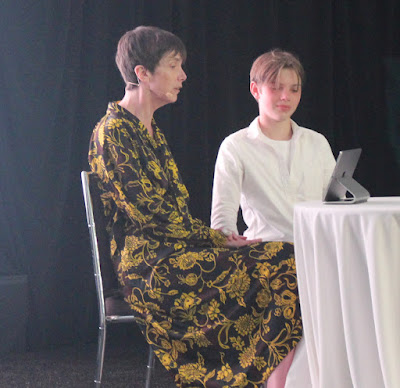
HD Therapeutics Conference keynote speaker and journalist Charlotte Raven (seated) and, from left to right, Dr. Ed Wild, Charlotte's daughter Anna, and son John, February 28, 2022 (photo by Gene Veritas, aka Kenneth P. Serbin). Read more below about Charlotte's heartrending but brave presentation.


Writing the history of the HD movement


As an HD mutation carrier and advocate, I have shifted my focus as a professional historian from the country I consider my second home, Brazil, to the history of science, technology, and medicine.


On January 31, I submitted an application for a grant to support new research for a book to be titled “Racing Against the Genetic Clock: A History of the Huntington’s Disease Movement and the Challenges of the Biomedical Revolution.”


“Huntington’s disease research stands at the forefront of the biomedical revolution,” I wrote in the application. “The search for the huntingtin gene, finally achieved in 1993, contributed to the concept of the Human Genome Project. Huntingtin was one of the first disease-causing genes discovered. Yet, thirty years later, the experience of living with Huntington’s has not changed dramatically.”


In this project, building on my quarter-century of advocacy and tracking of scientific progress, I will seek to chronicle and interpret the HD movement in the period since the huntingtin breakthrough.


A visit with scholar Alice Wexler


To gather documentation and exchange ideas about the project, on February 21 I traveled to Santa Monica, CA, to meet with the preeminent historian of HD, Alice Wexler, Ph.D., the sister of Nancy Wexler, Ph.D., a key figure in the search for the huntingtin gene.


Alice Wexler wrote Mapping Fate, the key historical account about the discovery of the gene. She also authored The Woman Who Walked into the Sea, which describes the of development of medical understanding of HD in the 20th century and the stigma and discrimination associated with the disease.


In October, Columbia University Press will publish her latest work, The Analyst, a memoir of her late father Milton Wexler. A psychoanalyst, he founded the Hereditary Disease Foundation (HDF) in 1968 after his wife Leonore was diagnosed with HD.


Until the early 2000s, the HDF was the main private funder of HD science. From her personal archive, Dr. Wexler provided me with HDF newsletters, scientific reports, and other important documents.


Dr. Wexler also shared with me news clippings and other documents related to the HD movement.


Over lunch and then on a long walk along the Santa Monica beach, Dr. Wexler and I bonded over stories of our beloved Latin America (she, too, began her career studying that region), our families’ respective fights against HD, and my goal of building on her work as I embark on my new research.


Alice Wexler and Gene Veritas, aka Kenneth P. Serbin, in Santa Monica, CA, February 21, 2022 (personal photo)


My eleventh CHDI meeting


This will be my eleventh HD Therapeutics Conference, which is sponsored by CHDI Foundation, the nonprofit virtual biotech firm that grew out of the HDF and is dedicated solely to developing HD therapies. I keynoted the 2011 meeting. Because of the pandemic, the 2021 conference was held online. This year the conference will take place in person at its traditional location, the Parker Palm Springs, but under a tent on one of the hotel’s large lawns instead of inside.


As a pre-meeting reception on February 27 held by CHDI at the Villa Royale, I saw many veterans of the CHDI staff. I also spent time telling a new CHDI researcher staff member, who was attending her first Therapeutics Conference, about my family’s HD story.


I also conversed at length with Daniel Claassen, M.D., M.S., a professor of neurology at the Vanderbilt University Medical Center.


I was thrilled to hear Dr. Claassen describe his experience of lecturing via Zoom to about 150 Brazilian neurologists last year about Huntington’s disease, with the assistance of a Portuguese-speaking interpreter.


Fighting for human well-being


We also discussed the unique interpretations that each HD family can develop about the symptoms, especially in cases such as that involving my family, which had no prior knowledge of HD before it struck my mother.


I recalled for Dr. Claassen an especially painful moment from around Christmas of 1989. I had been doing research in Brazil for well over a year and was very happy to see my parents upon visiting their home in Ohio.


At one point, I heard my mother on the phone crying and complaining to a friend that she could not stand having me around.


At the time, I attributed her reaction to moodiness. In retrospect, as Dr. Claassen and I concluded, my mother’s reaction probably represented the start of the psychiatric and behavioral disorders that are often the first HD symptoms to appear.


My mother was diagnosed with HD six years later, in 1995.


“It wasn’t my mother’s fault!” I said with great sadness about her emotional difficulties.


At the Therapeutics conference, we will all be renewing our commitment to defeat HD and other neurodegenerative conditions.


For me, this is our contribution to human well-being.


Dr. Daniel Claassen (left) and Gene Veritas (photo by Simon Noble, Ph.D., director, scientific communications, CHDI)


Charlotte Raven, a brave keynote speaker


The conference got under way the evening of February 28 with a profoundly moving presentation by keynote speaker Charlotte Raven, a renowned British journalist, commentator, and author whose work has appeared in The Guardian, New Statesman, and Modern Review.


Charlotte is affected by HD. She was the first participant in the Roche GEN-PEAK trial, a small Phase 1 study run in tandem with the Roche Phase 3 GENERATION HD1 trial. These trials sought to measure the effects of the gene silencing drug tominersen.


In March 2021, Roche halted dosing in GENERATION HD1 because of lack of efficacy. In January, Roche announced that it will start a new, less ambitious Phase 2 trial to test tominersen’s efficacy (click here to read more).


Joined in the presentation by her son John, daughter Anna, and her neurologist, Ed Wild, M.D., Ph.D., Charlotte spoke bravely about her struggles with HD. She echoed the deep sadness and frustration of the HD community in the wake of the March 2021 news.


With many of the nearly 300 conference participants crying at the end, Charlotte received a standing ovation.


Roche will present two reports on its efforts on the conference’s final day, March 3.


A future article will feature Charlotte’s story, including a video of her keynote.


Assisted by son John, Charlotte delivers her keynote address (photo by Gene Veritas).