Showing posts with label Louise Vetter. Show all posts

Friday, November 10, 2017

A time for hope: HDSA’s 50th anniversary, a record-setting gala, and the impending release of highly anticipated clinical trial results

This year, Pope Francis’ historic “Hidden No More” audience with the Huntington’s disease community has understandably overshadowed another milestone in the HD cause: the 50th anniversary of the Huntington’s Disease Society of America (HDSA).

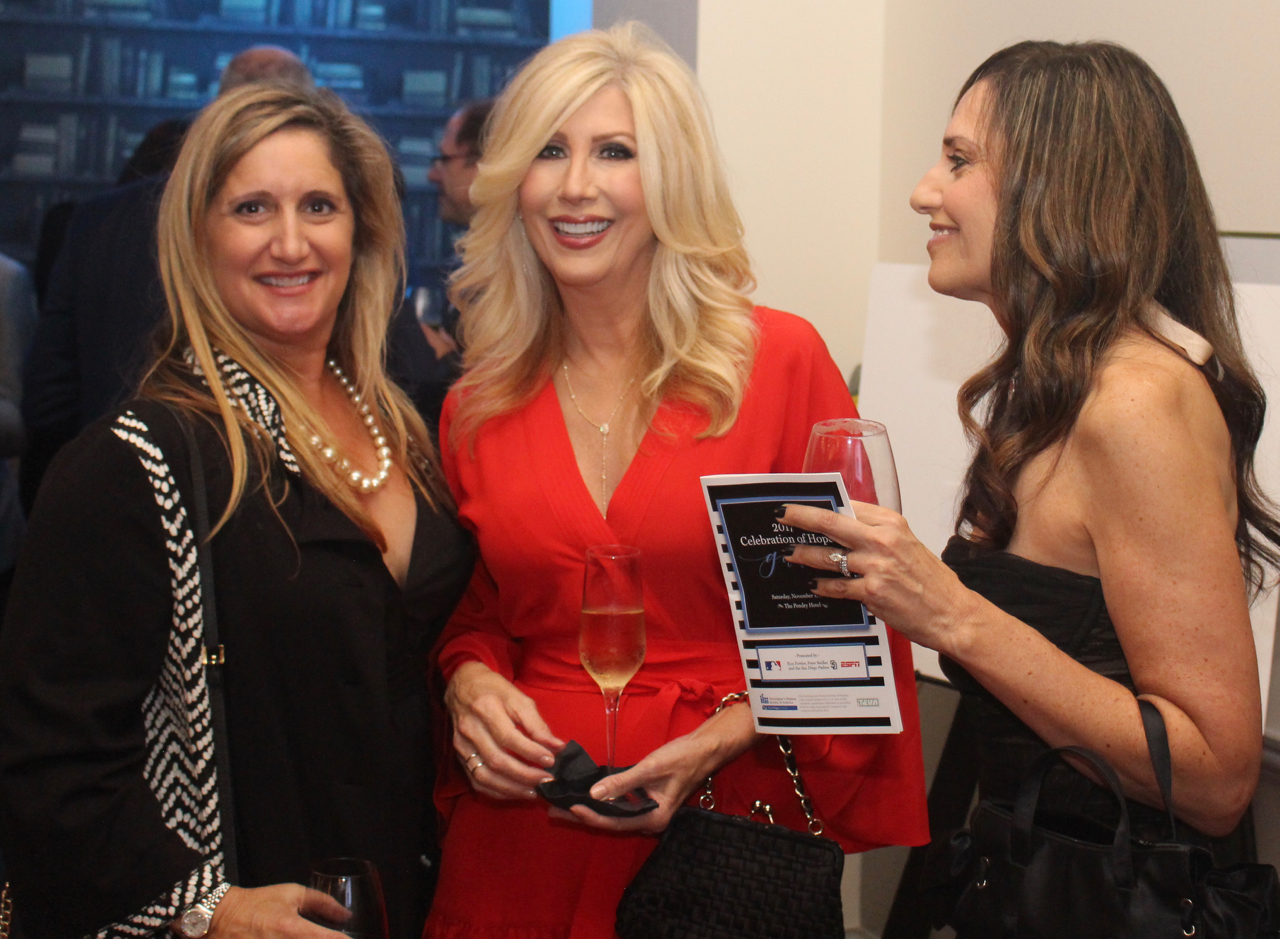
However, on November 4 the spirit of HDSA, embodied in founder Marjorie Guthrie’s goal of a cure, helped fuel new hopes: the San Diego chapter’s sixteenth gala, recalling HDSA’s start in 1967 and honoring celebrated ESPN sportscaster Chris Berman, raised more than $250,000, a national record for chapters. It was the society’s most successful fundraising event of the last decade.

Also, for the first time, the gala attendees included top scientists from Ionis Pharmaceuticals, Inc., which, by January 2018, expects to release results of its highly anticipated Phase 1 gene-silencing clinical trial.

It was also the first time an HDSA chairman of the board attended: Chair Arik Johnson, Psy.D., the staff psychologist at the HDSA Center of Excellence at the University of California, Los Angeles, joined HDSA CEO Louise Vetter at the event.

It was a striking convergence of history, people, and research progress.

The gala was organized by HDSA-San Diego and the chapter’s former president, Bill Johnston. Johnston left a 38-year career as PR director for the San Diego Chargers football team, which moved to Los Angeles, to keep his HD-stricken wife Ramona at Edgemoor Hospital, an award-winning care facility in nearby Santee. Johnston now works as special advisor to Ron Fowler, the executive chairman and co-owner of the San Diego Padres baseball team and a long-time supporter of HDSA-San Diego.

“It was so rewarding to see the extended HD community having a wonderful evening and enjoying a series of heartfelt and humorous stories about Marjorie Guthrie, the Johnstons and the 2017 Guthrie Awardee, Chris Berman,” HDSA-San Diego President Beth Hoffman, Ph.D., said after the event. “Generosity was in the air, and we’re so grateful to everyone who dug deep to support HD families and to find a cure for HD.”


HDSA CEO Louise Vetter addressing the gala (photo by Derrick Tuskan)

Marjorie Guthrie’s vision for a cure

More than 300 people attended the gala, held at the Pendry San Diego Hotel, including members of the Padres organization, sports and local celebrities, drug company representatives, HD researchers and clinicians, and HD family members.

In her speech, Vetter described HD’s devastating symptoms, its impact on families, and the story of Guthrie’s founding of what would become HDSA after her husband, folk singer and social activist Woody Guthrie, died of HD in 1967. Guthrie began in a time before the Internet: she placed a classified ad in The New York Times seeking contact with other families affected by a disease mainly unknown, even to New York’s medical community.

“In three months, she had 35 families affected by Huntington’s disease that were meeting around her kitchen table and dreaming about developing a cure for HD,” Vetter said. “That’s how the Huntington’s Disease Society of America was born. And at 50 years, we mark the amazing vision that this woman had to really set a course for a community to come together and provide support for one another.”

Today HDSA provides education about HD, supports research, and advocates for better care for HD-affected individuals, Vetter added. It now has more than 40 Centers of Excellence (COE), which provide a variety of family services and involve the community in research studies and clinical trials.

In a pre-gala interview, board chair Johnson outlined some of the ways in which HDSA and COEs are assisting affected individuals and families with HD’s daunting psychological and behavioral symptoms. “We have a Telehealth program for people to call in and talk to a trained social worker or psychologist who has been educated in Huntington’s disease,” he said.

You can watch Vetter’s speech in the video below. Click here to watch my interview with Dr. Johnson.

‘A heart for people that need a voice’

After the audience watched an ESPN report on the Johnston family’s struggles and leadership of the cause, Johnston received a standing ovation as he approached the podium. Johnston’s daughter Hayley, who has not tested for the inheritable genetic defect that causes HD, appears in the video.

“If my wife were here, then it would make sense that you’re standing up,” Johnston told the audience, explaining that Ramona’s advanced symptoms caused her to miss the event for the first time. “My wife is my hero. I appreciate everybody being here tonight. Hayley said it in that video about this disease: people don’t really know what it is until you see it. I wish Ramona could be here. She would be here, if she could.”

Johnston noted that Berman and Fowler have been the “biggest” and “most consistent” contributors to his fundraising efforts. Fowler was honored at the 2013 San Diego gala.

Johnston recalled his friendship with Berman, begun in the 1980s when he started at the Chargers and Berman was at ESPN. Starting in the 1990s, around 6 a.m. every Sunday during football season, Johnston updated Berman on Chargers news for the sportscaster’s reports.

“We just talked football,” Johnston said. “And then when Ramona got diagnosed, I could not have that conversation without him asking first how was Ramona, how are the kids. Every year, at the end of the year, a check would show up in the mail, unannounced, unrequested, a donation. Our honoree has been a huge friend of our organization and the effort to find a cure, find a treatment, for this disease.”

Berman does more than write checks, Johnston added. Berman, he said, “shows to me a commitment and a caring and a heart for people that need a voice, and that’s what this disease needs. It needs people to talk about it, to learn about it. And that’s why we’re doing what we’re doing here tonight.”


Bill Johnston (left) and 2017 Guthrie Award Honoree Chris Berman (photo by Derrick Tuskan)

‘Advancing the ball’ for HDSA

In accepting the Guthrie Award, Berman praised Johnston’s commitment.

“Billy is as loyal as they come,” he said, referring to Johnston’s decision to stay in San Diego. “Is there anything more admirable than that?”

Berman recalled that, after his wife’s death in a car accident in May, Johnston flew to the East Coast for the funeral. Johnston and other “true friends” have helped him overcome his grief, he said.

“You realize that, when times are the toughest, your friends and people bonding together is the way we all can advance the ball, if you will, to use a football term. They’ve helped me do that. And that’s where we are with Bill, and Hayley, who’s here tonight, and the Johnston family and countless other families just like this family.”

You can watch Johnston’s and Berman’s remarks in the video below.


Baking the clinical trial cake

Earlier, I watched as Ionis scientists bid on silent auction items using a mobile phone app. I greeted several of the Ionis officials, including Frank Bennett, the senior vice president for research, who attended the gala for the first time.

Dr. Bennett has overseen the ten-year development of IONIS-HTTRx, a gene-silencing drug that aims to alleviate HD symptoms by reducing production of the huntingtin protein in brain cells. The drug entered a Phase 1 clinical trial in September 2015 in Canada, England, and Germany. The company expects results to become available in the next two months.

Currently, to protect against bias as clinical trial administrators analyze the results, Dr. Bennett and the Ionis HD team cannot access the data. That’s standard clinical trial protocol.

Recalling a metaphor used in formal interviews about IONIS-HTTRx, Dr. Bennett referred to the project as a “cake in the oven.” The team is awaiting the opening of the oven to learn the results.

If successful, IONIS-HTTRx would mark the first effective treatment – though not a cure – for a brain disease.


The Ionis Pharmaceuticals table: (clockwise from left) Chris Bragg, Stacy Raysin (Dr. Bennett's assistant), Eric Swayze, Ph.D., Carolyn Swayze, Lisa Lane, Roger Lane, M.D., Brad Smith, Anne Smith, Ph.D., Frank Bennett, Ph.D., and Paula Bennett (photo by Gene Veritas, aka Kenneth P. Serbin)

Close to treatments

Jody Corey-Bloom, M.D., Ph.D., the director of the COE at the University of California, San Diego, also attended with her husband Floyd Bloom, M.D., staff, and members of the HD community. So did representatives of Teva Pharmaceutical Industries, a major sponsor of HDSA galas and the manufacturer of AUSTEDO, a recently approved drug – developed in San Diego – that alleviates HD’s involuntary movements but does not slow progression of the disease.

On October 30, Dr. Corey-Bloom gave her annual Huntington’s disease research update at the HDSA-San Diego support group. Most of her talk focused on gene silencing and the Ionis trial.

She also spoke on her groundbreaking research on the presence of huntingtin protein in saliva – a potential marker of both disease onset and progression and also of medications’ impact. Saliva is easier and far safer to collect than blood and cerebrospinal fluid, which are also under study for markers. (Click here for a scientific presentation on this topic.)

“This is an incredibly exciting time for HD,” Dr. Corey-Bloom concluded. “I think really we’re on the edge of really discovering something here, and being able to treat this disease. If we can’t cure it, we can slow it down.”

To watch Dr. Corey-Bloom’s presentation, click here.


Dr. Jody Corey-Bloom's table: (clockwise from front) HD family member Linda Pohl, Pablo Garcia, Lily Garcia (Dr. Corey-Bloom's assistant), Steve Granger, Ph.D., chief scientific officer at Salimetrics, LLC, Beth Thomas, Ph.D., The Scripps Research Institute, Dr. Corey-Bloom, Floyd Bloom, M.D., and HD family member Margaret Schroeder (photo by Gene Veritas, aka Kenneth P. Serbin) 

A true celebration of hope

I’ve attended every San Diego gala but one. As always, it was simultaneously exhilarating and emotionally draining.

I was thrilled to see the especially large group of scientists, researchers, and clinical workers. I was able to introduce several of these mutual contacts to each other. I also enjoyed listening to Berman talk about his career as a broadcaster, one of the highlights of the evening (click here to watch an excerpt).

When I greeted Johnston, I told him that my recent, annual neurological checkup showed no signs of HD. I’m 57; my HD-stricken mother’s symptoms started in her late 40s.

However, seeing “HD brothers and sisters” like Tim Schroeder and Sharon Shaffer, both deeply affected by the disease, reminded me of my likely future unless a treatment is found soon.

Yet this gala lived up to its name: a celebration of hope. My heart jumped as I realized it would set a fundraising record.

I’m hoping it will jump even more when the Ionis Phase 1 results come out.


Above, from left to right, Fran Walker, daughter Sharon Shaffer (seated), Taylor Shaffer, Renato, Shaffer, and Alexa Shaffer (photo by Gene Veritas, aka Kenneth P. Serbin). Below, Gene Veritas with HDSA-San Diego supporter Mary Wisco (photo by Bob Walker).


(Disclosure: I hold a symbolic amount of Ionis shares.) 

(Scroll down for other photo highlights.)


Chris Berman (left) and Ron Fowler, executive chairman and co-owner of the San Diego Padres (photo by Derrick Tuskan)


HDSA-San Diego president Beth Hoffman, Ph.D., (left) and Beth A. Thomas, Ph.D., The Scripps Research Institute (photo by Gene Veritas, aka Kenneth P. Serbin)


Mike and Jan Neil, HDSA-San Diego supporters (photo by Gene Veritas)


Nina Detrow (left), KGTV news anchor Kimberly Hunt, and Lori Ello (photo by Gene Veritas)


Bill and Hayley Johnston (left) with Liya Sharif and Pete Lancia of Qualcomm (photo by Gene Veritas)


The HDSA San Diego Center of Excellence/UC San Diego/Teva table: clockwise, starting in the foreground, Ameera Haque (UCSD research assistant), Gayle Paddison (Teva clinical nurse educator), Mr. Paddison, Amy Rahilly, Jeff Rahilly (Teva), Aeri Kim (UCSD research assistant), Chase Snell (UCSD research coordinator), Sungmee Park (UCSD research coordinator), Ayesha Haque (UCSD research assistant), and Rina Patel (UCSD research assistant) (photo by Gene Veritas)


HDSA-San Diego board member Paul June (middle) with supporters Amy and Cam Stephens (photo by Gene Veritas)


Scott Yoffe and HDSA-San Diego board member Nan Pace (photo by Gene Veritas)


HD family member Doug Schulte (photo by Gene Veritas)


Former HDSA-San Diego president George Essig (standing) toasts with friends (photo by Derrick Tuskan).

Wednesday, September 30, 2015

At key FDA meeting, Huntington's disease community insists on faster search for treatments

The Huntington’s disease community sent a powerful message to the U.S. Food and Drug Administration (FDA) at the September 22 meeting on HD patient-focused drug development: the agency must do its utmost to facilitate clinical trials and speed the search for effective treatments.

“We discovered the gene – we don’t have a cure,” declared Nancy Wexler, Ph.D., the famed researcher who initiated the search for the huntingtin gene while watching her mother suffer and ultimately die from HD. She addressed the panel of ten FDA officials and audience of some 200 HD family members and advocates at the agency’s headquarters in Silver Spring, MD. “We did that [discovery] in 1993.”

Along with Wexler, two panels of HD family members selected by the FDA to make presentations about the disease and current lack of effective remedies, as well as other participants in the unusually large meeting, described HD’s cruel devastation and the exhausting burden for caregivers.

The Huntington’s Disease Society of America (HDSA), which advocated for the meeting under the new requirements for patient feedback established by Congress for the FDA, sought to provide the FDA with a more tangible and comprehensive view of HD’s reality, all too familiar to affected families.

The FDA doesn’t conduct drug research, but its regulators must approve all clinical trials and new drugs in the U.S.

The plethora of symptoms

Many presenters and audience commenters emphasized the plethora of cognitive, behavioral, and other symptoms involved in HD in addition to chorea, the involuntary movements traditionally but erroneously labeled the key diagnostic signifier of the disease.

“I have all of the symptoms that have nothing to do with chorea,” stated presenter Julie Rosling, 72, of Orange, CA. Forced to retire some ten years ago from her pharmacist job, Julie participated on the five-person panel about the daily impact of HD.

I first met Julie almost 20 years ago in San Diego at the local HD support group, several years before I tested positive for the genetic defect that causes the disease. At most meetings the group had three breakouts: for the affected, caregivers, and untested individuals and asymptomatic gene carriers. Julie and I participated in this last breakout group. Sharing our most intimate fears about HD, we became friends.

I hadn’t seen Julie in a few years. I had long admired her intelligence, profound knowledge of HD science, and healthy lifestyle. My wife and I viewed Julie as a model for avoiding HD and, once her symptoms started, for living with the disease. She has late-onset HD, in contrast with most patients, who experience onset between 35 and 55.

From left to right, Frances Saldaña, Julie Rosling, Reed Rosling, and Gene Veritas (aka Kenneth P. Serbin) (photo courtesy of Frances)

‘I can’t play Chopin anymore’

At the FDA meeting, I was shocked and saddened to see how the disease had, as Julie put it in her presentation, greatly affected her demeanor.

“There are so many different types of symptoms,” Julie said, adding that HD must no longer be seen as just a brain disease. She described how she can no longer drive, suffers from insomnia and gastrointestinal difficulties, and fears choking, a common problem with HD.

“I fall all the time when I go up and down the stairs,” she continued. “The thing that’s the most important […] is that my symptoms are affecting every system in my body.”

Sadly, HD has robbed Julie of many favorite activities. Each December, Julie, a painter, sent out exquisitely designed holiday cards. Several years ago, she wrote in her holiday card that she could no longer paint the cover for her cards.

Those beautiful cards always brought me a glow of hope. I have missed them.

“I can’t play Chopin on the piano anymore,” Julie said at the FDA. “I can’t walk to the corner and back.”

HD has hampered her social interaction, too, because of her slurred speech.

“My symptoms have never gotten better,” Julie concluded. “They get worse every single day. I am a living example of what this disease is all about.”

Once again, I had looked into the genetic mirror and viewed my own highly probable future decline.

You can watch Julie’s presentation in the video below. To watch other presentations, click here to visit my video album of the meeting.


FDA ‘blown away’ by turnout

“I think it was a very successful day,” said HDSA CEO Louise Vetter in an interview with me shortly after the meeting. “I’m really pleased with how full the room was, not only from the patient and community side, but also the FDA. They had a full docket of folks who wanted to be in the meeting to listen to the HD community.[…] There were more FDA staff in the room than is typical for a public hearing.”

The FDA’s level of interest demonstrated its “commitment to paving the way for new therapies for HD,” Vetter added. The FDA was “impressed” with the “urgency” and “commitment” of the HD community.

“The FDA was blown away,” she said, adding that the agency at the last minute had to set up a room “three times larger than what they planned.”


FDA regulators at the Public Meeting on HD Patient-Focused Drug Development (photo by Gene Veritas)

Several dozen HD community members participated in the hearing via webcast. In addition, representatives attended from CHDI Foundation, Inc., the nonprofit virtual biotech focused exclusively on the search for HD therapies, and the pharmaceutical industry.

The HD hearing took place in the morning, followed by a Parkinson’s disease meeting in the afternoon. The FDA had initially combined HD and Parkinson’s concerns into a single event, but HDSA convinced the agency to divide the meeting because of significant differences in the two conditions and the different treatment approaches, Vetter explained.

“We had more people than Parkinson’s had planned, and given the difference in prevalence, the FDA really took notice,” she said.

“I’m just so pleased with how many caregivers and family members really came prepared to succinctly share their stories and open up about the impact of the disease and their hopes and wishes. I know that the FDA heard that.”


FDA regulators Leonard Kapcala, M.D. (above) and Peter Como, Ph.D., and Lei Xu, M.D., Ph.D. (below) watch presentations by HD advocates (photos by Gene Veritas)


Still time to submit comments

HDSA requested the hearing as soon as the Congressional mandate for patient-focused feedback to the FDA went into effect in 2012. HDSA told the FDA that it could learn much from HD as a genetic disease, given a clearly identified gene and a community of affected families with a serious need for treatments, including preventative remedies for presymptomatic gene carriers, Vetter noted. HDSA also said HD could be a case study for understanding and treating other diseases.

In addition, HDSA will submit to the FDA survey responses from 3,600 HD-affected individuals and family members regarding the impact of symptoms and desired treatments, Vetter noted in her public comments at the hearing.

The public can provide further feedback to the FDA until November 23, 2015, by clicking here.

Several months after the public comment period closes, the FDA will complete a “Voice of the Patient” report on HD, Vetter told me. HDSA will carefully review the report and provide feedback.

You can watch Vetter make her public comments in the video below.


Advocating for the presymptomatic

During my brief remarks (audience members got only two minutes per commentary), I told of my mother’s demise, our daughter’s gene-negative status after testing in the womb, and my luck at remaining presymptomatic at 55, well beyond the point where my mother experienced many symptoms.

“I would like to see a medication that prevents me from ever getting any kind of symptoms,” I said. “There’s got to be a really open dialogue with the scientists on the new areas such as gene-silencing.”

I referred to the disappointment among HD advocates that the first gene-silencing clinical trial for HD, by the Carlsbad, CA-based Isis Pharmaceuticals, Inc., is happening outside the United States. (Phase I of the trial started in July in Europe and Canada; click here to read more.) I remarked that some drug company executives think the FDA too inflexible regarding new approaches. I urged the regulators to consider the new biomarkers (signs of disease and drug efficacy) scientists are seeking to measure in the blood, cerebrospinal fluid, and brain measured with new techniques.

Many presymptomatic people dont get tested “because of the immense fear of the disease and the fact that there are no treatments,” I added during the final round of comments. “There’s also associated with genetic testing and getting your results a lot of suicidal tendencies.”

I recalled my suicidal fantasies from the early years of my family’s struggle with HD, when I saw my mother declining. Those ended after the birth of my daughter, I added.

“The presymptomatic population out there really needs to be part of the conversation,” I urged.

The urgent need for treatments

The FDA regulators, unsurprisingly, offered little comment on the proceedings; they wanted to listen and learn.

After returning home, on September 25 I requested an interview to follow up on the above-mentioned points, and more, including calls from families with juvenile HD patients for JHD-specific approaches to clinical trials and treatments. I have not yet received a response, but will write an update when I learn more.

However, HDSA CEO Vetter recalled for me the nub of her conversation with William Dunn, M.D., a neurologist and the FDA’s director of the Division of Neurology Products, immediately after the meeting. Dr. Dunn had welcomed the participants at the meeting’s start.

“He’s very committed to this,” Vetter said, referring to the search for HD treatments. “He was very impressed, very grateful for the input of the families, and very committed to making sure that, as therapies move forward to FDA consideration, they will be efficient in their review, that the FDA’s not sitting on anything. The last thing they want to do is be accused of keeping something meaningful out of the hands of families. They’re very committed to being very expeditious and thorough.”

Along with many fellow HD family members, I believe that the FDA gained a clearer understanding of our community’s suffering and the urgent need for treatments.

* * *

For the FDA’s recording of the meeting, click here. Be sure to visit my video album for other perspectives expressed at the hearing. For additional photos from the meeting, click here.

For the perspective of Parkinson’s specialist Jeanne Loring, Ph.D., click here.

(Note: HDSA paid for my travel to Silver Spring and a night of lodging. The views expressed in this article are wholly mine.)


HD advocate Katie Moser (left), HDSA CEO Louise Vetter, and advocate Emma Burris (photo by Gene Veritas)

Wednesday, April 23, 2014

After a Social Security setback, HDSA steps up advocacy on Huntington’s disability criteria

The Huntington’s Disease Society of America (HDSA) is calling on the HD community and its supporters to urge the Social Security Administration (SSA) to update and expand its listing (description) of the disorder so that patients suffering from all types of symptoms can qualify for disability benefits.

Listings are medical criteria for evaluating disability claims involving diseases and disorders as determined in the Social Security Act. Written decades ago, the current SSA listing for HD mentions only the motor symptoms, the involuntary movements caused by the deterioration of the brain. However, HD also produces cognitive decline and psychiatric and behavioral issues, which usually leave patients disabled. Both of these symptom types often occur before the motor symptoms.

In the past decade, HDSA worked for the introduction of a bill in Congress, the Huntington’s Disease Parity Act, to change the HD listing and eliminate the two-year waiting period for benefits. HDSA has also directly lobbied the SSA.

Initially, the SSA responded favorably. It took a big step in April 2012 by listing juvenile onset HD as eligible for a Compassionate Allowance, thus quickening the approval of applications for benefits, which can take many months and even years and sometimes require applicants to resort to an arduous appeals process. Later that year, adult onset HD also became eligible for the allowance. (Click here to read more about Compassionate Allowance, HD, and Social Security benefits.)

However, when the SSA on February 25 released its draft of updated neurological listings – the first such revision in more than 30 years – the description for HD remained woefully inadequate.

A glaring omission

“We were certainly disappointed when the listings … made no practical advancements in the ability of their (SSA) examiners to have a true picture of the clinical manifestation of Huntington’s,” said HDSA CEO Louise Vetter in an interview today. “They continue to depend on the motor symptoms. There is a large body of knowledge obviously that gives the cognitive and behavioral symptoms equal importance in the progression of the disease.”

HDSA CEO Louise Vetter (photo by Gene Veritas)

On March 27, HDSA issued an analysis of the SSA HD listing that it posted on its website (click here to read more).

“Based upon HDSA’s analysis, this listing leaves many of the same gaps unaddressed and is worse than the listing we have now,” the society states. The proposed listing puts even more emphasis on the motor symptoms. (To obtain benefits, patients must be examined by at least one doctors and provide any medical documentation requested by SSA.)

The HDSA analysis found an “inconsistency between the listings (that do not mention any non-motor symptoms) and the preamble, which states that: ‘When these disorders result in solely cognitive and other mental function effects, we evaluate the disorder under 12.02/112.02 (for juvenile).’” The number twelve refers to the mental health listings, where general issues with neurological disorders such as HD are also described.

HDSA argues that “unless these other sections are spelled out in the listing itself, the examiner (and even a medical professional who is unfamiliar with HD) won’t know that they should look at the preamble because the person with HD appears fine in person and often lacks the insight to describe symptoms.”

The “glaring omission” of non-motor symptoms in the SSA listing “will cause individuals disabled by non-physical symptoms to be denied,” the HDSA analysis concludes.

One advocate told me privately that the SSA and HD specialists “don’t always speak the same language.” For instance, what HD specialists describe clinically as “apathy,” a hallmark symptom of HD, must be found in the SSA criteria under “anhedonia.

Educating the bureaucracy

As of this writing, the SSA point person had not responded to my phone message requesting comment on the HD listing. Cheryl Williams of the SSA Office of Medical Listings Improvement is indicated as a contact person in the Federal Register, where the SSA published the proposed neurological listings.

Vetter offered “two plausible explanations” for the inconsistency in the neurological listing.

First, the SSA is “struggling with a change in leadership” after Commissioner Michael Astrue finished a six-year term, retiring in February 2013. Astrue had approved the Compassionate Allowances and even appeared in a video made specially for the 2012 HDSA national convention. Since Astrue’s departure, SSA has operated under an acting commissioner, Carolyn Colvin. Thus, “new staff” received the task of revising the neurological listings, Vetter observed.

Second, Vetter noted the complexity and length of a document covering numerous neurological conditions.

“I recognize that it’s a tall order to conveniently define HD,” she said. “This is a bureaucracy looking for simple definitions, and HD is not easily characterized in convenient language. From that perspective, they’re trying to simplify a complex disease. That is inevitably going to lead to some gaps, and we’re calling them out on that.”

Pressing for a meeting

Vetter added that, at some level, the SSA doesn’t sufficiently understand HD. HDSA is seeking “direct dialogue” with the SSA, but so far the SSA has refused to meet.

Vetter speculated that, if the SSA meets with HD community representatives, it fears “the slippery slope” of having to meet with all disease groups.

HDSA, Vetter said, must convince the SSA of the uniqueness and complexity of HD and therefore the need for more “guidance” for the medical examiners who determine whether HD patients receive disability benefits.

“We should be granted an exception,” she declared. “We won’t take no for an answer on this one.”

How to send a message to Social Security

HDSA CEO Louise Vetter has formally submitted the HDSA analysis as a comment for SSA consideration, as have several dozen other HD advocates and family members.

Vetter urged HD advocates, family members, and supporters to also submit comments to the SSA. You can view others’ comments and add your own by clicking here. Your can simply state that you support the HDSA's input on the Huntington's listing, or you can leave a personalized comment of greater length.

The deadline for comments is April 28.

Removing barriers to understanding HD

Advocacy on this issue forms part of a larger effort by HDSA and the HD community in favor of the Huntington’s Disease Parity Act of 2013, a bill that would direct the SSA to update and expand its HD listing and waive the two-year waiting period for HD patients to receive Medicare benefits.

The current setback is “not a reflection on the HD community’s momentum at all,” Vetter said. “I know that we still have many strong advocates in the SSA. They are trying to find a way to accommodate HD in a complex process. Hopefully they’ll be able to accomplish that quickly. I don’t think we should be disheartened.”

Little by little, HD advocates are “removing barriers” to understanding of the disease, she added.

To learn more about how you can assist with HD advocacy, contact the nearest chapter of HDSA or write advocacy Jane Kogan, HDSA’s manager of education and advocacy, at jkogan@hdsa.org.

Wednesday, November 28, 2012

HDSA’s renewed commitment to critical research

After a budgetary crisis that practically eliminated support to HD scientists in recent years, the Huntington’s Disease Society of America (HDSA) has committed itself to reestablishing a program of research projects critical for developing effective treatments.

In a September 28 e-mail message to “HDSA friends,” HDSA CEO Louise Vetter announced the hiring of George Yohrling, Ph.D., to fill the new position of Director of Medical & Scientific Affairs.

“In the past we have relied upon the volunteer support and consultation of physicians and scientists,” Vetter explained in an interview in San Diego on November 16. “We will continue to do so. But based on what the pace of HD research is right now and our vision to have a new research program, we felt it was the right time to bring that expertise in-house.”

Dr. Yohrling, a molecular neuroscientist, has worked in the HD field since 2000.

“His first job was with an HDSA Coalition for the Cure lab,” Vetter said. “He was funded with an HDSA grant, and he has continued to stay in the field.... He has real expertise in HD, which is incredibly important. His primary task is to launch a new research program for the organization.”

The hire marks the first step in fulfilling a series of goals outlined in HDSA’s first-ever strategic plan, formulated after broad consultation with the HD community in 2011 and 2012, and launched by Vetter at the annual HDSA convention last June (click here to read a report on the drafting of the plan).

In response to recent criticisms of HDSA because of the drastic decline in research support (click here to read more), Vetter stated that HDSA is working “to have the most impact for the most people and help set the course for the best care and the best treatments as soon as possible.”

(Watch the entirety of my interview with Vetter in the video below.)


Avoiding repetition

In crafting the new research program, HDSA planners took into account the organization’s limited budget (about $8.5 million annually) and strived to avoid duplicating efforts by other HD initiatives focused strictly on research, Vetter added.

Those initiatives include the CHDI Foundation, Inc., which spends tens of millions of dollars annually, and the Hereditary Disease Foundation (HDF). Unlike HDSA, they do not offer support groups, care centers, or other forms of patient outreach.

Both Vetter and Dr. Yohrling emphasized that the new research program will focus on HD research in humans and human cells. This contrasts sharply with – but also necessarily complements – the research conducted on animals.

Focusing on humans

“We’re calling it ‘Human HD Biology Project,’” Dr. Yohrling said in a November 26 interview. “All of the observations will be from human HD patients, and not from a worm or mouse or fly. There’ll be no arguing about the physiological relevance of the data we will acquire.”

Dr. Yorhling explained that the project will function like a post-doctoral or clinical fellowship program. Young scientists will partner with the directors of HDSA’s 21 Centers of Excellence for Family Services and Research, which see patients and other HD family members on a regular basis. It replaces the Coalition for the Cure grant program, which ceased to exist with the onset of the budget crisis.

Dr. George Yohrling (CHDI photo)

The new researchers will focus on tasks such as the search for human biomarkers – specific signs of the disease within bodily fluids or tissues or the brain, for example – that will become crucial for measuring the effects of potential remedies.

“These are studies, not clinical trials, but their outcome could and should help support, drive, and steer clinical trials,” Dr. Yohrling explained, adding that he is currently recruiting HD specialists to serve on the program’s advisory committee, which will review the applications from researchers.

Grants will be relatively modest, Dr. Yorhling indicated. “These won’t be $250,000 jobs,” he said. However, because of the clear emphasis on non-redundancy, “hopefully we’ll get a big bang for our buck,” he added.

HDSA has already raised funds to kick off the project, Dr. Yorhling said, although both he and CEO Vetter recognized the need to increase fundraising to expand support for research.

HDSA hopes to issue its first call for proposals in early 2013, Dr. Yohrling said.

HDSA also will continue to support an important consortium of HD stem cell researchers, he noted.

A pivotal player

Dr. Yohrling’s diverse experience in HD research makes him a pivotal player in the search for treatments.

After receiving his Ph.D. in pharmacology from Wake Forest University in 2000, he became the very first post-doctoral researcher in the lab of Jang-Ho Cha, M.D., Ph.D., at Harvard Medical School/Massachusetts General Hospital. (Dr. Cha is a member of the HDSA Board of Trustees and will chair the HD Human Biology Project Advisory committee.) During his two years under Dr. Cha, he “got to see and interact with HD firsthand.”

“Any human being with a soul in their body” would be motivated to help, Dr. Yohrling recalls of his initial, serendipitous contact with Dr. Cha and the HD team while in Boston searching for a post-doctoral position. “I was hooked. I felt it was my calling.”

Under Dr. Cha, Dr. Yohrling also received an HDF grant.

Dr. Yorhling spent the next five years conducting Alzeimer’s disease research at the pharmaceutical giant Johnson & Johnson, followed by two years at Galleon Pharmaceuticals, Inc., researching respiratory conditions.

In 2009 Dr. Yohrling joined CHDI, which he described as a “dream” of an opportunity to focus fully on HD research in a large, resource-rich organization. There he served as director of target assessment and then director of systems biology-pathway assessment. Working with firms and leading HD scientists, he managed millions of dollars in research contracts. He also led the development of HD Research Crossroads, an online repository of HD-relevant drug target validation data.

Impacting patients with ‘all hands on deck’

CHDI was “more a behind-the-scenes operation,” Dr. Yohrling observed. “HDSA is more of a grassroots, family-oriented foundation. The opportunity to get back to that, while also getting involved in human biology research, was an opportunity too good to ignore.”

Responding to the argument that HDSA should let others concentrate on research while putting funds strictly into social services, Dr. Yohrling observed that the HDSA board and HD families want the organization “back involved in research and not to leave it up to the other entities like CHDI, HDF, and the government,” although his key responsibilities will include maintaining “an open line of communications” with those and other HD research organizations.

“We’re really glad to have someone like George working at HDSA,” said Robi Blumenstein, the president of CHDI Management, Inc., which carries out the day-to-day tasks of CHDI’s mission. “It just furthers our ability to collaborate.”

“I think that HDSA is well-positioned with their centers of excellence around the country,” Dr. Yohrling continued. “This is an incredible resource. It’s a huge benefit that HDSA has over other foundations or organizations, this access and close connection to the patients. A research program, although it might be limited initially, if the money is use properly and thoughtfully, can have a huge impact on the lives of patients.”

“We need all hands on deck,” said Vetter, adding that everybody in the HD community can take small but important steps to help the cause by keeping in touch with attending physicians, learning about HD research, and participating in clinical trials and research studies. “As we look at the dawn of a new time of HD therapeutic development, the only way those drugs are going to come to market is if people get involved. Getting involved is the most important thing that the HD community can do right now.”

Monday, June 11, 2012

The wholehearted embrace: my first HDSA convention


For the first time since learning in 1995 that I was at risk for Huntington’s disease, I participated in the annual convention of the Huntington’s Disease Society of America (HDSA).

Despite my heavy involvement in HDSA-SanDiego, I hadn’t previously attended a national convention, even when the event took place in my home city, because of annual research trips to Brazil, my focus as a historian.

Last year I strongly wished to attend the June convention in Minneapolis, where I was named the 2011 HDSA Person of the Year, only to cancel the trip at the last minute after falling ill. I was crestfallen.

This year I finally made it (!), driving with others from San Diego to Las Vegas for the 27th Annual Convention at the Red Rock Resort (June 8-10).

Though I flew back to San Diego the evening of the first day in order to watch my 11-year-old daughter sing in public for the first time and therefore missed the rest of the event, the trip meant a lot. I took my biggest step yet out of the “HD closet,” took stock of my long years of struggle, and made important new connections for the future.

Reflecting on HD’s tough reality

The convention atmosphere put me in a deeply reflective mood. After meeting Jenny Rogers of the host Las Vegas affiliate of HDSA, which operated an information table in the registration area during the day before the official opening, I returned in the evening, when nobody was around, to learn about her family’s struggles with HD, as told in pictures, letters, and a newspaper article attached to a poster.

I was profoundly shocked to read that Jenny’s mother had committed suicide in 2000 after Huntington’s had begun to rob her of her physical and cognitive capabilities. A teenager at the time, Jenny discovered her mother’s body lying on the floor in the bedroom of her home.

“I’ll be an angel watching over you,” wrote Jenny’s mother in her suicide note. “I did the best I could, but I just didn’t have any strength to cope with life anymore.”

Once again, a Huntington’s story cast a pall of sadness over me. I pondered how this disease relentlessly assaults families and destroys dreams.

Like me, Jenny is gene-positive for HD. She faces the onset of symptoms in the next couple decades, the prime of life. (Learn more about Jenny’s story by clicking here.)

I returned to my room, turned off the lights, and gazed at the night skyline of the Las Vegas Strip. As I admired its magnificence, I recalled the shortness and fragility of life – a reality intensified a thousand times in the HD community.

An upbeat opening

For me, the morning was more upbeat.

During the opening ceremony, Jenny welcomed the convention-goers assembled in the main hall. HDSA Chairman of the Board Don Barr addressed the audience. Nora Guthrie, the daughter of HD-stricken folk singer Woody Guthrie and HDSA founder Marjorie Guthrie, greeted the convention via a recorded video, in which she reminded us that this year marks the 100th anniversary of Woody’s birth.

Also via a recording, Social Security Administration (SSA) Commissioner Michael Astrue addressed the audience about the HD community’s important victory, in the form of the SSA’s announcement in April that juvenile HD benefits applications would be fast-tracked starting in August (click here to read more).

HDSA CEO Louise Vetter presented a measuredly optimistic “State of the Society” address, in which she outlined the organization’s recently unveiled five-year strategic plan.

The meaning of HDSA

At the end of the ceremony, I joined HD advocates Ted Krull and Shana Martin on a panel titled “We Are HDSA.”

Ted recalled the life of his deceased daughter Emily, whose battle against juvenile HD inspired Ted and his wife Carla to push for passage of The Huntington’s Disease Parity Act, a pending bill in Congress that would more quickly bring Social Security and Medicare benefits to affected individuals.

Emily Krull (family photo)

Shana, a model, lumberjack athlete, and fitness competitor, told the story of her mother’s ongoing struggle against HD, her involvement in HDSA’s National Youth Alliance, and the use of her athletic prowess to raise awareness of HD.

To the audience of several hundred people – the largest HD crowd to which I’ve spoken – I told my story, revealing the true identity of Gene Veritas. My family was the reason for my involvement with HDSA, I said. And while my mother died of HD and I tested positive for the genetic mutation, my daughter, our gene-negative “miracle baby,” thrives as she prepares to enter the seventh grade in the fall.

She and I are both “addicted to writing,” I said. For a class project, and using my at-risk status as an example, my daughter recently sent letters to 35 U.S. Senators urging them to reverse their opposition to health care reform. Using my writing talent, I said, I’ve produced the HDSA-San Diego newsletter and more than 130 articles for this blog.

However, not one of my newsletter or blog articles has carried my real name as the author, I pointed out.

Now, more than ever, I’m taking off the mask of Gene Veritas and exiting the terrible and lonely HD closet – a closet in which so many families remain hidden because of fear of genetic discrimination.

Explaining that HDSA has provided me with the necessary support to carry out my struggle against HD, I highlighted the organization’s meaning for me by summing up its mission in words beginning with the four letters of its acronym: Hope (through its support services), Determination (to find treatments), Solidarity (togetherness as the key to beating the disease), and Awareness (about the need for public advocacy and of the HD community’s key role in the larger battle against neurodegenerative disorders that will afflict millions in the coming decades).

You can watch a recording of our three presentations by clicking here.

Ted Krull (left), Shana Martin, and Gene Veritas

New allies

After the opening ceremony, I sought to meet online friends in person for the first time, as well as connect with new allies in the movement.

I spoke to one young brave man, a regular reader of this blog, who bears a double hardship: years ago a traffic accident left him paralyzed from the waist down, and later he tested positive for HD. “We are brothers,” he told me after an intense conversation about many aspects of HD.

Meeting him helped me put my own situation in perspective: compared to some, my burden is light.

I ran into another online acquaintance with an HD-stricken wife and daughter whose symptoms began much earlier than her mother’s.

In the exhibit hall, I signed and photographed the banner filled with messages of thanks to Congressman Bob Filner of San Diego, the original sponsor of the HD Parity Act.

Volunteers hold "thank you" banner to be presented to Representative Bob Filner (photo by Gene Veritas).

Three-year-old Kayden Bujnowski scrawled her own message on the banner, then posed for me.

When I heard that Kayden’s mother Heather Lewis has HD, and that Kayden has a 50-50 chance of inheriting the mutation, I gasped and thought, “No, not another family!”

To contribute further to awareness, Heather and her husband Jason Bujnowski graciously allowed me to take a family photo.

Above, Kayden Bujnowski blows a kiss from the HD Parity Act banner. Below, Kayden with mom Heather Lewis and dad Jason Bujnowski.  (Photos by Gene Veritas)


A new HD sister

After my morning presentation, I had only a few hours before catching the shuttle to the airport. I felt bad explaining that I needed to leave early, but everybody immediately supported my decision when they heard about my daughter’s performance.

After spending much of the past month on the road (North Carolina, Ohio, New York City, and New Haven) advocating for HD, I did not want the fight against HD to rob me of this precious moment. At 52, now in the range of years when my mother’s symptoms hit, I must strike a healthy balance between advocacy and the rest of my life.

I decided to spend my last half hour at the convention sitting next to a woman with HD. She was about my age. She had pronounced chorea (the dance-like movements caused by HD), and, like so many other HD people, was emaciated.

I struck up a conversation with her and the HD social worker sitting next to her. To my relief, the HD woman could take part in the dialogue – an ability my mother lost almost completely as the disease progressed.

The woman’s husband appeared and sat with us.

The three of us talked about HD.

The woman asked for her pills, about a half dozen, which she took one by one with drinks of water from a sipping cup. She dropped one of the pills, but her husband rescued it from the floor.

To my great satisfaction, the woman told me that she read my blog. She thanked me for it.

“Keep writing,” she said.

“Keep reading,” I responded.

It was time to catch the shuttle.

Summoning up her strength, my new sister rose to hug me.

We embraced for a few moments. Our bodies seemed to fuse into one sensation of fear, but also of love and hope.

I had never embraced an HD person so wholeheartedly – perhaps not even my own mother.

Back in San Diego, I realized that this was a symbol: I also had wholeheartedly embraced my role in the HD cause in a new way.